Every product is independently reviewed and selected by our editors. If you buy something through our links, we may earn an affiliate commission at no extra cost to you.
If you’ve ever stepped outside barefoot and felt those painful, spiky seed pods jab your toes, you already know the frustration of dealing with burrs in the yard. They cling to socks, stick to pets, and spread faster than most beginners expect. In my own backyard, burr weeds were one of the first “real” problems I ever had to tackle especially in sunnier, drier corners where the lawn thinned out.
The good news: with the right timing and a practical plan, you can get rid of burrs in the yard and stop them from returning next season. This guide focuses on easy, beginner-safe methods I’ve tested in my own lawn and in neighbors’ yards over the years.
Why Burrs Take Over (and Why These Methods Work)
Most “burr weeds” fall into a few common types: • Sandburs • Lawn burrweeds • Goathead/puncturevine • Stickers
These plants love: • Compacted soil • Bare patches of lawn • Heat and full sun • Drought-stressed grass • Thin or unhealthy turf
They spread aggressively by seeds the sharp burrs are simply their way of hitching a ride.
The reason the methods below work is simple backyard biology: • Kill or remove plants before they drop burrs • Stop seeds from germinating with a pre-emergent • Improve lawn density so burrs cannot establish • Correct soil conditions so burr weeds lose their advantage
What You’ll Need
You don’t need fancy equipment. Here’s what I’ve used successfully:
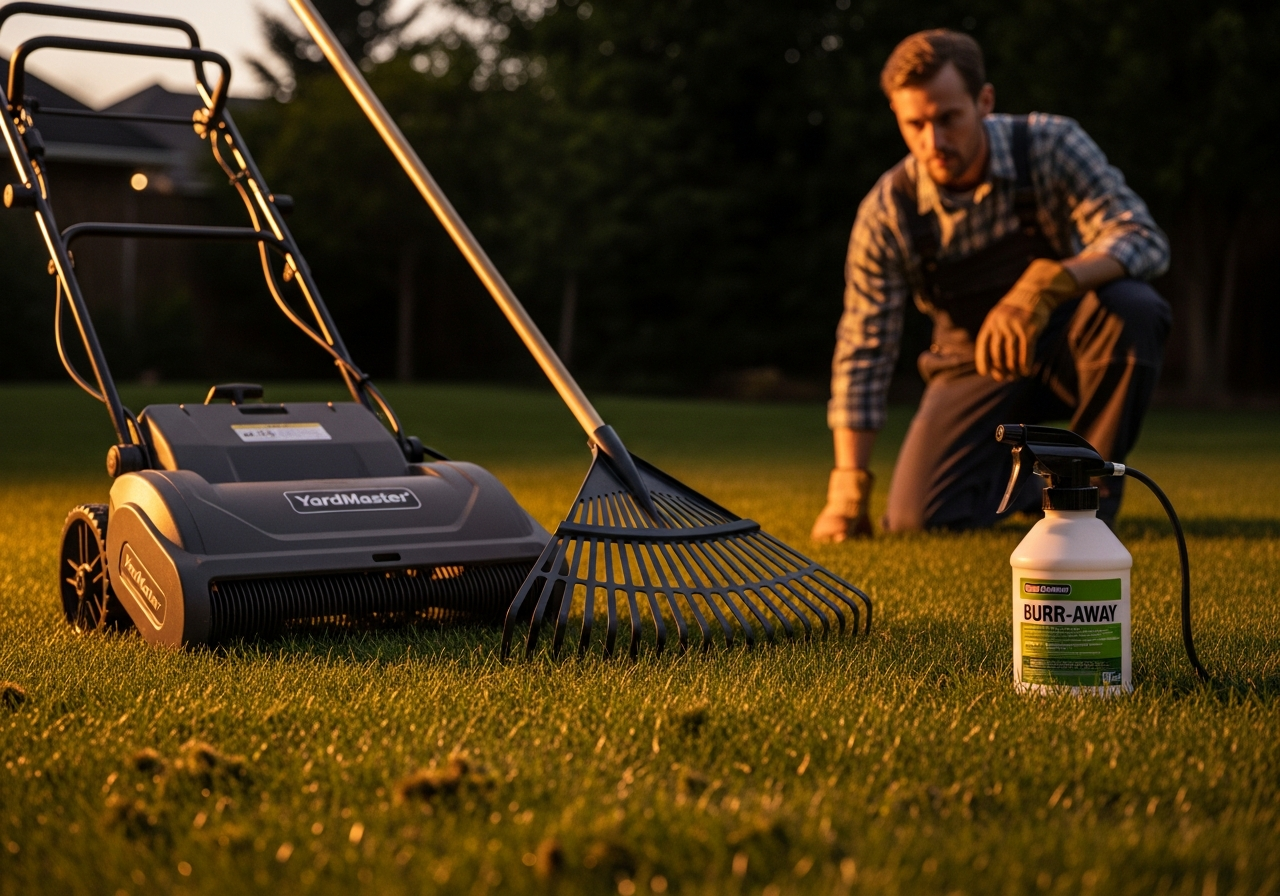
• Thick garden gloves (leather if possible) • A weeding tool (stand-up weeder or hand fork) • Lawn mower with bag attachment • Rake (metal, not plastic) • Pre-emergent herbicide (corn gluten for organic, or pendimethalin/prodiamine for synthetic) • Post-emergent herbicide safe for your grass type (optional) • Compost or lawn soil for patch repair • Grass seed or plugs if your lawn type allows
Eco-friendly options: • Corn gluten meal for pre-emergent • Vinegar only for spot-treating cracks not recommended on the lawn because it kills grass too
Step-by-Step: How to Get Rid of Burrs in the Yard
1. Start by mowing low and collecting everything
Best time: Dry day, late morning when dew has evaporated.
Set your mower slightly lower than usual and use the bagging attachment. This lifts burrs and seedheads into the bag instead of kicking them around the yard.
Visual cue: You’ll see fewer brown seedheads in the grass afterward.
2. Rake the infested areas hard
Use a metal rake to drag out any burrs lying at soil level. In my yard, this step removed far more burrs than I expected especially in sandy areas.
Tip: Rake in two directions for best removal.
3. Hand-pull the adult plants
Wear sturdy gloves and pull burr weeds from the base. If the soil is hard, water the area lightly first.
You want to see: • The entire root coming out • No stem snapping at soil level
If you leave roots behind, they usually return.
4. Bag and trash everything immediately
Do not compost burrs. They survive and spread.
5. Apply a pre-emergent herbicide
This step is what actually breaks the cycle.
• Apply in early spring before soil warms to 55–60°F • A second application in fall helps in warm regions
Corn gluten works but must be applied thickly and at the right time. Synthetic options are more reliable for beginners.
6. Spot-treat surviving weeds
If you still see green burr weeds after pre-emergent:
• Use a selective post-emergent safe for your lawn type • Follow label instructions exactly heat and timing matter
Warm-season lawns like Bermuda or Zoysia tolerate different herbicides than cool-season lawns like fescue.
7. Fix bare patches
This is the step most beginners skip and the reason burrs return.
Bare soil invites burr weeds back. Patch with: • Compost + grass seed (cool-season lawns) • Plugs or sprigs (warm-season lawns) • A thin topdressing of soil if the area is uneven
8. Strengthen the lawn going forward
Healthy lawns outcompete burrs naturally. I’ve seen this difference clearly in neighbors’ yards: the thicker the turf, the fewer the stickers.
Focus on: • Deep, infrequent watering • Regular mowing at the correct height • Annual compost topdressing • Avoiding over-thinning the grass
Pro Tips & Best Practices
• Burr weeds thrive in dry, compacted, sunny patches fix the soil, and you fix the problem. • Never mow burrs without a bag, or you’ll spread seeds everywhere. • If you have dogs, treat burrs quickly puncturevine and sandbur can injure paws. • In sandy soil, burrs pull easier right after irrigation. • Don’t rely on vinegar or boiling water in lawns they damage grass far more than burrs.
FAQ
Why do burrs keep coming back every year?
Because the seeds stay viable in the soil for several years. Without a pre-emergent, fresh plants emerge every spring.
Can I get rid of burrs in the yard without chemicals?
Yes, but it takes persistence. Hand-pulling, raking, and thick lawn coverage work if you stay consistent and remove plants before they seed.
Are burrs harmful to pets?
Certain types, especially puncturevine, can hurt paws or cause infection. Remove these quickly and avoid letting pets walk through infested areas.
How long does it take to get rid of burrs completely?
In most home yards, you can break the cycle in one full season if you use pre-emergent and fix bare patches.
Can I use a flame weeder?
Not in lawns. It kills grass and can cause fire hazards in dry conditions.
Should I replace the soil?
Usually no. Soil replacement is expensive and unnecessary. Improving soil health and lawn density is more effective.
When NOT to Use Certain Methods
Avoid herbicides if: • Your lawn is newly seeded (wait until established) • Temperatures are above product-safe limits • You have pets that chew grass choose pet-safe options instead
Avoid hand-pulling if burrs are already fully mature and shedding seeds it spreads them. In that case, mow and bag first.
Alternative Methods
Organic Method
• Hand-pull + rake • Corn gluten pre-emergent • Thick overseeding or plugging Pros: Safe for pets and kids, eco-friendly Cons: Slower results, requires frequent monitoring
Synthetic Method
• Pre-emergent + selective post-emergent Pros: Fast, reliable, good for heavy infestations Cons: Must follow application guidelines carefully
Turf Renovation
For extremely neglected lawns, a full renovation works best. Pros: Resets the lawn completely Cons: Labor- and cost-intensive
Conclusion
Getting rid of burrs in the yard is a process but a manageable one once you understand why these weeds spread and how to break their cycle. The winning formula is:
• Remove existing burrs • Prevent new seeds from sprouting • Strengthen your lawn so burrs can’t return
If you stay consistent for one growing season, you’ll see a dramatic reduction. By the next year, most yards become burr-free with regular maintenance.
With a bit of patience and a plan, your lawn can go from painful and patchy to soft, healthy, and burr-free again.
