Every product is independently reviewed and selected by our editors. If you buy something through our links, we may earn an affiliate commission at no extra cost to you.
If you’ve ever bought cilantro only to have it wilt in the fridge two days later, you’re not alone. In my own kitchen garden, cilantro was one of the first herbs I wanted a steady supply of but growing it indoors from seed can feel tricky at first. Many beginners struggle with spindly seedlings, slow germination, or plants that bolt quickly.
The good news is that cilantro actually grows beautifully indoors once you match it with the right light, soil, and watering rhythm. After years of growing it on a sunny apartment windowsill and later on a covered terrace, I’ve learned what this herb really needs to stay leafy and productive.
Below is a clear, practical guide to help you grow cilantro indoors from seed without guesswork.
Why Growing Cilantro Indoors Works So Well
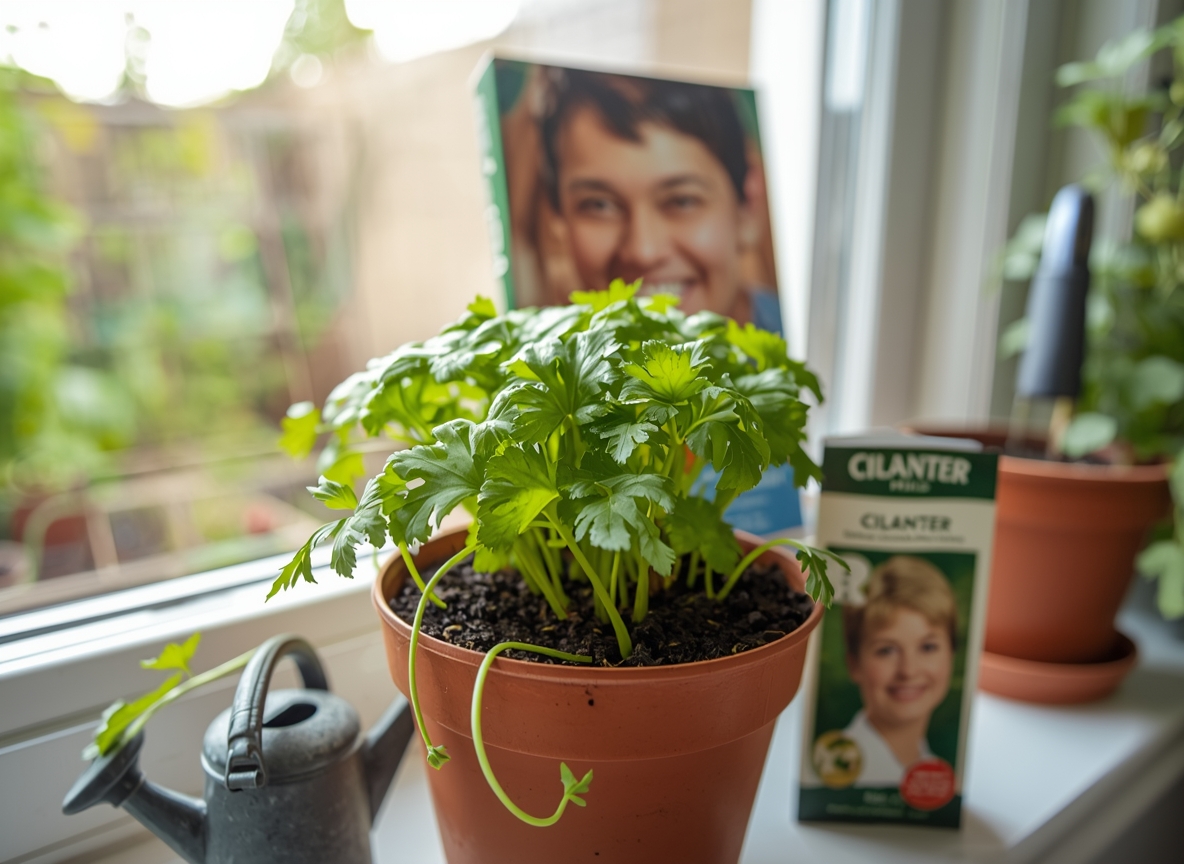
Cilantro prefers cool temperatures, moderate sunlight, and evenly moist soil. Indoor conditions especially near a bright east- or south-facing window give you reliable control over:
- Temperature (ideal: 60–70°F / 15–21°C)
- Light exposure (bright but not scorching)
- Soil moisture (neither waterlogged nor dried out)
- Protection from pests like leaf miners and aphids, which often attack outdoor cilantro
Growing indoors also reduces the biggest outdoor trigger for bolting: sudden heat spikes. In my experience, indoor-grown cilantro stays leafy longer because the plant isn’t stressed by rapid temperature swings.
What You’ll Need
- Fresh cilantro seeds (look for “slow-bolt” varieties if possible)
- A wide, shallow pot (6–8 inches deep is perfect)
- Tray for bottom watering (optional but helpful)
- Well-draining potting mix (herb or vegetable blend)
- Perlite or coco coir (if you need to lighten heavy soil)
- Grow light (optional useful for dim spaces)
- Spray bottle for gentle watering during germination
Eco-friendly options:
- Coco coir instead of peat-based mixes
- Terracotta pots for natural moisture regulation
- Organic fertilizer or compost
How to Grow Cilantro Indoors From Seed: Step-by-Step
1. Prepare the Seeds (Optional but Helpful)
Cilantro seeds are actually two seeds inside one hull. Lightly crushing them between your fingers or rolling pin helps them germinate more uniformly. Don’t pulverize just crack the casing.
2. Fill Your Pot with Light, Fluffy Soil
Fill your container with a well-draining mix. Cilantro roots dislike compacted soil. A good blend is:
- 70% potting mix
- 20% coco coir
- 10% perlite
Water the soil lightly until evenly moist think “damp sponge,” not soggy.
3. Sow Seeds Shallowly
Cilantro needs light to germinate.
- Scatter seeds evenly across the soil surface.
- Cover lightly with only 1⁄4 inch of soil.
- Mist gently so the seeds don’t shift.
4. Germinate in Faint Light, Moderate Warmth
Place the pot where temperatures stay between 65 and 75°F. Avoid direct, hot sunlight during germination.
Keep the soil consistently moist (not wet). I prefer bottom watering during germination because it prevents displacing the seeds.
Germination takes 7–14 days. Don’t worry if they come up irregularly cilantro is known for staggered sprouting.
5. Move Seedlings to Stronger Light
Once seedlings reach about 1 inch tall:
- Move the pot to brighter light (east window ideal).
- If using a grow light, keep it 6–8 inches above the plants.
Indoor cilantro needs about 5–6 hours of bright light. Too little light causes stretching and floppy stems.
6. Thin the Seedlings
Cilantro doesn’t like overcrowding. Thin seedlings to 1–2 inches apart. I usually keep the strongest clusters instead of individual plants it grows fine in small clumps.
7. Water Properly
Indoors, cilantro thrives on steady moisture. Signs you’re watering correctly:
- Soil feels springy and moist below the surface.
- Leaves stay vibrant, not wilted or curled.
- Stems remain sturdy.
Water when the top 1 inch of soil feels dry. Avoid wetting the leaves repeatedly this encourages mildew indoors.
8. Feed Lightly (But Consistently)
Cilantro grown indoors benefits from small, regular feedings:
- Every 2–3 weeks: diluted liquid organic fertilizer
- OR once a month: a small handful of compost mixed into the soil surface
Too much nitrogen makes leaves weak and floppy, so go gentle.
9. Harvest Early and Often
Start harvesting when plants are 4–6 inches tall. Always pick from the outer leaves first.
Regular harvesting delays bolting because the plant stays in “growth mode.”
Pro Tips & Best Practices
- Keep cilantro cool. If your kitchen gets hot, move the pot to a cooler room.
- Choose wider pots. Cilantro has a taproot but dislikes deep, narrow containers.
- Give it morning sun. Afternoon sun indoors often overheats seedlings.
- Avoid overwatering. If leaves turn pale and stems feel mushy, let the soil dry slightly.
- Re-sow every 3–4 weeks. Cilantro is short-lived; staggering pots ensures constant supply.
- Improve airflow. A small fan set on low prevents fungal issues in humid homes.
FAQ
Why is my indoor cilantro becoming tall and spindly?
It isn’t getting enough light. Move it to a brighter window or add a grow light placed 6 inches above the plants.
Can I grow cilantro indoors without a grow light?
Yes, if you have a bright east- or south-facing window. But dim apartments often require supplemental light.
How often should I water cilantro grown indoors?
Water when the top inch of soil feels dry. In most indoor conditions, that’s every 2–4 days.
Why does my cilantro keep dying when it sprouts?
Usually from:
- Waterlogged soil
- Heavy, compact potting mix
- Temperature above 75°F
- Lack of light after sprouting
Can I grow cilantro indoors year-round?
Yes. Indoors, cilantro grows best fall through spring, but with strong grow lights, you can grow it even in summer.
How do I keep cilantro from bolting indoors?
Keep temperatures cool, harvest regularly, and avoid strong afternoon heat from windows.
When NOT to Grow Cilantro Indoors
Indoor growing may disappoint if:
- Your home stays above 80°F regularly.
- You only have low-light north-facing windows and no grow light.
- You forget regular watering; cilantro wilts quickly in dry soil.
- You want very large, bushy plants cilantro stays modest indoors.
Safer alternatives in these cases:
- Parsley (more forgiving)
- Chives (excellent for low light)
- Mint (thrives in varying conditions)
Alternative Methods
Starting cilantro in outdoor pots
Pros:
- Faster growth
- Less light-related stress
Cons:
- More bolting
- Higher pest pressure
Growing cilantro hydroponically
Pros:
- Extremely fast growth
- Clean and mess-free
Cons:
- Requires equipment and monitoring
- Can bolt quickly under strong LED setups
Buying starter plants
Pros:
- Saves time
Cons:
- Cilantro often struggles after transplant due to its taproot
For beginners, starting cilantro indoors from seed is usually the simplest and most reliable method.
Conclusion
Growing cilantro indoors from seed is one of the most rewarding small-space gardening projects. With a bright window, cool temps, and steady moisture, you can enjoy fresh cilantro year-round without the constant grocery store trips.
The primary keyword “how to grow cilantro indoors from seed” really comes down to this: give it light, keep it cool, and harvest often.
With a little practice, you’ll find cilantro quickly becomes one of your most dependable indoor herbs. Happy sowing!
