Every product is independently reviewed and selected by our editors. If you buy something through our links, we may earn an affiliate commission at no extra cost to you.
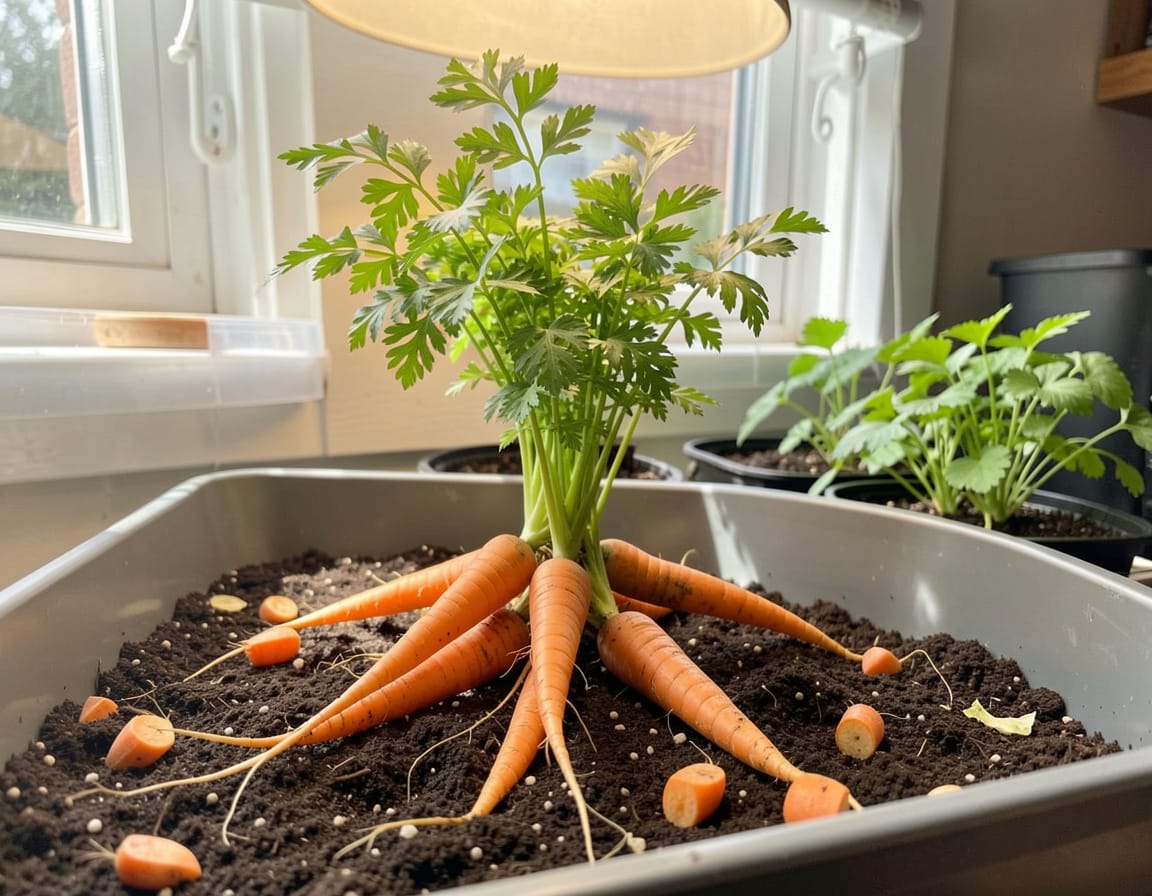
Growing carrots indoors from scraps is a fun, low‑risk way to reuse kitchen waste and get fresh carrot tops you can harvest for months. It won’t regrow full taproots (a common beginner misunderstanding), but it will give you leafy greens for salads, pesto, garnishing, and feeding to pets. In my own balcony and kitchen‑window gardens, this has become one of the easiest “set‑and‑forget” projects especially during winter or in small spaces.
Below is the most practical, experience-tested guide to help you get results quickly.
Why Growing Carrots Indoors From Scraps Works
When you cut off the top 1–2 inches of a carrot, the crown still contains dormant leaf buds. Those buds can re-sprout when given:
• Moisture • Light • A stable indoor temperature
You won’t regrow new carrot roots because taproots only form during the plant’s early development phase but the greens grow back readily. For indoor gardeners with limited space, it’s an easy way to get continuous leafy harvests with almost no supplies.
In my own tests, carrot tops regrew fastest when the crowns were kept consistently moist and given bright, indirect sunlight rather than direct window scorching.
What You’ll Need
• Fresh carrot tops (1–2 inches of the root attached) • A shallow dish or jar • Potting mix (optional, if transplanting later) • A small container with drainage (optional) • Clean water • Sunny windowsill or grow light
Eco‑friendly options: • Reuse takeout containers as propagation trays • Use rainwater or filtered water for better sprout quality
Step-by-Step: How to Grow Carrots Indoors From Scraps
1. Prepare the Carrot Scraps
Cut the top 1–2 inches off the carrot, keeping the crown intact. Avoid old or rubbery carrots—they sprout, but much slower.
2. Place the Tops in a Shallow Dish
• Set the crowns cut‑side down • Add just enough water to cover the bottom ¼ inch The crown should stay damp, not submerged.
3. Give Them Light and Warmth
Ideal placement: • A bright kitchen windowsill • Or under a grow light for 10–12 hours a day
Indoor air can be dry, especially in winter—greens grow better when humidity is moderate.
4. Refresh the Water Every 1–2 Days
This prevents mold and gnats. In my experience, skipping water changes is the fastest way to kill sprouts.
5. Watch for Sprouts (Usually 3–7 Days)
You’ll notice: • Tiny green shoots emerging • Thin white “hair roots” forming
Once greens reach 2–3 inches, they’re ready to transplant if you want fuller growth.
6. Optional: Transplant into Soil
This step encourages thicker, longer-lasting greens.
How to transplant:
- Fill a small pot with well-draining potting mix
- Place the crown on top and press lightly
- Cover the bottom with just enough soil to anchor it
Water gently and keep the soil slightly moist, never soggy.
7. Harvest Greens Regularly
You can: • Snip off outer leaves • Leave the center to keep growing
Indoors, well-lit carrot tops can produce for 2–4 months.
Pro Tips & Best Practices
• Use organic carrots if possible non-organic ones sometimes sprout slower. • Rotate the dish so sprouts don’t bend toward the light. • If stems grow pale and floppy, they need more light. • Compost scraps after productivity slows they won’t regrow forever. • Avoid deep pots; roots won’t regrow, and excess soil just stays soggy.
FAQs
Why is my carrot top turning slimy?
Likely stale water. Change water daily and keep only the bottom lightly submerged.
Can I grow carrots from scraps without sunlight?
You can, but growth will be pale and weak. A small LED grow light works well indoors.
How often should I water transplanted carrot tops?
Keep the soil lightly moist. If it feels dry at fingertip depth, water lightly.
Can I plant carrot tops directly into soil instead of rooting in water?
Yes. Water propagation is easier for beginners, but direct-soil planting also works.
Why won’t my carrot grow a new root?
Carrot roots only form during early seedling development. Scraps can sprout greens only.
When NOT to Use This Method
Avoid this method if you want:
• Full carrot roots • Large harvests • Outdoor-quality yields
Also not ideal for: • Very dark apartments (unless you use a grow light) • Homes prone to fruit-fly issues • Crowded windowsills with poor airflow
Alternative Methods
Growing Carrots Indoors From Seed
Pros: • Full roots, larger harvests • More predictable growth
Cons: • Needs deeper containers • Longer growing time (60–80+ days)
Regrowing Other Veggie Scraps (Green Onions, Lettuce)
Pros: • Faster regrowth • More consistent yields
Cons: • Shorter harvest window • Still limited to leafy growth
For beginners, carrot-top regrowing is the easiest “starter” scrap project.
Conclusion
Growing carrots indoors from scraps is a simple, low-maintenance way to turn kitchen waste into fresh greens, even in a tiny apartment or low-light kitchen window. You won’t get new carrot roots, but you will enjoy continuous leafy growth for garnishes, salads, and houseplant-style greenery.
With fresh water, decent light, and a bit of patience, this is one of the most beginner-friendly indoor gardening experiments you can try—and it’s a great way to learn how plants respond to light, moisture, and care without needing a yard or big setup.
If you’d like, I can also write: • A printable quick-start guide • A troubleshooting chart • A comparison of carrot varieties that sprout best
Just let me know!
