Every product is independently reviewed and selected by our editors. If you buy something through our links, we may earn an affiliate commission at no extra cost to you.
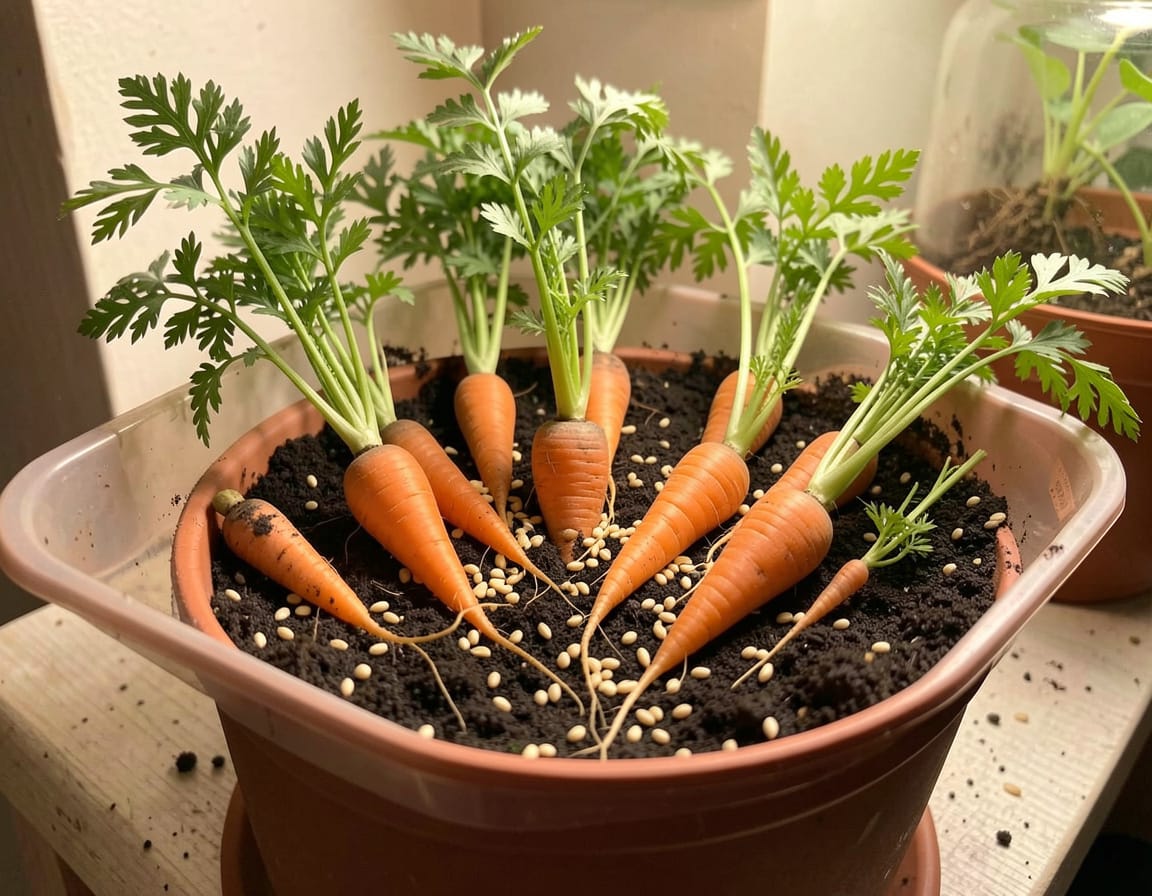
Growing carrots indoors from seed is one of the most dependable ways to get straight, tender roots without battling pests, compacted soil, or inconsistent weather. I’ve grown carrots from seed on a sunny kitchen windowsill, under inexpensive LED grow lights, and even in narrow pots tucked between herbs. Indoors, you control everything that matters soil texture, watering, and light so germination and root development are far more predictable than outdoors.
Below is a complete, experience-driven guide you can follow immediately.
Why Growing Carrots Indoors From Seed Works
Carrots truly prefer starting where they’ll finish. Their taproot is sensitive to disturbance, which is why transplanting often produces forked roots. Indoors, sowing directly into the final pot solves that problem while also giving you:
- Loose, stone-free soil
- Stable temperature (ideal for root formation)
- Consistent moisture
- No carrot flies or soil-borne insect issues
- Reliable light using windows or grow lights
In my own indoor setups, carrots grown from seed almost always turn out straighter than outdoor ones simply because the soil and moisture never fluctuate wildly.
What You’ll Need
- Deep pot:
- 6–8 inches for baby varieties
- 10–12+ inches for medium/long varieties
- Fine, loose potting mix (peat-free if possible)
- Carrot seeds (good indoor varieties: ‘Nantes’, ‘Adelaide’, ‘Little Finger’, ‘Parisian’, ‘Tendersnax’)
- Spray bottle for gentle watering
- Organic slow-release fertilizer (low nitrogen)
- Sunny window or LED grow light
- Optional: small fan for airflow, humidity dome for germination
Budget-friendly alternatives: recycled tall containers with drainage holes, simple LED shop light, homemade potting mix using coco coir + compost + perlite.
How to Grow Carrots Indoors From Seed (Step-by-Step)
1. Choose a Proper Pot
Carrots grow down, not out. Depth is more important than width.
Guide:
- Baby carrots: 6–8 inches deep
- Nantes/medium carrots: 10–12 inches
- Long carrots: 14–16 inches
I’ve had the most consistent results with deep, narrow pots because they hold moisture evenly.
2. Fill the Pot With Loose, Fluffy Soil
Carrots fork or twist in heavy soil. Fill your container with a fine-textured mix that drains well but stays lightly moist.
Soil cues to aim for:
- No sticks, bark chunks, or stones
- Light and airy when squeezed
- Water drains quickly
- Smooth texture
If the mix feels dense, add perlite or coco coir.
3. Lightly Pre-Moisten the Soil
Carrot seeds must stay evenly moist to sprout. Watering after sowing often washes the seeds around, so I always pre-moisten the mix first until it feels like a wrung-out sponge.
4. Sow Seeds Directly in the Pot
Scatter seeds evenly across the soil surface. Indoors, I aim for one seed every half-inch. This prevents overcrowding later.
Cover with a very thin layer of soil no more than 1/8–1/4 inch.
Tip from experience: carrot seeds are tiny; uneven sowing is normal. Thinning later fixes it.
5. Keep the Soil Surface Moist (Not Wet)
Carrot seeds take 7–14 days to germinate. Indoors, they dry out faster than you expect.
How to keep moisture right:
- Mist daily
- Use a humidity dome or loose plastic cover for the first week
- Avoid heavy watering this shifts seeds and creates sparse patches
Look for tiny, grass-like seedlings when they first appear.
6. Provide Strong, Direct Light
Carrots need 6–8 hours of direct sun or a grow light positioned 6–8 inches above the foliage.
Light cues:
- Sturdy, upright seedlings = good light
- Long, pale, stretched seedlings = more light needed
In winter, I rely almost entirely on grow lights because windows simply aren’t strong enough.
7. Thin Seedlings Carefully
Once plants are 1.5–2 inches tall, thin them to 1–2 inches apart (depending on variety). This step makes the biggest difference in root size.
I snip extras at soil level rather than pulling them out pulling can disturb neighboring roots.
8. Water Consistently
Carrots love even moisture. Indoors, I typically water every 2–3 days, depending on air dryness and pot size.
Watering cues:
- Soil should stay lightly moist, never bone-dry
- Overwatering leads to yellow foliage and rot
- Underwatering causes cracked, bitter roots
Lift the pot occasionally lighter weight means it’s time to water.
9. Feed Sparingly
Carrots need very little fertilizer. Too much nitrogen gives you lush greens and hairy, misshapen roots.
If your potting mix has no added nutrients, apply a low-nitrogen organic fertilizer around week 3–4.
10. Harvest Gently
Most indoor-grown carrots mature in 55–75 days depending on variety.
Check readiness by brushing soil away at the crown. If they’re the thickness you want, they’re ready.
To harvest:
- Hold the greens at the base
- Pull straight upward
- If stuck, gently loosen soil or water lightly first
Indoors, I tend to harvest slightly early carrots are sweeter and more tender before full maturity.
Pro Tips & Best Practices
- Always start with fresh seed. Carrot seeds lose viability quickly.
- Rotate pots weekly so plants don’t lean toward the window.
- Keep seedlings away from heat vents they dry out fast.
- Never reuse dense or compacted soil for carrots.
- Indoors, carrots grow best between 60–72°F.
- Use filtered water if your tap water is heavily chlorinated.
Common beginner mistake: pressing soil down too firmly when filling the pot. Compact soil guarantees twisted or stunted carrots.
FAQ
Why aren’t my carrot seeds sprouting indoors? Usually dryness. Carrot seeds must stay evenly moist for 7–14 days. Use a humidity dome or mist more frequently.
Are grow lights necessary? Not always, but carrots need strong light. Most indoor windows (especially in winter) are not sufficient.
How many carrots can I grow in one pot? A 12-inch pot can grow 10–12 medium carrots or 20–30 baby carrots.
Why are my indoor carrots thin or tiny? Overcrowding, poor light, or overly compact soil. Thinning and better lighting usually fix it.
Can I reuse the soil for the next batch? Only if it’s still loose. Indoor soil compacts over time; I usually mix in fresh compost or replace half.
When Not to Use This Method
Avoid growing carrots indoors from seed if:
- You have very poor indoor light and no grow light
- You only have shallow pots (under 6 inches)
- Your indoor temperatures consistently exceed 80°F
- Pets dig in your containers
- You use heavy, compost-dense, or clay-rich soil mixes
In these cases, leafy greens or radishes are better indoor options.
Alternative Indoor Growing Methods
Grow Bags
Pros: excellent drainage, lighter weight Cons: dry out faster; shape can slump without support
Hydroponic Carrots
Pros: extremely clean roots, controlled nutrition Cons: costlier, requires monitoring
Modular Vertical Containers
Pros: great space-savers Cons: must ensure adequate depth for roots
For beginners, traditional pots give the most reliable results with the least fuss.
Conclusion
Learning how to grow carrots indoors from seed is mostly about giving them what they crave: loose soil, steady moisture, and strong light. Indoors, these conditions are far easier to control than outdoors, which is why indoor-grown carrots often turn out straighter, sweeter, and more uniform.
Choose a deep pot, sow thinly, keep the top layer consistently moist until germination, and ensure good light. With these habits, you can enjoy crisp, homegrown carrots in nearly any living space year-round, without worrying about pests or weather.
Indoor carrot growing is simple, calm, and surprisingly rewarding. Once you harvest your first batch, you’ll likely start another right away.
