Every product is independently reviewed and selected by our editors. If you buy something through our links, we may earn an affiliate commission at no extra cost to you.
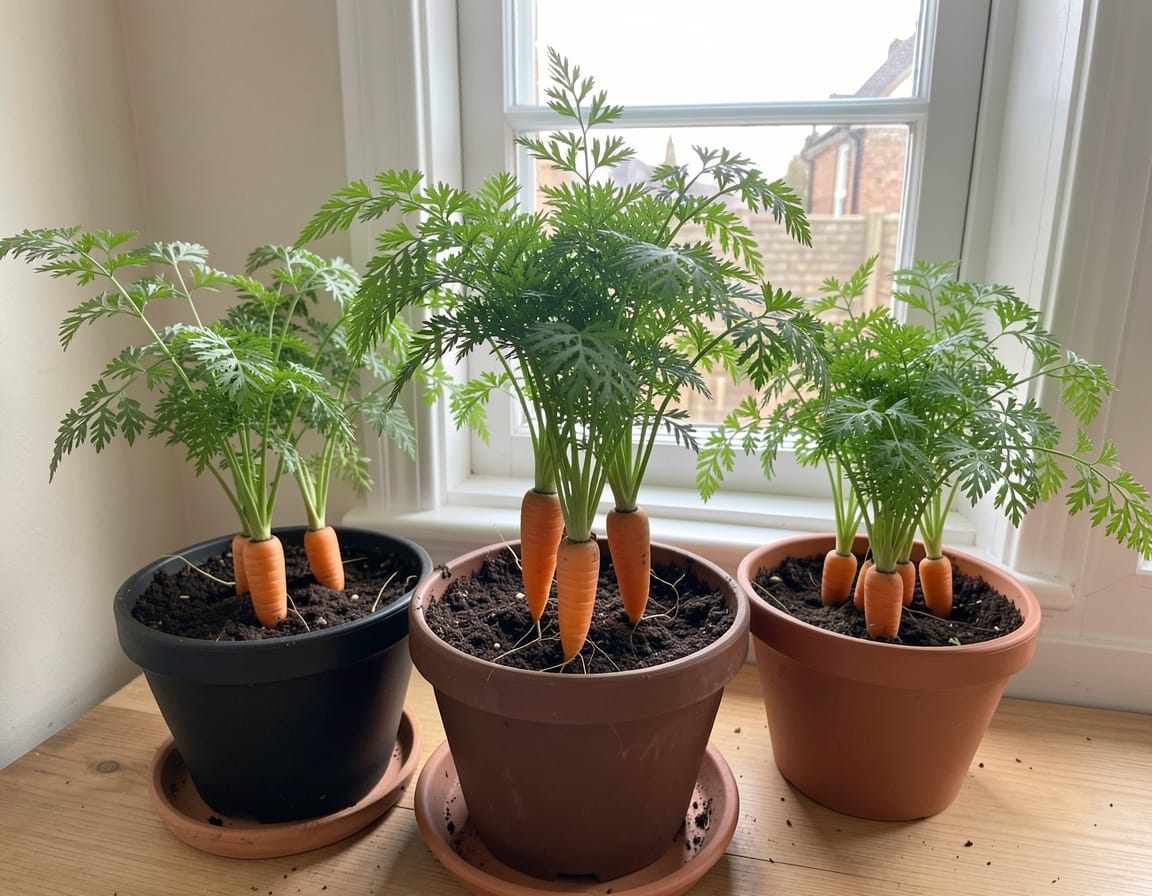
Growing carrots indoors in pots is one of the most reliable ways to get straight, tender roots without dealing with pests, poor soil, or unpredictable weather. I’ve grown carrots on a kitchen windowsill, under inexpensive grow lights, and even in a narrow pot tucked between herbs. As long as you give them loose soil, consistent moisture, and steady light, carrots adapt very well to indoor life.
Below is a complete, practical guide based entirely on real, hands-on experience.
Why Growing Carrots in Pots Indoors Works
Carrots can be fussy outdoors they fork in compact soil, crack from inconsistent watering, and attract carrot flies. Indoors, you control everything that matters:
- Soil stays loose and stone-free
- Moisture remains consistent
- Temperature is stable
- Zero carrot fly issues
- Light can be supplemented easily
This controlled environment is ideal for producing straight, flavorful roots, even for beginners.
What You’ll Need
- Deep pot (10–12 inches minimum; deeper for long varieties)
- High-quality, fine-textured potting mix (peat-free if possible)
- Slow-release organic fertilizer or compost
- Carrot seeds (ideal indoor varieties: ‘Nantes’, ‘Adelaide’, ‘Little Finger’, ‘Tendersnax’)
- Spray bottle or fine-rose watering can
- Sunny window or LED grow light
- Small fan for airflow (optional but helpful)
Budget-friendly substitutions:
- Recycled tall containers with drilled drainage holes
- Basic LED strip light
- DIY potting mix (coco coir + compost + perlite)
Step-by-Step: How to Grow Carrots in Pots Indoors
1. Choose the Right Pot
Carrot length determines your pot depth:
- Baby carrots: 6–8 inches
- Nantes or medium varieties: 10–12 inches
- Long varieties: 14–16 inches
Wider pots yield more carrots. Indoors, I prefer deeper over wider because they hold moisture more evenly.
2. Fill with Loose, Fine Soil
Carrots need soil with no clumps or stones. Fill the pot loosely don’t pack the soil down.
Soil cues:
- Feels airy and fluffy
- Drains quickly
- Holds moisture without becoming mushy
If the soil feels dense, mix in perlite or coco coir.
3. Water the Soil Before Planting
Pre-moisten the potting mix until it feels like a wrung-out sponge. This prevents seeds from washing away during early watering.
4. Sow Seeds Thinly on the Surface
Scatter seeds evenly, aiming for one seed every half-inch. Lightly cover with no more than ¼ inch of soil.
Indoor trick: sowing too densely is the biggest cause of tiny carrots later.
5. Keep the Surface Moist
Mist daily until seedlings appear (7–14 days). Dry soil = failed germination.
Covering the pot with a breathable lid helps retain moisture.
6. Provide Strong Light
Carrots need 6–8 hours of direct sun or a full-spectrum grow light placed 6–8 inches above the foliage.
Light cues:
- Healthy seedlings remain short and upright
- Pale, stretched seedlings indicate poor light
7. Thin Seedlings Carefully
Once seedlings reach 2 inches tall, thin them to 1–2 inches apart. This is non-negotiable—crowded carrots stay stunted.
I snip extras with scissors instead of pulling to avoid disturbing neighbors.
8. Water Consistently
Indoors, I water every 2–3 days or whenever the top inch feels dry. Carrots crack if they swing between very dry and very wet soil.
Good watering signs:
- Soil stays gently moist
- No standing water
- Greens stay upright and firm
9. Add Light Fertilizer (Optional)
If using plain potting mix, add a low-nitrogen fertilizer at 3–4 weeks. Too much nitrogen causes hairy roots and huge tops.
10. Harvest at Full Size
Depending on the variety, indoor carrots mature in 55–75 days. Brush back a bit of soil to check size.
To harvest: Grasp the greens at the base and pull straight up. If they resist, loosen the soil gently with your fingers.
Pro Tips & Best Practices from Real Indoor Growing
- Use fresh seeds every season carrot seeds lose viability quickly.
- Rotate pots weekly so carrots grow straight instead of leaning toward the window.
- Keep carrots away from cold winter drafts; they stop growing below 55°F.
- Avoid heavy compost blends they compact too easily inside pots.
- A small fan on low prevents mold and keeps foliage strong.
Beginner mistake to avoid: Pressing the soil too tightly when filling the pot. Dense soil guarantees forked or stubby roots.
FAQ
Why are my indoor carrots thin or tiny? Usually overcrowding or low light. Thin more aggressively and increase light intensity.
Can I grow carrots indoors without a window? Yes use a grow light. Carrots adapt very well under LED lights.
How often should I water carrots in pots indoors? Generally every 2–3 days, but always check the top inch first. Avoid fully drying out.
Why are my carrot tops turning yellow? Often from overwatering or poor drainage. Let the soil dry slightly and improve airflow.
How many carrots can I grow in one pot? In a typical 12-inch pot, 20–30 baby carrots or 10–12 medium carrots grow comfortably.
Do indoor carrots taste different? Yes. They’re usually sweeter because indoor soil stays consistently moist.
When Not to Grow Carrots Indoors
- Rooms with very poor light and no grow light option
- Pots shallower than 6 inches
- Heavy, compacted, or clay-based soil mixes
- Very hot rooms (above 80°F), which produce bitter roots
- Homes with curious pets that dig in soil
If any of these apply, grow leafy greens or radishes instead they’re more forgiving indoors.
Alternative Growing Options
Grow Bags
Pros: lightweight, breathable, great drainage Cons: dry faster; need a tray under them
Deep Window Boxes
Pros: perfect fit on sills Cons: limited depth for long carrot varieties
Hydroponic Carrots
Pros: clean roots, controlled nutrients Cons: more equipment and monitoring
For beginners, a simple deep pot with loose potting mix is the easiest, most reliable method.
Conclusion
Learning how to grow carrots in pots indoors is mostly about mastering three things: light, moisture, and loose soil. Indoors, you can control all of these better than outdoors, which is why potted indoor carrots often turn out straighter, sweeter, and more tender. Choose a deep pot, sow thinly, give bright light, and water steadily these small habits make all the difference.
Once you harvest your first crisp indoor-grown carrot, you’ll appreciate just how practical and satisfying this method can be. Let your next batch grow a little longer, experiment with new varieties, and enjoy the steady rhythm of indoor gardening year-round.
