Every product is independently reviewed and selected by our editors. If you buy something through our links, we may earn an affiliate commission at no extra cost to you.
Lavender is one of the most rewarding container plants you can grow but starting it from seed in pots can be frustrating. Many beginners tell me their lavender seeds “just sit there” without sprouting, or seedlings die off long before they look like the fragrant, bushy plants in garden photos.
This happens because lavender seeds need specific conditions: consistent warmth, very light soil, and careful watering. In my own balcony and terrace pots, I’ve learned that lavender behaves differently from fast sprouting herbs like basil it rewards patience, gentle moisture, and bright light.
The good news: once you understand its pace and preferences, growing lavender from seeds in pots becomes straightforward and surprisingly satisfying.
Why Growing Lavender From Seeds in Pots Works
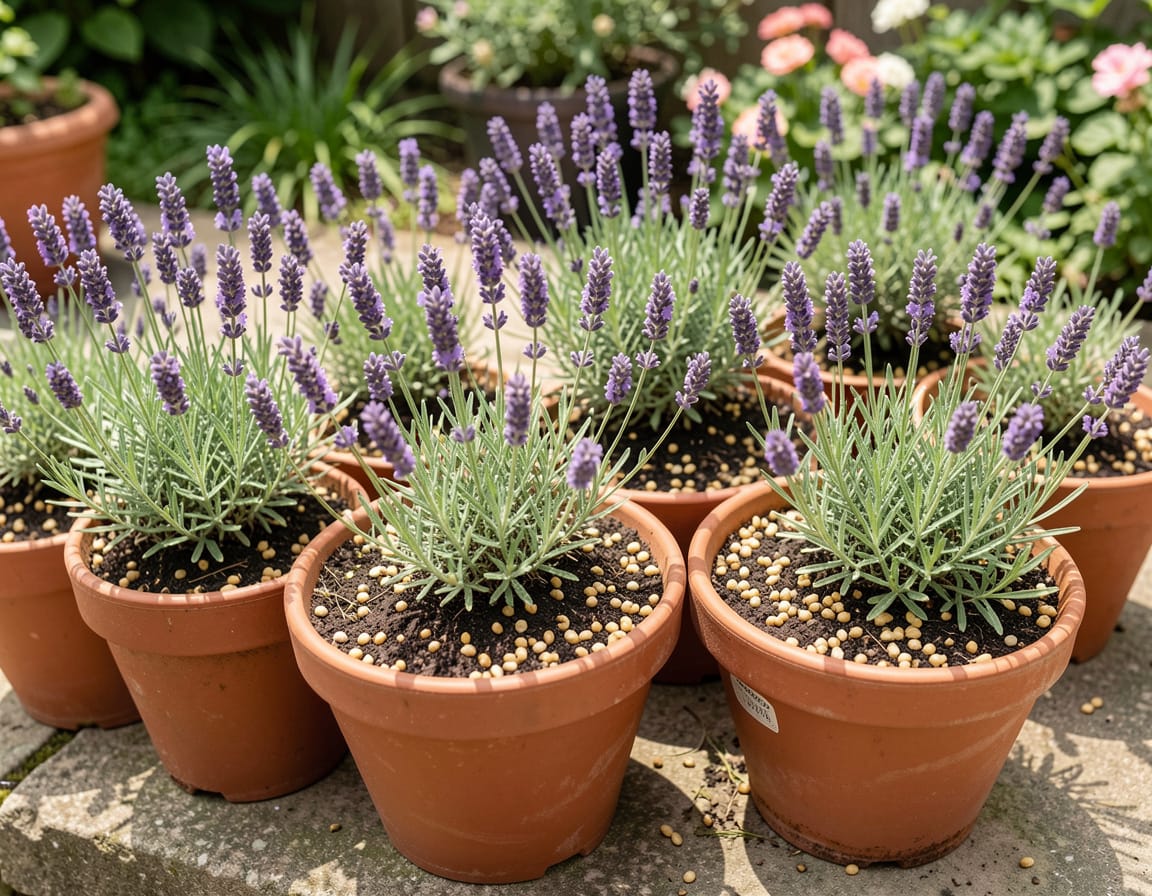
Growing lavender in pots gives you far more control than growing it directly in the ground. Here’s why the method works:
- Lavender hates soggy soil. Pots with good drainage prevent roots from sitting in water.
- Seeds germinate better when you can manage temperature and moisture closely.
- Containers let you move lavender into brighter or warmer spots as needed.
- Young lavender seedlings are delicate pots keep them safe from heavy rain, pests, and cold nights.
In real gardens, most failed lavender seedlings come from overwatering, dense soil, or insufficient sunlight. Pots help you avoid all three.
What You’ll Need
- Lavender seeds (English lavender germinates more reliably)
- Small seedling pots or a shallow seed tray
- A larger terracotta or ceramic pot for transplanting (6–10 inches)
- Well‑draining potting mix (cactus or succulent mix works well)
- Perlite or coarse sand (to lighten soil)
- Spray bottle for gentle watering
- Clear cover, humidity dome, or plastic wrap with air holes
- Labels (lavender seedlings look very similar to thyme/oregano at first)
- Optional: heat mat for cooler climates
Budget-friendly alternatives:
- Recycled yogurt cups with drainage holes make great seed-starting pots.
- You can mix your own soil: 60% potting mix + 40% sand/perlite.
Step-by-Step: How to Grow Lavender From Seeds in Pots
1. Start at the Right Time
- Best indoors: late winter to early spring.
- If you live in a warm climate, you can start any time, but light levels matter seedlings need very bright light.
2. Prepare a Light, Fast-Draining Soil Mix
Lavender seed soil should feel fluffy, not dense. Mix:
- 2 parts potting mix
- 1 part perlite or coarse sand
This prevents the common beginner issue of “mushy roots.”
3. Fill Pots and Lightly Moisten the Mix
Use your spray bottle to mist the soil until it feels lightly damp never soggy. If water drips out the bottom, it’s too wet.
4. Sow the Lavender Seeds on the Surface
This is where many gardeners go wrong. Lavender seeds need light to germinate.
- Sprinkle seeds on the soil surface.
- Gently press them in with your fingers.
- Do not bury them.
5. Cover Lightly and Maintain Warmth
Place a humidity dome or clear plastic cover over the pots.
Why:
- Lavender seeds germinate best at 18–21°C (65–70°F).
- Consistent moisture helps, but full humidity isn’t needed vent the cover daily.
6. Provide Bright, Indirect Light
Keep the pots where they get:
- Strong indirect light OR
- 12–14 hours under a grow light
Do not place seeds under full midday sun they dry out too fast.
7. Water Carefully
Use a spray bottle and mist only when the surface looks dry.
Signs of overwatering:
- Green algae on soil
- Mossy surface
- Seedlings collapsing
Lavender seedlings prefer the soil to slightly dry out between mistings.
8. Wait Patiently for Germination
Lavender takes time often 14–28 days. Some batches take up to 40 days. This slow start is normal.
9. Transplant Seedlings When They’re 2–3 Inches Tall
Move them to a larger pot with:
- 1 drainage hole minimum
- Fast-draining soil
- A sunny location (4–6 hours sun)
Terracotta pots work best because they allow excess moisture to evaporate.
10. Care for Young Lavender in Pots
- Water only when the top 2–3 cm of soil is dry.
- Gradually introduce more sun.
- Fertilize lightly once a month with a gentle, organic feed.
Lavender thrives on neglect too much water or fertilizer slows growth.
Pro Tips & Best Practices
- Use English lavender seeds (Lavandula angustifolia). They germinate more reliably.
- Keep seedlings away from cold drafts lavender hates sudden temperature drops.
- If seedlings get leggy, move them to brighter light immediately.
- Don’t rush transplanting; early transplant shock is common.
- Avoid peat-heavy mixes lavender prefers gritty soil.
- Once mature, let soil dry nearly fully before watering.
Common Beginner Mistakes to Avoid
- Burying the seeds (reduces germination).
- Using moisture-retentive potting soil.
- Keeping soil constantly wet.
- Starting seeds in low-light rooms.
FAQ
Why are my lavender seeds not germinating?
Usually too little light, too much water, or soil that’s too dense.
Can lavender grow indoors in pots?
Yes, but it needs very bright light most indoor windows are too dim without a grow light.
How often should I water lavender seedlings?
Mist lightly only when the soil surface looks dry. Overwatering kills more seedlings than underwatering.
Do lavender seeds need cold stratification?
Some varieties benefit from it, but English lavender usually germinates without it.
Why are my lavender seedlings falling over?
This is often damping-off, caused by excess moisture and poor air circulation.
Can I grow lavender from seeds on a balcony?
Yes balcony gardeners often have great success as long as the pot gets 4–6 hours of sun.
When NOT to Grow Lavender From Seeds in Pots
Avoid seed-starting if:
- You want flowers quickly seed-grown lavender takes months.
- Your home is very dark or cold in winter.
- You tend to overwater sensitive seedlings.
In these cases, nursery-grown lavender plants are easier.
Alternative Methods
- Propagating from softwood cuttings Fast, high success rate, and identical to the parent plant.
- Buying established lavender Best for beginners who want instant greenery.
Seeds are ideal for:
- Growing many plants cheaply
- Long-term gardeners who enjoy the process
- Warm, bright homes with good air circulation
Cuttings are ideal for:
- Quick results
- Balcony gardeners with limited time
Conclusion
Growing lavender from seeds in pots takes patience, but the results are worth it. With light, well-draining soil, careful watering, and plenty of light, you can raise strong, fragrant lavender from tiny seeds. The key is consistency not perfection. Follow the steps above, give the seedlings time, and you’ll have beautiful, resilient lavender plants that thrive in pots for years.
If you stay patient and keep watering light, lavender usually rewards you with steady, reliable growth.
