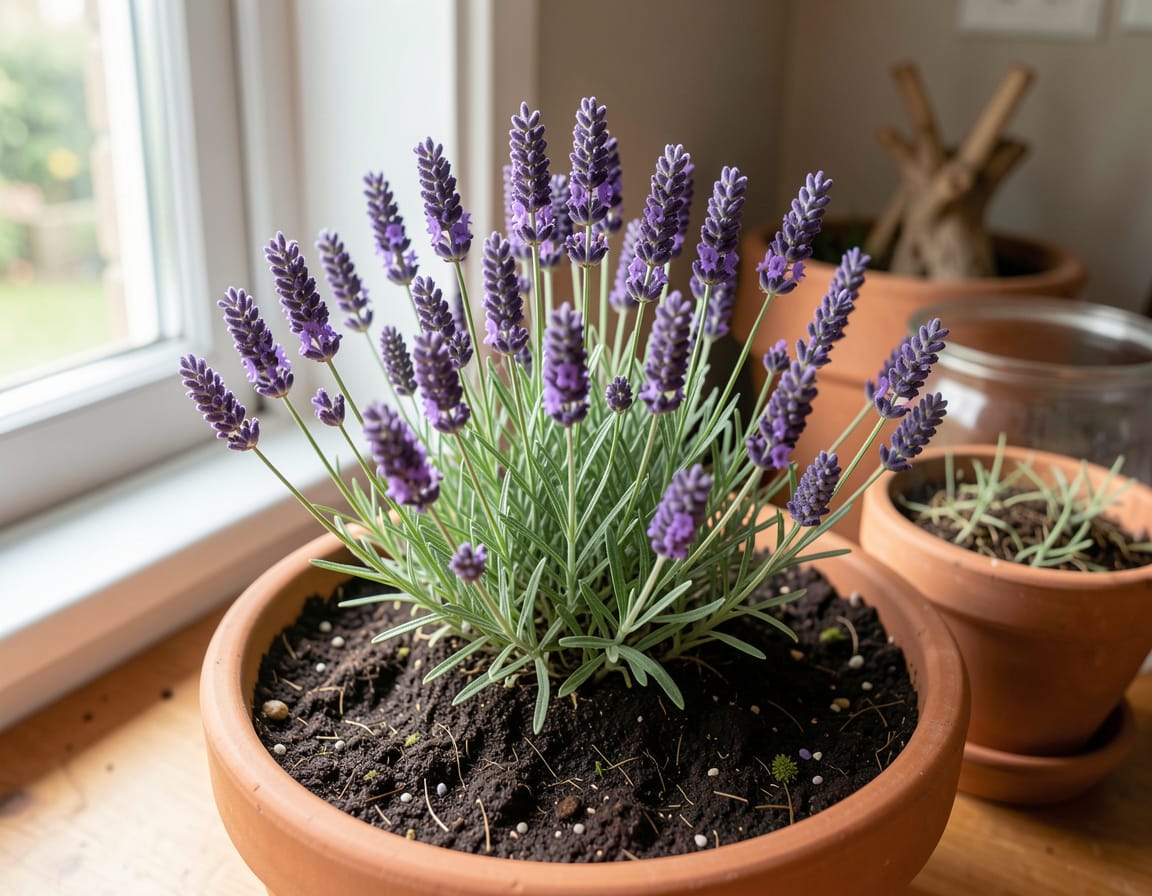
Every product is independently reviewed and selected by our editors. If you buy something through our links, we may earn an affiliate commission at no extra cost to you.
Growing lavender from seed indoors isn’t difficult once you understand how lavender behaves in its natural Mediterranean environment cool winters, bright sun, and dry, airy soil. When I first tried starting lavender seeds on my kitchen windowsill, I had almost zero germination. The breakthrough came when I began cold‑stratifying the seeds and switched to a gritty, fast‑draining mix. Since then, I’ve raised dozens of healthy lavender seedlings indoors each winter.
Below is a clear, practical guide on how to grow lavender from seed indoors, written for beginners and small‑space gardeners.
Why Lavender Seeds Can Be Tricky
Lavender seeds:
- Need a “winter signal” (cold stratification)
- Sprout slowly 14 to 30+ days
- Hate soggy, humid conditions
- Become leggy fast without strong light
Once you mimic their natural cues, germination becomes far more reliable.
Why This Method Works
This approach recreates lavender’s natural cycle:
- Cold period for dormancy break
- Bright light for compact growth
- Fast‑draining soil for strong roots
- Very careful watering to avoid damping-off
Indoors, this method consistently produces sturdy plants ready for transplant by late spring.
What You’ll Need
- Lavender seeds (English lavender is the easiest)
- Seed tray or small pots
- Seed-starting mix (light, airy, fast-draining)
- Perlite or coarse sand
- Spray bottle
- Humidity dome or clear cover
- Refrigerator (for stratification)
- Strong light (sunny south window or grow light)
Eco-friendly options: biodegradable pots, coir-based mixes, LED lights.
Step-by-Step: How to Grow Lavender From Seed Indoors
1. Cold-Stratify the Seeds (Crucial Step)
Lavender seeds sprout best after a cold period.
How to do it:
- Lightly dampen a paper towel.
- Spread the seeds on half and fold it over.
- Place inside a labeled plastic bag.
- Refrigerate for 3–4 weeks.
This step dramatically increases germination.
2. Prepare the Soil
Lavender needs dry, airy soil.
Mix:
- 2 parts seed-starting mix
- 1 part perlite or coarse sand
The soil should feel loose and slightly dry not rich or heavy.
3. Sow the Seeds (Surface-Sow Only)
Lavender seeds need light to germinate.
- Fill trays or small pots
- Mist the surface so it’s lightly damp
- Sprinkle seeds on top
- Press lightly to ensure contact
- Do not cover with soil
- Mist again gently
Cover with a humidity dome for the first stage only.
4. Give Them Bright, Consistent Light
Place trays in:
- A bright south-facing window or
- Under grow lights for 14–16 hours per day
Grow lights make a huge difference my indoor seedlings are compact and sturdy instead of stretched.
Ideal temperature: 18–21°C (65–70°F).
5. Be Patient Lavender Sprouts Slowly
Expect sprouts in:
- 14–30 days
- Sometimes longer
Keep the top of the soil barely damp never soaked.
6. Remove the Dome After Sprouting
Once seedlings appear:
- Remove the humidity dome
- Increase airflow (small fan on low, optional)
- Keep them close to the light source
This prevents damping-off disease.
7. Water Carefully
Lavender seedlings prefer to be a little dry.
Water:
- When the top 1 cm is dry
- From the bottom if possible
- Using small amounts just enough to moisten
Overwatering kills more lavender seedlings than anything else.
8. Pot Up When They Have 2–3 True Leaves
- Transplant into larger pots (7–10 cm)
- Use a gritty mix: potting soil + extra perlite
- Handle seedlings by the leaves, not stems
At this stage, lavender starts forming its woody base.
9. Harden Off Before Moving Outdoors
Start 1–2 weeks before transplanting.
- Place seedlings outside for 1 hour
- Increase time daily
- Avoid harsh midday sun at first
Lavender seedlings sunburn quickly without gradual exposure.
Pro Tips & Best Practices
- English lavender (Lavandula angustifolia) germinates best from seed.
- Keep seeds very lightly moist—lavender hates soggy soil.
- Use a grow light to prevent long, weak seedlings.
- Add grit or sand to soil for better airflow.
- Rotate trays daily if using window light.
Common beginner mistakes:
- Skipping cold stratification
- Burying seeds too deep
- Keeping soil wet under a dome
- Not giving enough light
- Growing in rich, heavy soil
FAQ
1. How long does lavender take to grow from seed indoors? Around 3–4 weeks to sprout, 10–12 weeks to reach transplant size.
2. Why are my lavender seedlings leggy? They’re not getting enough light move them closer to a grow light.
3. Why are my seeds not sprouting? Most common causes: no stratification, old seeds, soggy soil, or low light.
4. Can lavender grow indoors permanently? It can survive, but lavender thrives outdoors where it gets strong sun and airflow.
5. When should I start lavender seeds indoors? 8–12 weeks before your last expected frost.
Alternatives to Seed Starting
Winter sowing
- Easy
- Naturally cold-stratified
- Slower spring growth
Buying starter plants
- Fast, reliable
- More expensive
Cuttings
- Very easy
- Produces identical plants
- Not suitable for starting from seed packets
Conclusion
Now that you know how to grow lavender from seed indoors, the keys are simple: cold‑stratify, use a light and gritty soil mix, give strong light, and water sparingly. Once you understand lavender’s preference for airy, dry conditions, your seedlings will grow into strong, fragrant plants ready for a sunny outdoor spot.
