Every product is independently reviewed and selected by our editors. If you buy something through our links, we may earn an affiliate commission at no extra cost to you.
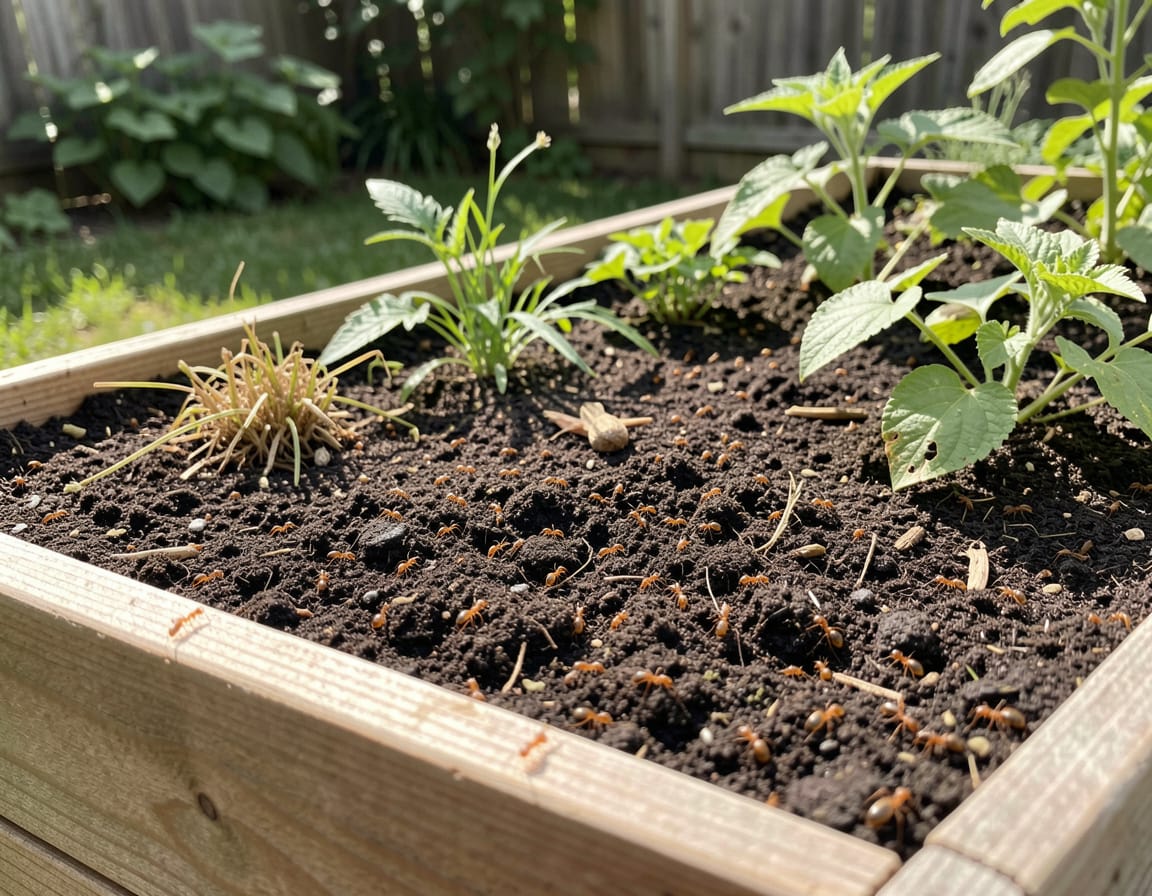
Anyone who gardens long enough eventually finds ants nesting in a raised garden bed. I’ve dealt with ant colonies in my own wooden beds more than once usually showing up in warm, dry spells when the soil becomes a perfect place for tunneling. Ants themselves don’t usually harm plants directly, but they do protect aphids, disturb young roots, and make it uncomfortable to work in the soil. The good news is that you can handle the problem without chemicals that harm soil life, pollinators, or your crops.
Here’s exactly how to get rid of ants in a raised garden bed naturally, based on hands‑on experience and real testing in my own beds.
Why Ants Move Into Raised Garden Beds
Ants settle in raised beds because the conditions are ideal:
- Warm, loose soil
- Dry top soil during heat spells
- Protection from predators
- Aphids providing honeydew nearby
They don’t usually eat plants, but their tunnels can disturb roots and their protection of aphids leads to bigger pest problems.
Why These Natural Methods Work
Natural ant control focuses on:
- Increasing soil moisture (ants hate soggy conditions)
- Breaking up tunnels so colonies relocate
- Using scents and materials ants avoid
- Interrupting their relationship with aphids
Instead of harming the entire soil ecosystem, these methods gently push ants out while keeping worms, pollinators, and beneficial microbes safe.
What You’ll Need
You don’t need anything expensive. Most items are already in a home gardener’s shed.
- Watering can or hose with soft spray
- Compost or finished mulch
- Cinnamon powder
- Diatomaceous earth (food‑grade only)
- Boiling water (for spot‑targeting outside the bed only)
- Neem oil or insecticidal soap (if aphids are present)
- Small spade or hand fork
Eco-friendly options: coffee grounds, citrus peels, soapy water, and wood ash can also help.
Step-by-Step Guideline : How to Get Rid of Ants in a Raised Garden Bed Naturally
1. Water the Soil Deeply
Ants prefer dry, crumbly soil. If your bed has been drying out between waterings, they’ll move right in.
Steps:
- Soak the bed thoroughly so water reaches 6–8 inches deep.
- Repeat daily for 2–3 days.
In my beds, this alone often pushes colonies to relocate.
2. Disturb Their Tunnels
Once the soil is softened, break the tunnel system.
- Use your hand fork to gently stir the top 3–5 inches of soil.
- Avoid disturbing plant roots.
- Do this every day for several days.
Ants abandon nests that aren’t stable. This method is slow but very effective.
3. Use Cinnamon as a Natural Repellent
Cinnamon works surprisingly well.
How to apply:
- Sprinkle a thick line around active ant areas.
- Work a small amount into the soil surface.
- Reapply after watering or rain.
From experience: cinnamon doesn’t kill ants, but it stops them from returning to the nest area.
4. Add Moisture-Holding Mulch
Ants dislike cool, damp environments.
Use:
- Compost
- Shredded leaves
- Straw
- Fine bark mulch
Spread a 1–2 inch layer. This keeps the soil moist longer and discourages nesting.
5. Apply Food-Grade Diatomaceous Earth (Only When Dry)
Diatomaceous earth (DE) is a natural, mechanical insect killer safe for people, pets, and soil life, but deadly to ants.
How to use:
- Wait until the soil surface is completely dry.
- Dust a light layer over ant trails and nest entries.
- Do NOT apply directly on wet soil it clumps and becomes ineffective.
Avoid blowing the dust; it can irritate lungs.
6. Remove Aphids (The Ants’ Food Source)
In nearly every raised-bed ant problem I’ve had, aphids were also present.
Natural ways to remove aphids:
- Spray with soapy water (1 tsp mild soap per litre).
- Use neem oil every 7 days until clear.
- Blast them off with a hose jet.
When the honeydew disappears, ants often move on.
7. Use Boiling Water (But Only Outside the Raised Bed)
Never pour boiling water into soil where you grow food it kills beneficial microbes and roots.
Instead:
- Pour boiling water on ant mounds outside the bed.
- Target access points or trails leading toward the garden.
This disrupts their colony without harming your vegetables.
Pro Tips & Best Practices
- Keep soil evenly moist during hot weather dry beds invite ants.
- Plant strong-scented herbs (mint, thyme, rosemary) along edges they naturally deter ants.
- Check the bed weekly for aphids; tackling them early prevents 90% of ant issues.
- Use citrus peels or coffee grounds in small amounts they repel ants but won’t fix a large colony alone.
- Install a drip line or mulch deeply to stabilize moisture levels.
Common beginner mistakes:
- Pouring vinegar or boiling water directly into the bed kills soil life.
- Using too much diatomaceous earth it can dry out beneficial insects.
- Ignoring aphids, which are usually the root cause of ant problems.
- Allowing soil to stay dry at the surface for weeks.
FAQ (Beginner-Friendly)
1. Will ants hurt my vegetable plants? They don’t eat plants, but they farm aphids, disturb seedlings, and disrupt soil structure.
2. How long does it take to get rid of ants naturally? Most colonies move within 3–7 days once moisture and disturbance increase.
3. Is diatomaceous earth safe for vegetables? Yes food-grade DE is safe. Avoid using it on flowers to protect pollinators.
4. Can I use soap water directly on ants? Yes, soapy water kills ants on contact, but it’s a short-term fix. Use it only on visible trails.
5. Should I remove my plants to deal with ants? No disturbing the soil gently is usually enough. Removing plants stresses the garden more than the ants do.
6. Why do ants keep coming back? Usually because:
- Soil stays dry
- Aphids are present
- Raised beds have lots of loose organic matter
Fix those and they don’t return.
When NOT to Use Certain Methods
Avoid:
- Boiling water inside the bed (kills beneficial life)
- Large amounts of vinegar (changes soil pH)
- Chemical ant baits in food-growing areas
- Heavy diatomaceous earth application during bloom season (may harm pollinators)
If ant numbers are extremely high or soil is extremely dry, adjust watering and shade first ants often disappear once moisture improves.
Natural Alternatives
Beneficial nematodes
- Safe for gardens
- Reduce ant larvae populations
- Best for large infestations
Boric acid bait stations (OUTSIDE the bed only)
- Very effective
- Must be placed away from soil where food grows
- Avoid if pets or children can access them
Predatory insects (ladybugs, lacewings)
- Reduce aphids
- Indirectly reduce ants
Conclusion
Now that you know how to get rid of ants in a raised garden bed naturally, focus on the two most reliable strategies:
- Keep soil evenly moist.
- Break up tunnels and remove aphids.
Most colonies relocate within a week when conditions become less appealing. Natural methods are slower than chemicals, but they protect your soil, your food, and the beneficial creatures working in your garden.
