Every product is independently reviewed and selected by our editors. If you buy something through our links, we may earn an affiliate commission at no extra cost to you.
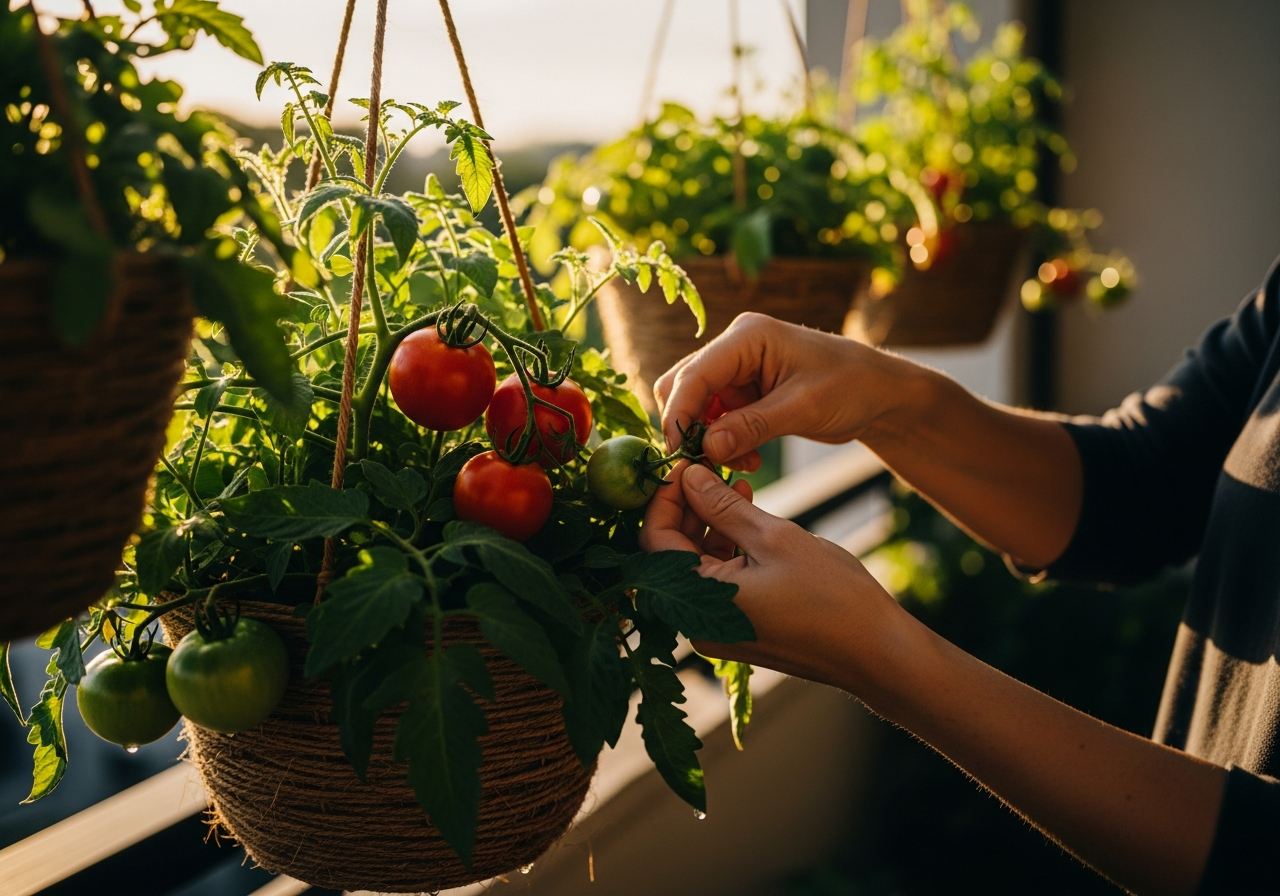
Growing tomatoes in hanging baskets looks charming and saves floor space, especially on balconies, terraces, and small patios. But tomatoes in hanging pots behave differently from tomatoes in ground beds or large containers. They dry out faster, need steadier nutrients, and rely on proper branch support to stay healthy. After years of growing cherry and dwarf tomato varieties in hanging baskets on my own terrace, I’ve learned exactly what keeps them productive and what causes sudden wilting, poor fruiting, or nutrient burn.
This guide walks you through how to care for hanging tomato plants with practical, real‑world tips beginners can apply immediately.
Why Hanging Tomato Plants Need Special Care
Hanging tomato plants are exposed to more sun, heat, and wind, which affects:
- Water retention – soil dries extremely quickly
- Nutrient levels – fertilizers leach out faster
- Plant balance – stems can snap if unsupported
- Fruit weight – heavy clusters strain the branches
But with the right care, hanging tomatoes can produce cleaner fruit, fewer pests, and faster drying foliage, reducing fungal issues like blight and mildew.
Why This Method Works
Growing tomatoes in hanging pots creates:
- Great airflow, keeping foliage dry and healthier
- Sun exposure on all sides, which improves ripening
- Less soil contact no splitting from ground moisture swings
- Natural cascading growth for trailing or cherry varieties
From hands-on experience, hanging plants are happiest when roots stay cool and consistently moist, and when you choose varieties bred for compact or trailing growth.
What You’ll Need
- 10–14 inch hanging pot (bigger = better moisture control)
- Premium potting mix (light, rich, well-draining)
- Compost or worm castings
- Slow-release organic fertilizer (e.g., tomato/vegetable blend)
- Liquid feed (tomato fertilizer, seaweed, or fish emulsion)
- Mulch (coco chips, straw, pine needles)
- Sturdy hook or wall bracket
- Optional: self-watering hanging basket
Eco-friendly options: compost-based soil, organic granular fertilizers, coconut coir lining.
Step-by-Step: How to Care for Hanging Tomato Plants
1. Choose the Right Tomato Variety
For hanging pots, these types perform best:
- Trailing tomatoes (e.g., Tumbling Tom, Tumbler)
- Cherry and grape varieties
- Dwarf or compact bush tomatoes
- Determinate plants (less aggressive growth, fewer stakes needed)
Avoid large indeterminate varieties they quickly outgrow baskets.
2. Use the Right Soil Mix
Tomatoes need rich but airy soil.
Mix:
- 2 parts potting mix
- 1 part compost or worm castings
- A handful of perlite for drainage
Avoid garden soil it compacts and overheats in a hanging basket.
3. Plant Properly
- Bury two-thirds of the stem below the soil. Tomatoes form roots along the buried stem, creating a stronger root system.
- Leave room at the top for mulch.
This single step dramatically improves plant stability in hanging pots.
4. Water Deeply and Frequently
This is the biggest challenge.
Hanging tomato plants need:
- Daily water in warm weather
- Twice daily in hot, windy, or dry climates
- A deep soak until water runs out of the drainage holes
Use the finger test: If the top 1–2 inches are dry, water immediately.
Signs of underwatering:
- Drooping leaves (recover when watered)
- Blossom drop
- Small or cracked tomatoes
5. Feed Consistently
Tomatoes in hanging pots deplete nutrients quickly.
Recommended feeding schedule:
- Slow-release fertilizer at planting
- Liquid feed every 7–10 days once fruiting starts
What I personally use: alternating seaweed and tomato fertilizer keeps foliage strong without overloading them.
6. Support the Branches
Even in hanging baskets, tomatoes need help.
Options:
- Soft ties to keep heavy clusters from snapping
- Mini trellis set inside the basket
- Gentle clips to stabilize fruiting stems
Supporting stems prevents sudden mid-season collapse something I learned the hard way.
7. Mulch the Surface
A light mulch helps regulate soil temperature and prevent rapid drying.
Good mulches:
- Coco chips
- Shredded straw
- Leaf mold
Avoid heavy bark it’s too chunky for small pots.
8. Prune Lightly
Pruning depends on the variety.
For trailing varieties:
- Remove dead leaves
- Snip small, useless suckers
- Don’t over-prune these plants grow more like cascades
For compact bush types:
- Remove yellowing or crowded leaves
- Clear lower leaves for better airflow
9. Harvest Regularly
Frequent picking encourages more fruit.
Harvest tomatoes when:
- Fully colored
- Slightly soft to the touch
- Warm morning sun hasn’t dried them out completely
Avoid letting ripe fruit hang too long they attract pests.
Pro Tips & Best Practices
- Use light-colored baskets in hot climates to avoid root overheating.
- Turn the basket weekly so all sides receive even light.
- If heavy rain arrives, move the basket to avoid runoff washing out nutrients.
- For balconies with wind, add a drip tray to reduce soil splatter.
- Self-watering baskets are a lifesaver in summer.
Common beginner mistakes:
- Watering lightly instead of soaking deeply
- Using a pot that’s too small
- Growing large varieties that overwhelm the basket
- Skipping feeding (nutrient deficiency appears fast!)
FAQ (Beginner-Friendly, Realistic Questions)
1. Why are my hanging tomato leaves curling? Usually heat stress or underwatering. Give a deeper soak and shade during the hottest afternoon hours.
2. Can I grow hanging tomatoes in partial shade? They’ll survive, but fruiting drops significantly. Aim for at least 6 hours of direct sun.
3. Why are my tomatoes splitting? Moisture swings common in hanging pots. Keep watering consistent and deep.
4. Do I need to prune hanging tomatoes? Trailing varieties need minimal pruning. Bush types benefit from removing lower leaves and crowded suckers.
5. Why is my plant turning yellow? Most often nutrient loss fertilizers wash out quickly from hanging baskets. Feed more consistently.
6. Can I grow full-size tomatoes in a hanging pot? Not recommended. They become heavy, unstable, and unmanageable.
When NOT to Use Hanging Tomato Pots
Avoid this method if:
- You cannot water at least once per day in summer
- You’re growing large indeterminate tomatoes
- Your balcony or terrace gets strong, constant wind
- Temperatures regularly exceed 38°C (100°F) with full sun
In these cases, ground containers or raised beds are safer.
Alternative Growing Methods
Regular containers (5–10 gallons)
- Pros: Most stable moisture, great for all tomato types
- Cons: Uses floor space
Grow bags
- Pros: Breathable, inexpensive, good drainage
- Cons: Dry fast, may need trays
Raised beds
- Pros: Large root zone, best yields
- Cons: Needs more space
Upside-down planters
- Pros: No staking
- Cons: Harder watering, limited varieties
Hanging pots are best for small-fruited, trailing tomatoes.
Conclusion
Now that you know how to care for hanging tomato plants, you’re ready to grow productive, cascading plants even in small spaces. Prioritize consistent watering, steady feeding, and choosing the right tomato variety. With the right care, hanging tomatoes stay healthy, produce heavily, and look beautiful throughout the season.
