Every product is independently reviewed and selected by our editors. If you buy something through our links, we may earn an affiliate commission at no extra cost to you.
If you’ve ever brought home a trailing pothos, string of pearls, ivy, or wandering Jew and wondered why the vines stay sparse, turn yellow, or simply stop growing, you’re not alone. Trailing plants look effortless, but in real home gardens especially indoors most struggle because they don’t get the light, watering rhythm, or pruning they naturally expect.
After raising trailing plants on my balcony, windowsills, and shaded outdoor corners for years, I’ve learned that their care is simpler than it seems once you understand a few plant-behavior basics. This guide breaks down how to care for trailing plants using practical steps you can apply today, even if you’re a complete beginner.
Why This Method Works
Trailing plants naturally grow in environments where their stems hang from trees, rocky ledges, or dense shrubs. That means:
- They expect bright, filtered light from above.
- Their vines lengthen only when the plant has enough energy (light + nutrients).
- Pruning triggers fuller, bushier growth just like trimming hair.
- Consistent moisture not sogginess is key to preventing leaf drop and root rot.
Beginners often miss that trailing plants behave differently from upright houseplants. Growth happens at the tips, and if those tips aren’t getting enough light or water, the whole vine slows down.
These care steps work because they mimic how trailing plants grow in nature while adapting to small homes, balconies, or apartments.
What You’ll Need
- A bright spot with indirect light (east or north window is ideal)
- Well-draining potting mix
- Optional: perlite, coco coir, or orchid bark for extra airflow
- Pots with drainage holes
- Clean pruning scissors
- A small watering can with a narrow spout
- Organic fertilizer (worm castings, fish emulsion, or a gentle balanced liquid feed)
- Hanging planters, shelves, or wall brackets (optional but helpful)
Budget-friendly alternatives:
- Reuse yogurt containers with holes punched in the bottom
- Mix your own soil: 2 parts potting mix + 1 part perlite
- Use household scissors disinfected with rubbing alcohol
How to Care for Trailing Plants: Step-by-Step
1. Give them the right light (the #1 factor)
Most trailing plants hate dark corners. In my own home, the difference between a pothos near a bright window vs. a dim shelf is night and day literally 5x the growth.
Best spots:
- Within 2–4 feet of a bright, indirect-light window
- On a balcony with filtered sun
- Under LED grow lights for low-light homes
Avoid:
- Harsh midday sun (bleaches leaves)
- Deep shade (thin, leggy vines)
2. Water only when the top soil dries out
Trailing plants often sit in hanging pots that collect moisture at the bottom. That’s where beginners accidentally drown them.
Watering rule:
- Stick your finger 1–2 inches into the soil.
- If it’s dry at that depth, water thoroughly.
- Let excess water drain completely.
Signs of underwatering:
- Crispy tips
- Drooping vines
- Soil pulling away from pot edges
Signs of overwatering:
- Yellowing leaves starting at the base
- Squishy stems
- Fungus gnats
3. Use airy, fast-draining soil
Trailing roots need oxygen. Heavy soil = rot.
Best soil mix:
- 2 parts all-purpose potting mix
- 1 part perlite
- Optional: ½ part coco chips or bark
This mix has saved my ivies and pothos from chronic yellowing in humid weather.
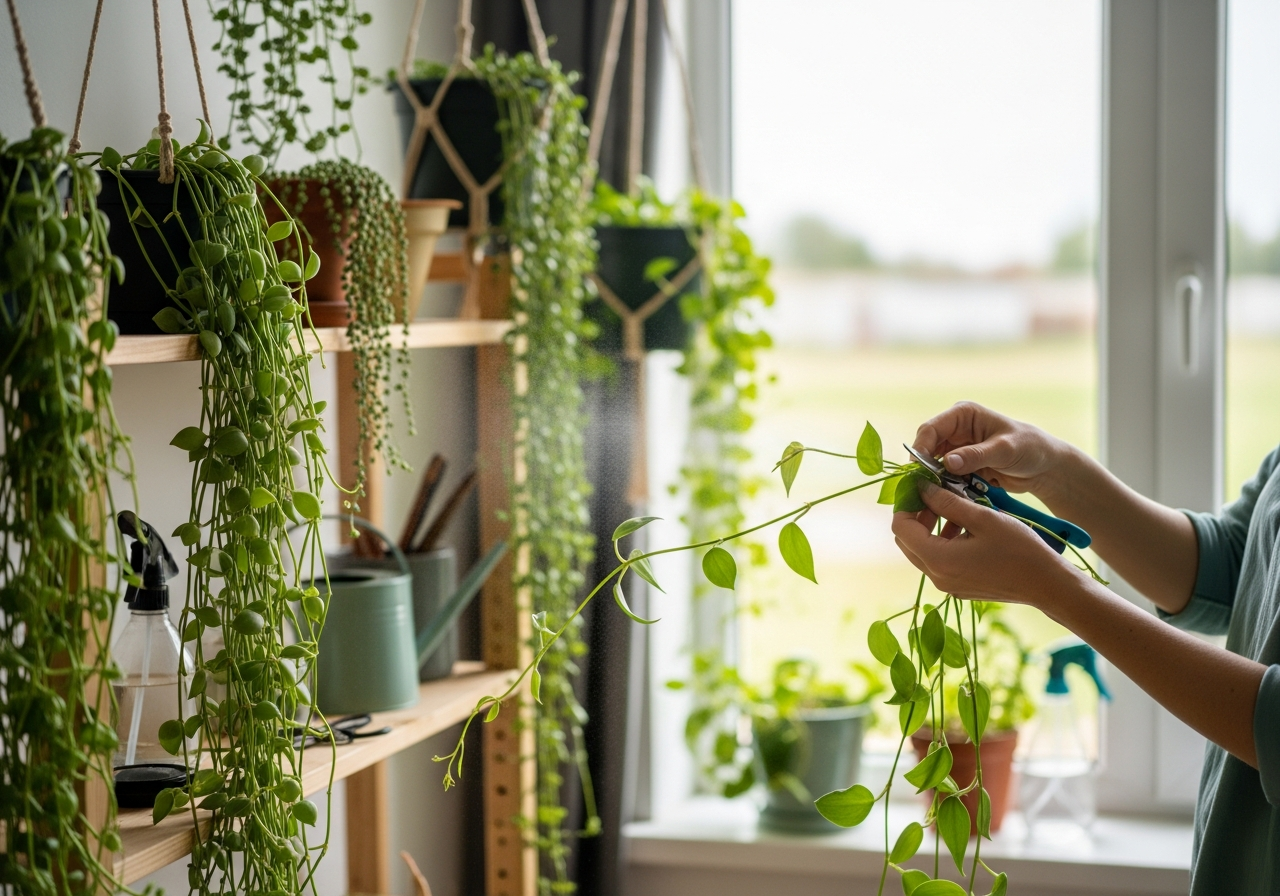
4. Prune regularly to encourage fullness
This is the trick that most beginners skip.
How to prune:
- Cut just above a leaf node (the tiny bump on the stem).
- Remove long, bare sections with few leaves.
- Use the cuttings to propagate free plants!
Why this works: Pruning redirects energy to new shoots near the base, giving you a fuller, denser plant instead of long, sparse “stringy” vines.
5. Fertilize lightly but consistently
Trailing plants grow fast when fed properly.
Feeding routine:
- Every 2–4 weeks during spring and summer
- Once every 6 weeks in fall
- Skip winter feeding
Use gentle, organic fertilizers to avoid salt build-up in small pots.
6. Keep humidity moderate
Most trailing species tolerate normal home humidity, but they grow faster with a little extra moisture in the air.
Tips:
- Avoid placing them next to heaters
- Mist occasionally (not daily)
- Group plants together to raise humidity naturally
7. Rotate the pot every 2–3 weeks
Trailing vines lean toward light. If you don’t rotate, you’ll get growth on one side only.
Pro Tips & Best Practices
- Train vines around a hoop or trellis if you want a fuller look.
- For hanging baskets, water slower than usual so the soil absorbs moisture instead of draining instantly.
- Don’t rely on “self-watering” pots unless you know the plant’s moisture needs they can stay too wet.
- If vines become bald at the top, prune and propagate don’t try to “fix” the bare stems.
- In outdoor balconies, protect trailing plants from strong winds; vines snap more easily than upright plants.
Common Mistakes to Avoid
- Keeping trailing plants too far from a window
- Using heavy garden soil indoors
- Letting vines trail before the plant has filled out at the top
- Overwatering because the hanging pot “looks dry” from below
- Never pruning (the fastest way to a scraggly plant)
FAQ
Why do my trailing plant vines look thin and leggy?
Usually because of low light. Move the plant closer to a bright window and prune lightly to encourage new shoots.
Why are my trailing plant leaves turning yellow?
Most common cause: overwatering. Check if the soil stays wet for more than 4–5 days.
Can trailing plants grow in low-light rooms?
They can survive, but they won’t thrive. Use a small grow light if you don’t have bright natural light.
How often should I repot trailing plants?
Every 1–2 years, or when roots circle the pot or poke through the drainage holes.
Can I propagate trailing plants from any cutting?
Yes just include at least one node. Leaf-only cuttings won’t root.
Why are the vines on my hanging plant bare at the top?
It’s natural over time. Refresh by pruning and placing the pot in brighter light.
When NOT to Use These Methods
- Avoid frequent watering if you live in a humid climate or keep plants in ceramic pots (they hold moisture longer).
- Don’t place thin-leaved trailing plants (like English ivy) in direct hot sun.
- Don’t fertilize stressed or recently repotted plants wait 3–4 weeks.
Plants that dislike this general care routine:
- String of Pearls prefers more sun and less water
- Fern-like trailers need higher humidity
- Hoya trails but hates heavy pruning
Alternative Methods or Solutions
Self-watering pots
Good for: busy gardeners Not ideal for: plants prone to rot (pothos, tradescantia)
Growing trailing plants upward on a trellis
Pros: fuller appearance, stronger vines Cons: not the classic “hanging” look
Water propagation before soil rooting
Pros: almost foolproof for beginners Cons: Slower adjustment when moved to soil
Conclusion
Learning how to care for trailing plants comes down to a few simple principles: bright indirect light, airy soil, consistent but careful watering, and regular pruning. Once you understand how these plants naturally grow, their care becomes predictable and incredibly rewarding.
With a little attention and patience, your trailing plants will give you lush, cascading vines that brighten shelves, balconies, and corners of your home. Start with the basics, observe how your plant responds, and adjust gently. That’s the real secret to thriving home gardening.
