Every product is independently reviewed and selected by our editors. If you buy something through our links, we may earn an affiliate commission at no extra cost to you.
Round railing planters are one of the most efficient tools for small-space gardening. If you’re working with a balcony, compact deck, rooftop, or narrow porch, railing-mounted round planters allow you to grow herbs, flowers, and even vegetables without sacrificing floor space. When selected and installed correctly, they improve drainage, sunlight exposure, and air circulation compared to floor pots. When chosen poorly, they dry out too fast, overload railings, or become unstable in wind. This guide breaks down how to choose, install, and plant round railing planters for real-world success covering soil composition, drainage, weight limits, sunlight direction, watering frequency, plant selection, and long-term maintenance.Small balconies often become cluttered quickly. Traditional containers eat up walking space, reduce airflow, and make maintenance harder. Many beginners overcrowd the floor with pots, then struggle with drainage stains, fungal issues, or poor sun exposure. Round railing planters solve this by lifting plants vertically. But not all railing planters are equal. The shape, depth, material, drainage holes, and mounting mechanism all affect plant health.This guide gives you expert-level clarity so you can build a productive, stable, and low-maintenance balcony garden using round railing planters.
Quick Summary Box
- Best for: Balconies, decks, compact patios
- Ideal depth: 6–12 inches depending on plant type
- Minimum soil depth for herbs: 6–8 inches
- Minimum for vegetables: 10–12 inches
- Drainage holes: Non-negotiable
- Soil type: Lightweight, well-draining potting mix
- Weight caution: Wet soil adds significant load
- Best sun exposure: South- or west-facing balconies
- Watering frequency: 2–4 times per week in summer
Why Round Railing Planters Work So Well
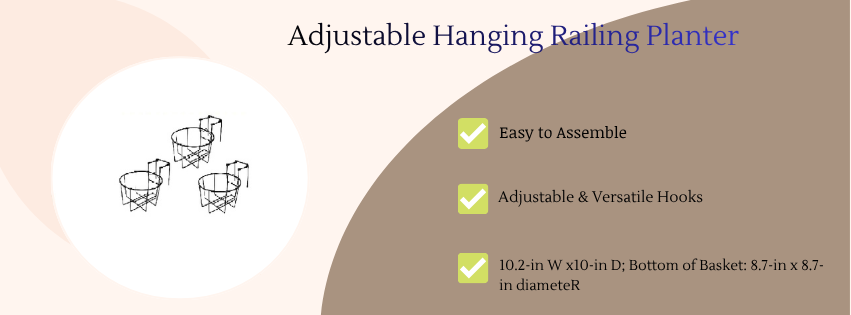
1. They Free Up Floor Space
Balcony gardening is often limited by square footage. A 4 ft balcony may only offer 12–16 sq ft of usable space.
Mounting planters along railings:
- Preserves walking area
- Keeps drainage off the floor
- Improves airflow
- Increases sun exposure
Why It Works
Elevated placement allows plants to receive unobstructed light especially in urban environments where shadows are common.
Maintenance Impact
Less bending, easier pruning, simpler harvesting.
2. Better Air Circulation = Healthier Plants
Plants mounted at railing height benefit from cross-breezes.
This reduces:
- Powdery mildew
- Aphid buildup
- Fungal leaf spots
Proper spacing between planters (at least 6 inches) prevents overcrowding.
Types of Round Railing Planters
1. Clamp-On Half-Round Planters
Designed to hook over flat or rounded railings.
Pros
- Easy installation
- Affordable
- Ideal for renters
Cons
- Limited depth
- Weight restrictions
Best for herbs, flowers, trailing plants.
2. Adjustable Bracket Planters
Attach using metal brackets.
Why Choose This
- More secure
- Handles heavier soil loads
- Better for vegetables
Cost range: $20–$60 per planter depending on material.
3. Self-Watering Round Railing Planters
Include reservoir system.
Why They Work
Water wicks upward, preventing soil from drying too quickly.
Best for:
- South-facing balconies
- Hot climates (USDA Zones 8–11)
Higher upfront cost, lower watering labor.
Choosing the Right Depth
Depth determines what you can grow.
6–8 Inches Deep
Suitable for:
- Basil
- Thyme
- Lettuce
- Petunias
- Succulents
Low soil volume means faster drying.
10–12 Inches Deep
Suitable for:
- Cherry tomatoes (compact varieties)
- Peppers
- Strawberries
- Dwarf kale
Minimum root depth required for stable growth.
14+ Inches Deep
Rare in railing planters but possible with reinforced brackets.
Suitable for:
- Dwarf eggplant
- Compact cucumber varieties
Heavier and requires strong railing support.
Soil Composition for Round Railing Planters
Never use garden soil.
Ideal Potting Mix Formula
- 50% high-quality potting mix
- 25% compost
- 15% perlite
- 10% coco coir or peat moss
Why This Works
- Lightweight structure prevents compaction
- Perlite improves drainage
- Compost provides slow-release nutrients
- Coco coir improves moisture retention
Cost consideration: Quality potting mix costs more but prevents root rot and nutrient deficiency.
Drainage Requirements
Drainage holes are essential.
Minimum 3–5 holes per planter base.
If water pools:
- Roots suffocate
- Fungal disease increases
- Soil compacts
Use saucers only if absolutely necessary standing water increases mosquito risk.
Sunlight Exposure Guide
Sun direction determines plant selection.
South-Facing Balcony
6–8+ hours of direct sun Best for vegetables and flowering plants.
West-Facing Balcony
Hot afternoon sun Choose heat-tolerant herbs like rosemary and thyme.
East-Facing Balcony
Morning sun Ideal for leafy greens and partial-shade flowers.
North-Facing Balcony
Low light Choose shade-tolerant plants like ferns and coleus.
Watering Frequency
Round railing planters dry faster than floor pots.
Summer:
- 3–4 times per week
- Daily in extreme heat (Zones 9–11)
Spring/Fall:
- 1–2 times per week
Always check soil 1 inch below surface before watering.
Overwatering is a common beginner mistake.
Weight Considerations (Critical)
Wet soil weighs significantly more than dry soil.
Example: 12-inch planter filled with wet soil can weigh 15–25 lbs.
Before installing:
- Confirm railing material (metal vs wood)
- Check bracket weight rating
- Avoid overloading old railings
In rental properties, verify structural capacity.
Best Plants for Round Railing Planters
Herbs
- Basil
- Parsley
- Oregano
- Mint (keep isolated)
Shallow root systems and frequent harvesting keep plants compact.
Vegetables
- Dwarf cherry tomatoes
- Compact peppers
- Lettuce
- Spinach
- Radishes
Avoid large root vegetables.
Flowers
- Petunias
- Geraniums
- Calibrachoa
- Trailing lobelia
Flowering plants increase pollinator visits.
Pest Prevention Basics
Common balcony pests:
- Aphids
- Spider mites
- Whiteflies
Prevention strategy:
- Weekly leaf inspection
- Neem oil spray every 10–14 days
- Avoid overcrowding
Good airflow is your first defense.
Budget vs Premium Setup Comparison
| Feature | Budget Setup | Premium Setup |
| Material | Plastic | Powder-coated metal or resin |
| Drainage | Basic holes | Integrated drainage system |
| Watering | Manual | Self-watering reservoir |
| Longevity | 1–3 years | 5–10+ years |
| Cost | $10–$20 each | $40–$80 each |
Premium planters reduce maintenance and replacement frequency.
Beginner Mistakes to Avoid
- Using garden soil
- Overloading railing weight capacity
- Ignoring sun direction
- Planting large vegetables in shallow containers
- Skipping drainage holes
Seasonal Maintenance
Spring:
- Refresh top 2 inches of soil
- Add compost
Summer:
- Increase watering
- Deadhead flowers
Fall:
- Remove spent plants
- Clean containers
Winter:
- Remove soil in freezing climates (Zones 5–7) to prevent cracking
FAQ
Are round railing planters safe for balconies?
Yes, if properly mounted and within weight limits. Always confirm railing strength before installation.
What size round railing planter is best for vegetables?
Minimum 10–12 inches deep for most compact vegetable varieties.
Do railing planters dry out faster?
Yes. Elevated placement increases airflow and evaporation, especially in hot climates.
Can I grow tomatoes in round railing planters?
Yes, but choose dwarf or patio varieties and ensure at least 12 inches of soil depth.
How often should I fertilize?
Every 2–4 weeks during growing season using liquid organic fertilizer.
Are self-watering railing planters worth it?
For hot climates or busy schedules, absolutely. They reduce watering frequency significantly.
Conclusion
Round railing planters are one of the smartest investments for balcony gardeners. They maximize vertical space, improve airflow, and increase sun exposure without crowding your floor.
Success depends on:
- Proper depth selection
- Lightweight, well-draining soil
- Adequate drainage holes
- Realistic weight management
- Correct plant choices for your sun exposure
When installed thoughtfully, railing planters transform even the smallest balcony into a productive, visually appealing garden. Start with two or three high-quality planters. Test your sun exposure. Adjust watering habits. Over time, you’ll build a system that’s efficient, low-maintenance, and surprisingly productive. Small spaces don’t limit gardening potential. Smart vertical planning expands it.
