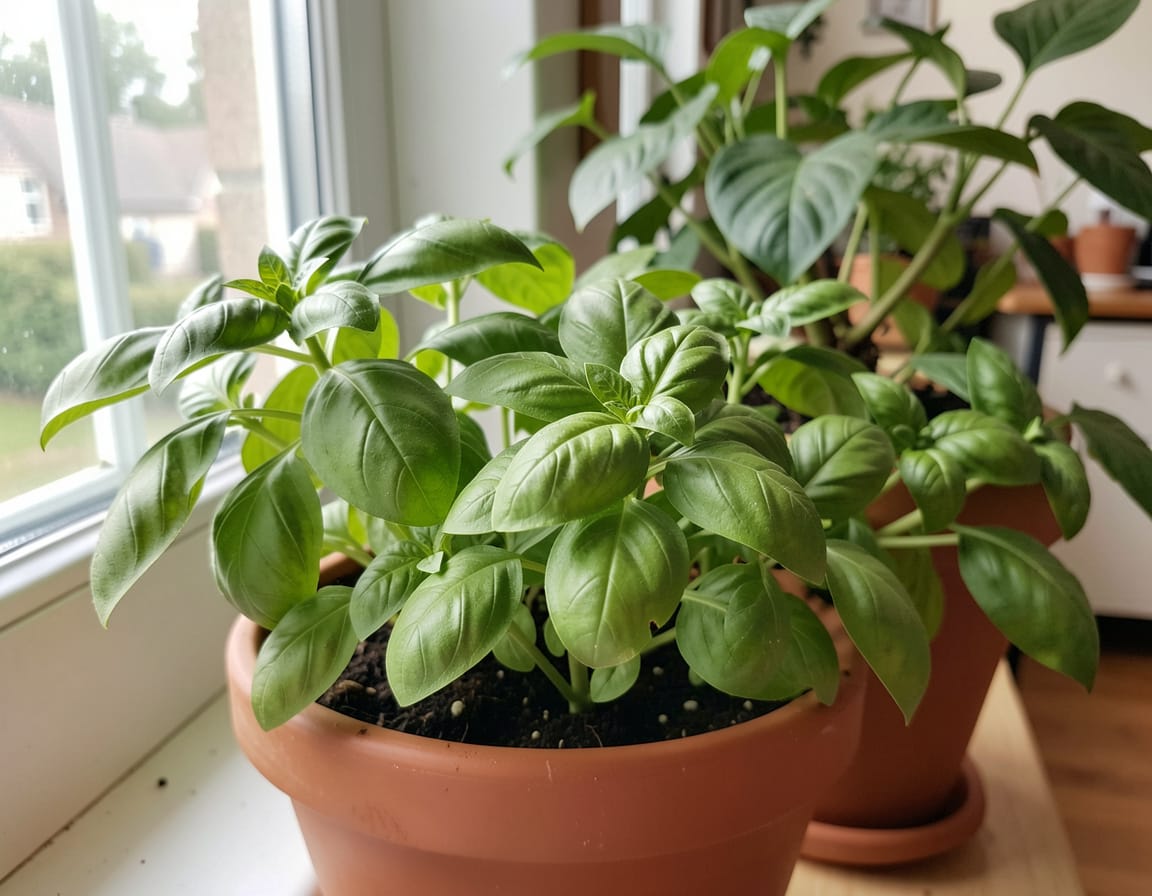
Every product is independently reviewed and selected by our editors. If you buy something through our links, we may earn an affiliate commission at no extra cost to you.
If you’ve ever tried to keep a basil plant alive on your kitchen windowsill and ended up with droopy stems or yellowing leaves, you’re not alone. Many home gardeners assume basil is low-maintenance indoors because it grows fast outdoors but indoor conditions are a different story.
In my own small balcony garden, I’ve tested basil in everything from sunny windows to grow lights, and the difference is night and day. The good news? Yes, basil is easy to grow indoors if you understand what it truly needs. With a few adjustments to light, watering, and air circulation, indoor basil can thrive year-round.
Why Basil Can and Can’t Thrive Indoors
Basil is a sun-loving Mediterranean herb that evolved in dry, warm climates. When we bring it indoors, we often deprive it of its two biggest needs: strong light and airflow.
Here’s why this matters:
- Light: Basil needs 6–8 hours of direct sunlight or 12–14 hours under a full-spectrum grow light. Without this, it becomes leggy, pale, and weak.
- Warmth: Basil’s roots slow down below 18°C (65°F). Drafty windows or cold night air stunt growth.
- Humidity vs. Airflow: Indoors, we often have still air. That can lead to fungal leaf spots or mildew, especially if you mist too much or overwater.
Once you balance these three factors light, warmth, and airflow basil becomes one of the easiest herbs to keep alive indoors.
Why This Method Works
Healthy basil depends on steady photosynthesis and consistent root oxygenation. Indoors, light and soil moisture are the two levers you can control best.
From hands-on observation:
- Basil growing on a south-facing window produced bushier growth than any other position.
- Pots with coarse, well-draining soil (I use a mix of cocopeat, perlite, and compost) had fewer root rot issues.
- A small USB fan running intermittently helped prevent fungal spots and kept stems sturdier.
So, the method that works is simply replicating outdoor Mediterranean conditions inside, in miniature.
What You’ll Need
You don’t need fancy equipment just a few smart choices:
- A sunny spot – ideally a south- or west-facing window
- Grow light (optional but helpful) – full-spectrum LED, 12–14 hours/day if sunlight is weak
- Pot with drainage holes – 6–8 inches wide
- Well-draining soil mix – equal parts cocopeat (or potting soil), compost, and perlite
- Organic fertilizer – seaweed extract, vermicompost, or a mild liquid feed
- Small fan or open window nearby for airflow
- Watering can or spray bottle
Eco tip: Reuse kitchen containers like yogurt cups (with drainage holes) for seedlings basil doesn’t mind a thrifty start.
Step-by-Step: How to Grow Basil Indoors Successfully
1. Choose the Right Variety
Compact types like ‘Genovese,’ ‘Sweet Basil,’ or ‘Spicy Globe’ perform best indoors. Avoid large-leaf Thai basil unless you have strong lighting.
2. Start from Seed or Cuttings
- Seeds: Sow 2–3 seeds per pot, ¼ inch deep, lightly cover with soil, and keep moist until germination (5–10 days).
- Cuttings: Take a 4-inch stem from a healthy outdoor plant, remove lower leaves, and root it in water before potting.
3. Place in Bright, Warm Light
- Minimum 6 hours of sunlight daily, or use a grow light positioned 6–8 inches above the plant.
- Keep the temperature between 20–28°C (68–82°F).
4. Water Correctly
This is where most beginners slip up.
- Water only when the top inch of soil feels dry.
- Pour gently until water drains out the bottom, then empty the saucer to prevent soggy roots.
- Avoid misting leaves basil prefers dry foliage and moist roots.
5. Feed Lightly
Feed every 2–3 weeks with a diluted organic fertilizer. Overfertilizing encourages weak, floppy growth.
6. Prune Early and Often
Once the plant reaches 6–8 inches tall, pinch off the top two sets of leaves. This encourages branching and fuller growth. Never let basil flower if your goal is leaf production.
7. Maintain Airflow
A gentle fan or open window keeps humidity balanced and discourages mildew. Still air is the quiet killer of indoor basil.
Pro Tips & Best Practices
- Rotate pots weekly so all sides get equal light.
- Harvest from the top, not the bottom this keeps the plant compact.
- Don’t crowd multiple basil plants in one pot; give each room for roots.
- Avoid cold drafts basil hates sudden chills.
- When leaves turn yellow, check for overwatering or weak light.
From my trials, basil grown under supplemental LED light had 30–40% more leaf production than window-only plants during winter.
Common Questions About Growing Basil Indoors
1. Why does my indoor basil keep dying?
Usually due to insufficient light or soggy soil. Move it closer to a bright window and let the top inch of soil dry before watering again.
2. Can I grow basil indoors year-round?
Yes if you maintain warmth and artificial light during winter. Indoor temperatures below 18°C (65°F) slow growth drastically.
3. How often should I water indoor basil?
Typically every 3–5 days, depending on humidity. Always use the finger test—dry topsoil means it’s time to water.
4. Why are my basil leaves turning brown or curling?
Brown edges often indicate low humidity or heat stress near a radiator. Move the plant to a more stable, warm but not dry location.
5. Can I grow basil without sunlight?
You can, with a full-spectrum grow light on a 12–14-hour timer. In my winter trials, basil under artificial light performed almost identically to summer window-grown plants.
6. How do I make my indoor basil bushy?
Pinch the top growth regularly once plants are about 6 inches tall. Every cut stimulates two new shoots.
When NOT to Try Growing Basil Indoors
Avoid starting basil indoors if:
- You have very low light and no grow light option.
- Your home is consistently below 18°C (65°F).
- You can’t provide good drainage dense garden soil in indoor pots will suffocate roots.
In these cases, try growing mint or parsley instead they’re more forgiving in low light and cooler conditions.
Alternatives and Comparisons
| Method | Pros | Cons | Best For |
| Grow light setup | Reliable year-round growth | Small energy cost | Apartments with limited sun |
| Sunny window method | Free light, natural flavor | Seasonal limitations | Mild climates |
| Hydroponic kits | Fast growth, minimal mess | Upfront investment | Tech-friendly beginners |
If you’re starting out, a simple pot and sunny window is the easiest and cheapest way to learn basil care.
Conclusion:
So, is basil easy to grow indoors? Absolutely once you recreate the warmth, brightness, and airflow of its outdoor habitat.
From my hands-on experience across seasons, the key is strong light, well-draining soil, and light pruning discipline. Follow these practical steps, and you’ll have fresh basil for pesto, salads, and teas within weeks.
Be patient, observe your plant daily, and adjust your routine subtly. That’s how real gardeners learn and that’s why your next indoor basil plant can thrive far longer than your first.
