Every product is independently reviewed and selected by our editors. If you buy something through our links, we may earn an affiliate commission at no extra cost to you.
Few herbs are as satisfying or as moody as basil. It grows lush and fragrant in summer sunshine, then suddenly wilts or turns leggy when brought indoors.
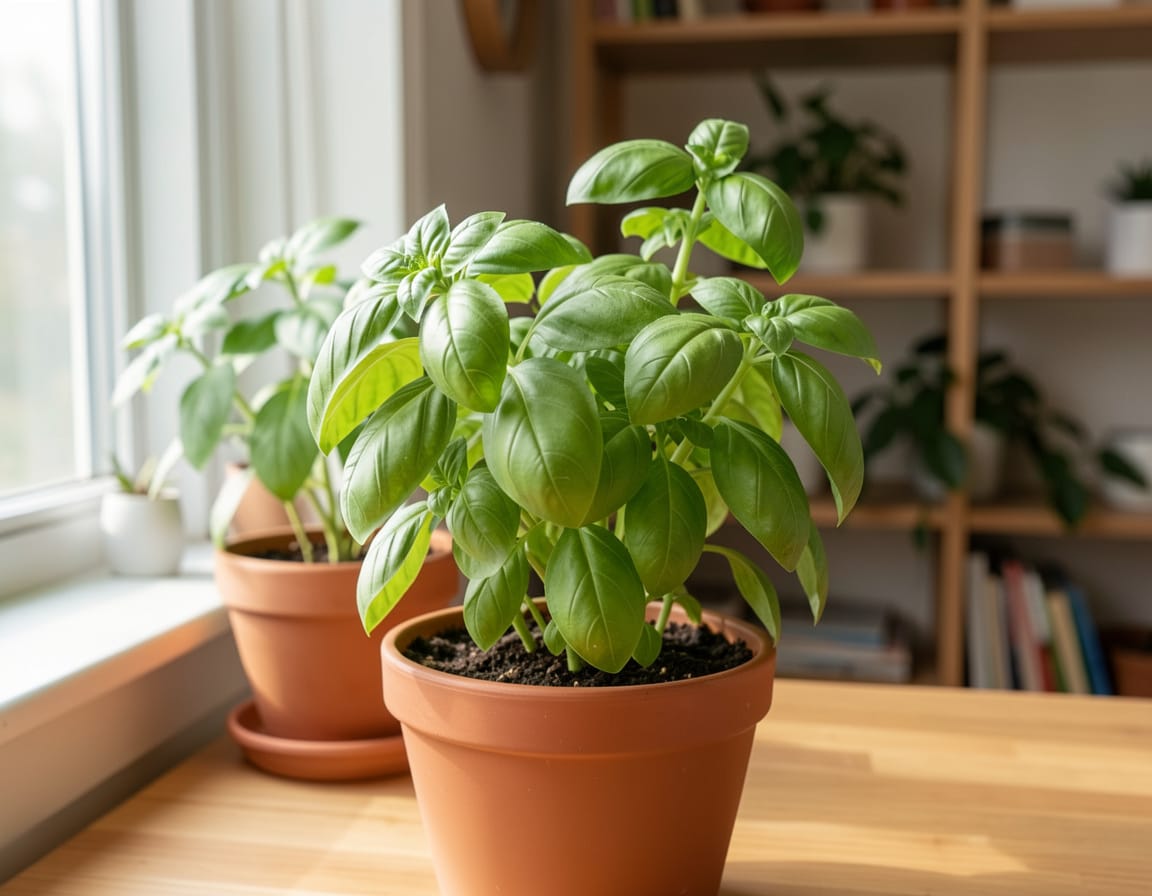
After years of growing basil on my kitchen windowsill and under grow lights through winter, I’ve learned that keeping a basil plant alive indoors comes down to mastering light, airflow, and watering rhythm not just luck.
Here’s a step-by-step, experience-based guide to help you keep your indoor basil thriving year-round, even in small spaces.
Why Basil Struggles Indoors (and How to Fix It)
In gardens, basil enjoys long daylight hours, warm soil, and moving air. Indoors, it’s often deprived of one or more of these essentials:
- Low light: Windows indoors rarely provide the six hours of direct sun basil needs.
- Stale air: Still indoor air encourages fungal leaf spots and moldy soil.
- Overwatering: Without outdoor drainage and sun, basil roots can suffocate.
- Temperature swings: Drafty windows or A/C vents shock the plant.
Once you replicate the outdoor conditions bright light, steady warmth, moderate moisture basil becomes one of the easiest house herbs to maintain.
What You’ll Need
- Healthy basil plant or seeds (varieties like Genovese or Sweet Basil are reliable)
- 6–8 inch pot with drainage holes
- Light, well-draining soil (1 part compost + 1 part cocopeat or perlite + 1 part garden soil)
- Tray or saucer to catch excess water
- Grow light (optional but ideal during winter or for low-light homes)
- Small fan (optional, for airflow if room is humid)
- Liquid organic fertilizer or compost tea
Eco tip: Reuse yogurt tubs or small buckets with holes drilled in the bottom perfect size for kitchen basil.
Step-by-Step: How to Keep Basil Alive Indoors
1. Choose the Right Spot
Place your basil where it gets at least 6 hours of bright, direct sunlight a south-facing window is best. If natural light is limited, use a full-spectrum LED grow light placed 6–8 inches above the plant for 12–14 hours daily.
Hands-on tip: My basil near an east window grew tall and pale until I added a small desk grow light. Within two weeks, the stems thickened, and leaf color deepened noticeably.
2. Use the Right Pot and Soil
- Always use a pot with drainage holes. Basil hates “wet feet.”
- Fill with light, airy soil a heavy garden mix without perlite tends to compact and suffocate roots.
- Mix in organic compost sparingly. Too much can hold moisture and lead to fungal gnats.
3. Water Properly
This is where most indoor basil dies.
- Water when the top 1 inch of soil feels dry. Don’t follow a strict schedule—observe.
- Pour water slowly until it drains out the bottom, then empty the saucer to prevent standing water.
- In winter or under low light, water less frequently once every 3–4 days may suffice.
Real-world warning: Overwatered basil usually droops even though the soil is wet. Drying it out for a day or two often revives it better than more watering.
4. Maintain Warmth and Airflow
- Basil thrives between 20–30°C (68–86°F).
- Keep it away from cold drafts, A/C vents, or heaters that dry the air.
- Run a small fan nearby on a low setting for an hour daily if your home is humid this reduces fungal disease.
5. Feed Lightly
Indoor basil doesn’t need heavy feeding but appreciates a boost:
- Apply diluted liquid compost tea or seaweed extract every 2–3 weeks.
- Avoid strong fertilizers they lead to lush but weak, pest-prone growth.
6. Prune Regularly
Pinch off the top two leaves once the plant is about 6 inches tall. This encourages branching and prevents it from flowering prematurely.
Experienced grower’s note: Every time you harvest, cut just above a leaf node (where two small leaves form). Those nodes will become new stems, keeping your plant compact and bushy.
7. Harvest Smartly
Never strip more than one-third of the leaves at once. Rotate where you harvest to keep the plant balanced. If flowers appear, pinch them off immediately flowering signals the plant to stop growing leaves.
Pro Tips & Common Mistakes to Avoid
- Don’t mist daily. Basil dislikes wet leaves; it invites fungal spots.
- Avoid cold water. Always use room-temperature water to prevent root shock.
- Repot annually. Indoor basil roots fill pots quickly; fresh soil keeps it vigorous.
- Group herbs wisely. Basil prefers more moisture than rosemary or thyme, so don’t pot them together.
- Trim brown or yellow leaves early. It prevents disease from spreading.
Troubleshooting Indoor Basil Problems
Q: Why are my basil leaves turning yellow? Usually overwatering or nutrient deficiency. Let the soil dry slightly between waterings, and feed with diluted compost tea.
Q: My basil looks tall and thin what’s wrong? That’s a sign of insufficient light. Move it closer to sunlight or under a grow light.
Q: The leaves have black spots what causes this? Poor air circulation or water on the leaves. Prune affected areas and increase airflow.
Q: Can I keep a supermarket basil plant alive? Yes, but divide it into smaller pots. Store-bought basil is often overcrowded in one pot, competing for light and nutrients.
Q: How long does an indoor basil plant live? Basil is technically an annual—it naturally declines after flowering. With pruning and good care, you can extend it for 6–8 months indoors.
When Basil Won’t Thrive Indoors
- Very low light homes: Without supplemental lighting, leaves become pale and weak.
- Cold climates: Near-freezing temperatures will kill basil quickly.
- Overly dry homes in winter: Use a humidity tray (pebbles + water) under the pot to maintain gentle moisture around the plant.
If conditions are too challenging, grow Thai basil or lemon basil, which tolerate slightly lower light and humidity.
Alternative Options for Indoor Herb Success
| Herb | Light Needs | Water Needs | Difficulty |
| Mint | Moderate | High | Very easy |
| Parsley | Bright indirect | Moderate | Easy |
| Chives | Bright indirect | Moderate | Easy |
| Thyme | Direct light | Low | Moderate |
| Oregano | Direct light | Low | Moderate |
These herbs can be grown alongside basil to create a kitchen herb garden that supports different light and moisture zones.
Conclusion
To truly keep a basil plant alive indoors, treat it like a sun-loving garden plant that happens to live inside not a decorative windowsill ornament. Give it strong light, free-draining soil, regular pruning, and gentle watering, and it will reward you with months of aromatic harvests.
Start with one healthy plant, observe how it responds to your space, and adjust light and water as you go. Once you master basil, most other indoor herbs will feel easy.
