Every product is independently reviewed and selected by our editors. If you buy something through our links, we may earn an affiliate commission at no extra cost to you.
If you’re just starting your first home garden whether it’s on a balcony, terrace, or small backyard one of the most common questions is: What’s the easiest vegetable to grow for beginners?
After years of trial and error in my own garden (including a few wilted tomato seedlings and overwatered herbs), I can confidently say radishes top the list. They’re fast, forgiving, space-efficient, and incredibly satisfying to harvest. But that’s not the whole story there are a few other beginner-safe vegetables worth mentioning too.
Let’s walk through why radishes are such a reliable starter crop, how to grow them successfully from seed, and what alternatives work just as well depending on your space and climate.
Why Radishes Are the Easiest Vegetable to Grow
From hands-on experience, radishes check nearly every “beginner-friendly” box:
- Fast results: They mature in as little as 25–30 days. That quick reward keeps new gardeners motivated.
- Minimal space: You can grow them in pots as shallow as 6 inches or directly in garden beds.
- Low maintenance: They don’t need staking, pruning, or transplanting.
- Cool-season tolerance: Radishes thrive in mild spring or fall weather, when many summer crops struggle.
- Pest resistance: They’re rarely attacked by pests if harvested on time.
The only real trick? Timing and soil texture. In compacted or very hot conditions, radishes can become woody or fail to bulb up but we’ll cover how to avoid that.
The Horticultural Logic Behind Their Success
Radishes are root vegetables that prioritize quick growth over long-term leaf production. In cool, moist soil with moderate sunlight (4–6 hours a day), the plant channels most of its energy into forming that crisp, edible root.
Because they germinate within 3–5 days, you can quickly see whether your soil and watering habits are working. This immediate feedback loop helps beginners understand soil moisture and seed spacing better than any textbook.
From a biological standpoint:
- The taproot stores nutrients fast.
- The short life cycle avoids many common pest life cycles.
- The shallow root zone means you can grow them almost anywhere raised beds, recycled containers, or fabric grow bags.
What You’ll Need to Grow Radishes Successfully
Basic supplies:
- Radish seeds : Choose quick-growing varieties like Cherry Belle or French Breakfast.
- Container or garden bed : At least 6 inches deep with good drainage.
- Loose, fertile soil : A mix of garden soil, compost, and a little sand or cocopeat works well.
- Watering can with a fine rose : Prevents soil splash and seed displacement.
- Organic compost or vermicompost : For steady, balanced nutrition.
- Mulch (optional) : Helps retain moisture in sunny balconies.
Budget-friendly tip: If you don’t want to buy special potting mix, sieve your existing garden soil to remove clumps and add one part compost to two parts soil.
Step-by-Step: How to Grow Radishes (Even in a Balcony Pot)
1. Sow at the Right Time
- Best season: Early spring or fall when temperatures are between 10–25°C (50–77°F).
- Avoid peak summer heat it makes radishes bolt (flower early) and turn woody.
2. Prepare the Soil
- Loosen it at least 6 inches deep.
- Mix in well-rotted compost for organic matter.
- The texture should feel crumbly, not sticky radish roots need space to expand.
3. Sow the Seeds
- Scatter seeds about 1 inch apart in rows or circles (depending on your pot).
- Cover lightly with ½ inch of soil.
- Water gently to settle the soil.
4. Keep the Soil Evenly Moist
- Water lightly every 1–2 days, ensuring soil never dries out or becomes soggy.
- In containers, check moisture daily especially in wind or full sun.
5. Thin the Seedlings
- Once they’re an inch tall, remove every other seedling so roots have room to grow.
- Crowded plants produce small, misshapen radishes.
6. Watch for Harvest Signs
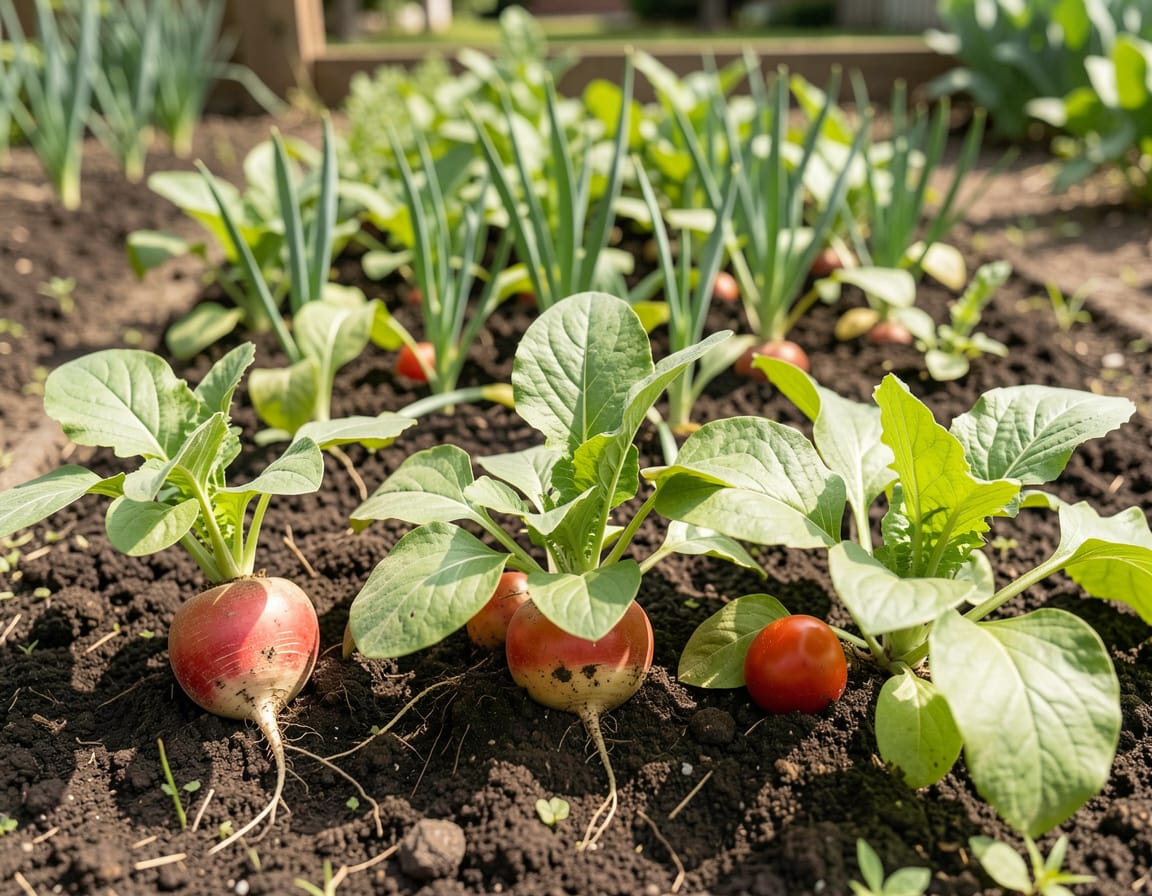
- After 3–4 weeks, check if the red tops of the roots are visible at the soil surface.
- Harvest when the roots are 1 inch in diameter. Waiting too long makes them fibrous.
Pro Tips & Best Practices
- Don’t over-fertilize. Nitrogen-heavy feeds promote leafy growth instead of roots.
- Harvest on time. Small radishes are crisp and sweet; oversized ones become spicy and dry.
- Rotate crops. Don’t grow radishes repeatedly in the same container alternate with leafy greens to prevent soil fatigue.
- Shade protection: In hot climates, provide partial shade during midday to prevent bolting.
- Use radish tops: The young greens are edible and full of nutrients perfect for stir-fries or soups.
Common Questions About Growing Easy Vegetables
1. Why are my radishes growing only leaves, not roots?
Too much nitrogen or too little spacing usually causes this. Keep the soil loose and avoid overfeeding.
2. Can I grow radishes indoors?
Yes, as long as you provide 4–6 hours of direct sunlight or use a grow light. A sunny balcony windowsill works perfectly.
3. How often should I water radishes?
Keep the soil evenly moist not soaked. In warm weather, daily light watering is better than deep weekly watering.
4. What’s the easiest vegetable to grow in hot climates?
If your area stays hot most of the year, try okra (lady’s finger) or yardlong beans instead—they handle heat better.
5. Can I grow radishes in recycled containers?
Absolutely. Old paint buckets, plastic tubs, or crate boxes with drainage holes all work. Just make sure they’re at least 6 inches deep.
When Radishes Might Not Be the Best Choice
- Hot, dry summers: Plants may bolt (flower early) before roots develop.
- Heavy clay soil: Roots struggle to expand improve texture with compost and sand.
- Tropical humidity: Radishes can attract fungal spots if air circulation is poor.
If you live in very warm regions, choose heat-tolerant alternatives like okra, bush beans, or amaranth greens.
Other Easy Vegetables for Beginners
| Vegetable | Best Season | Why It’s Easy | Container Depth |
| Lettuce | Cool seasons | Grows fast, cut-and-come-again harvest | 6–8 inches |
| Spinach | Cool to mild | Resilient, minimal pests | 6–8 inches |
| Okra | Warm | Tolerates heat, minimal care | 10–12 inches |
| Cherry Tomatoes | Warm | Compact, very rewarding | 12–14 inches |
| Spring Onions | All seasons | Can regrow from scraps | 6 inches |
Each of these crops teaches you a different gardening skill succession sowing, pruning, or organic pest control without overwhelming you.
Conclusion
So, what’s the easiest vegetable to grow for beginners? In most temperate to subtropical home gardens, radishes win hands down for their speed, simplicity, and reliability.
Start with one pot, follow the simple steps above, and within a month you’ll have your first homegrown harvest. More importantly, you’ll learn how soil, moisture, and sunlight interact lessons that will make every future crop easier.
Gardening rewards patience and observation. Don’t chase perfection in your first season; focus on building the habit of paying attention to your plants. Before long, you’ll be harvesting not just radishes, but confidence in your green thumb.
