Every product is independently reviewed and selected by our editors. If you buy something through our links, we may earn an affiliate commission at no extra cost to you.
Many people bring home succulents because they’re marketed as “unkillable,” only to watch them slowly stretch, soften, or rot on a windowsill. In real homes, this happens all the time and it’s frustrating. The issue isn’t bad luck or a lack of skill. It’s usually a misunderstanding of how succulents actually behave indoors.
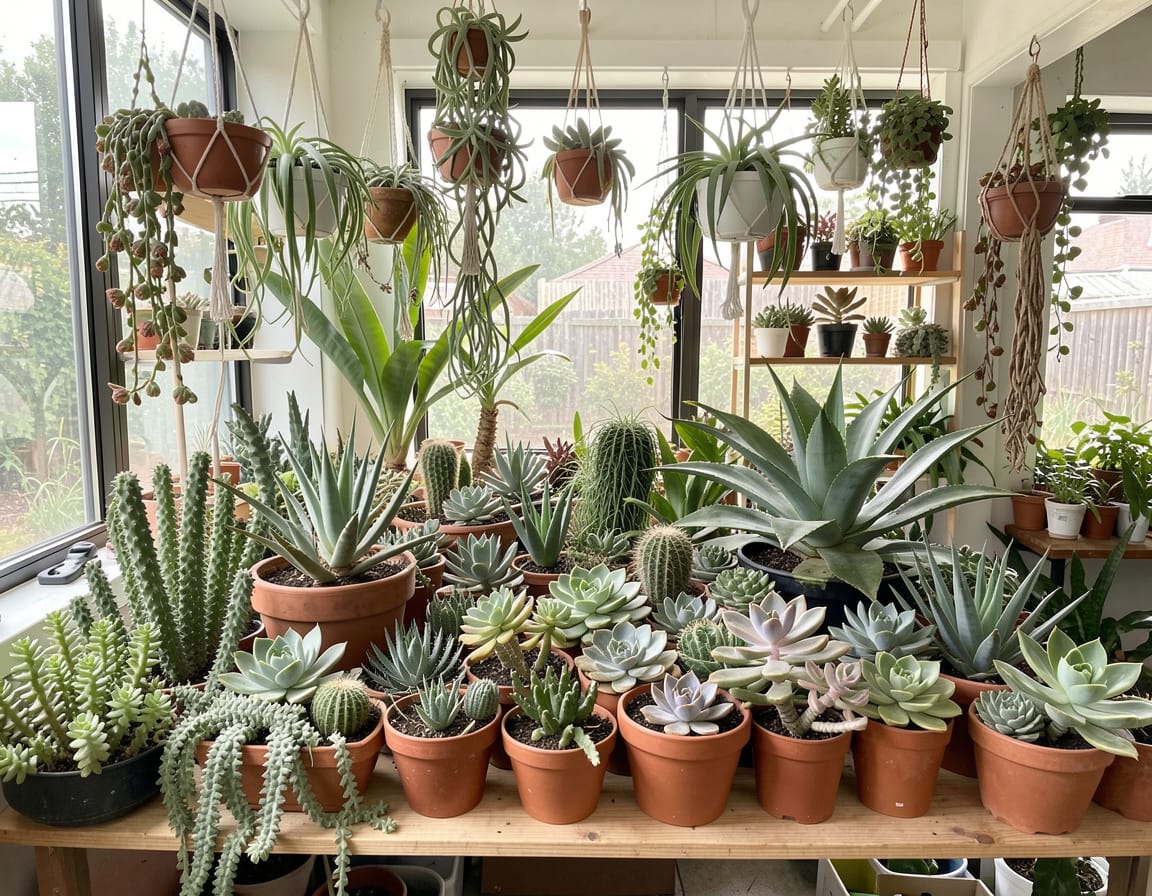
If you’re searching for how to create an indoor succulent garden that stays compact, healthy, and attractive for years not weeks this guide is designed for you. Everything here comes from hands-on indoor growing experience, not ideal greenhouse conditions. You’ll learn why succulents fail indoors, how to design a garden that fits real living spaces, and how to maintain it with minimal effort.
Why Indoor Succulent Gardens Often Fail
From working with apartments, rental homes, and small houses, the most common problems are:
- Too little light
- Containers without drainage
- Overwatering out of habit
- Grouping incompatible succulents together
- Decorative containers prioritized over plant health
Succulents don’t die suddenly. They decline slowly. The goal of a successful indoor succulent garden is preventing stress before it shows.
Why This Method Works for Indoor Succulents
Succulents evolved to survive harsh, dry environments by storing water in their leaves and stems. Indoors, they benefit from:
- Stable temperatures
- Protection from heavy rain
- Fewer pests
- Controlled watering
However, they struggle with low light and trapped moisture. This method works because it balances plant biology with realistic indoor conditions moderate light, breathable soil, and containers that don’t trap water.
Instead of forcing succulents to adapt, we design the garden around their natural behavior.
What You’ll Need to Create an Indoor Succulent Garden
Essential Supplies
- Succulent plants (healthy, firm leaves)
- Containers with drainage holes
- Succulent or cactus soil mix
- Grit material (perlite, pumice, coarse sand)
- Small trowel or spoon
- Tray or saucer
Budget-Friendly & Eco-Safe Alternatives
- Reuse terracotta pots from thrift stores
- Mix regular potting soil with sand and perlite
- Use gravel collected outdoors (washed and dried)
- Repurpose shallow ceramic dishes (drill drainage holes if possible)
Safety Notes
- Wash hands after handling soil
- Avoid decorative stones small enough for pets to swallow
- Keep toxic succulents (e.g., Euphorbia) out of reach of children
Choosing the Right Succulents for Indoors
Not all succulents tolerate indoor life equally.
Best Succulents for Indoor Gardens
- Haworthia
- Gasteria
- Snake plant (technically succulent-like)
- Aloe vera
- Zebra plant
- Jade plant
- Echeveria (only with strong light)
Succulents That Struggle Indoors
- Most cacti without grow lights
- Outdoor Sedum varieties
- Full-sun Agave species
Beginner tip: Compact, slow-growing succulents adapt best to indoor light.
Step-by-Step: How to Create an Indoor Succulent Garden
Step 1: Choose the Right Location
Light determines success more than anything else.
Best spots:
- South- or west-facing windows
- Bright rooms with indirect light most of the day
Visual cue:
Healthy succulents stay compact with tight leaf spacing. Stretching means insufficient light.
Step 2: Select Containers That Support Roots
Avoid sealed glass bowls and decorative planters without drainage.
Why drainage matters:
Succulent roots suffocate quickly in wet soil.
Ideal containers:
- Terracotta pots (breathable)
- Shallow planters with drainage
- Unglazed ceramic
Step 3: Prepare the Soil Mix
Succulents need fast-draining soil.
Simple DIY mix:
- 50% cactus/succulent soil
- 30% perlite or pumice
- 20% coarse sand
Soil test:
Water should pass through in seconds, not minutes.
Step 4: Arrange Plants Before Planting
Before planting, place succulents on the soil surface and adjust spacing.
What beginners often miss:
Succulents grow outward, not upward. Leave space between plants.
Group succulents with similar water and light needs.
Step 5: Plant Carefully
- Gently loosen roots
- Plant at the same depth as the nursery pot
- Firm soil lightly don’t compact
Wait 5–7 days before watering to allow roots to settle.
Step 6: Water Correctly
This is where most indoor gardens fail.
Correct method:
- Water deeply
- Let soil dry completely
- Empty saucers after watering
Frequency:
Every 2–4 weeks depending on light and temperature.
Visual cue:
Wrinkled leaves = thirsty
Soft, translucent leaves = overwatered
Expert Tips & Best Practices for Indoor Succulent Gardens
Lighting Optimization
- Rotate pots every 1–2 weeks
- Use grow lights in winter or low-light homes
Watering Discipline
- Ignore schedules check soil instead
- Less is almost always better
Air Circulation
- Open windows occasionally
- Avoid stagnant corners
Seasonal Adjustments
- Reduce watering in winter
- Resume normal care in spring
Common Beginner Mistakes and How to Avoid Them
Mistake 1: Overwatering
Succulents don’t want “even moisture.”
Fix: Let soil dry completely.
Mistake 2: Decorative Containers Without Drainage
Looks nice, kills roots.
Fix: Always prioritize drainage.
Mistake 3: Mixing Incompatible Plants
Different succulents have different needs.
Fix: Group similar types together.
Mistake 4: Low-Light Placement
Succulents cannot survive on vibes alone.
Fix: Bright windows or grow lights.
FAQ
How often should I water my indoor succulent garden?
Usually every 2–4 weeks, only after soil fully dries.
Why are my succulents stretching?
They’re not getting enough light.
Can I grow succulents indoors without sunlight?
Yes, but only with grow lights.
Do succulents improve indoor air quality?
They contribute modestly but shouldn’t replace ventilation.
Is misting good for succulents?
No. Misting increases rot risk.
When NOT to Use This Method
This method may struggle if:
- Your space receives almost no natural light
- Temperatures drop below 10°C (50°F) regularly
- You prefer frequent watering routines
Safer Alternatives
- Snake plants
- ZZ plants
- Pothos
Alternative Indoor Succulent Garden Approaches
Grow Light Shelving
Pros: Consistent growth
Cons: Electricity use
Single-Plant Containers
Pros: Easy care
Cons: Less visual impact
Terrarium-Style Displays
Pros: Decorative
Cons: High rot risk (not recommended for beginners)
Conclusion
Learning how to create an indoor succulent garden isn’t about adding more more water, more decoration, more plants. It’s about knowing when to stop.
Choose the right succulents, give them light and drainage, water sparingly, and let them grow at their own pace. When designed correctly, an indoor succulent garden becomes one of the lowest-maintenance, most satisfying plant setups you can have perfect for busy homes, apartments, and beginner gardeners who want beauty without constant care.
