Every product is independently reviewed and selected by our editors. If you buy something through our links, we may earn an affiliate commission at no extra cost to you.
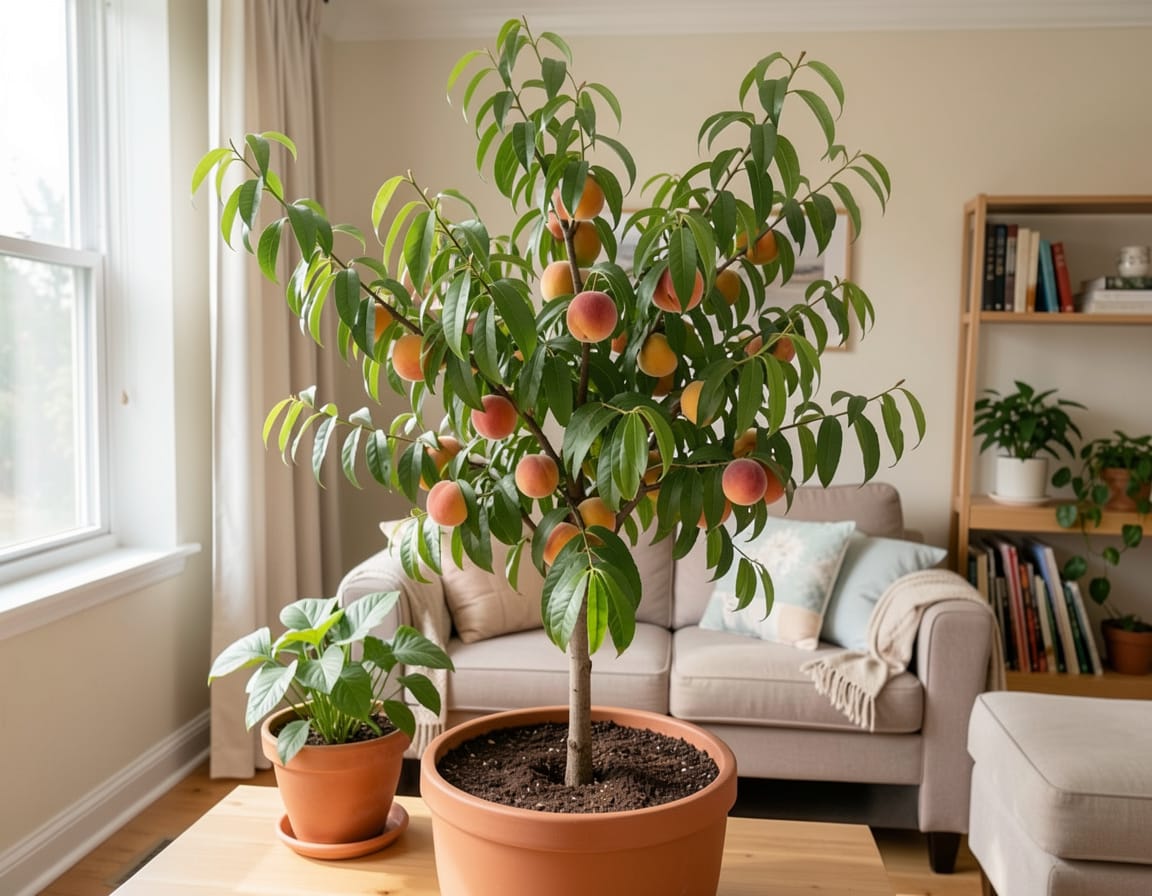
Many gardeners ask the same hopeful question after saving a peach pit or spotting a young sapling at a nursery: Can I grow a peach tree indoors?
The short answer is yes but with important limits. The longer, more useful answer is what this guide is about.
In real gardens and real homes, indoor peach trees are often started with good intentions and end in disappointment because key biological needs are misunderstood. Peach trees are not houseplants, but they can be grown indoors for specific stages or purposes if you understand what they need and what they will never tolerate.
This article explains when growing a peach tree indoors makes sense, when it doesn’t, and how to do it safely and realistically especially for beginners working with apartments, balconies, terraces, or limited outdoor space.
Why This Question Matters (And Why Peach Trees Are Different)
Peach trees are deciduous fruit trees, not tropical plants. That single fact explains most failures.
In simple terms:
- Peach trees need seasonal signals (cold, light changes, dormancy)
- They are sun-hungry and root-intensive
- They are genetically programmed to grow outside
What beginners often miss is that “indoors” can mean different things:
- Indoors temporarily (seedling stage, winter protection)
- Indoors in containers that move outdoors
- Indoors year-round as an experiment (usually unsuccessful)
Understanding this distinction saves time, money, and frustration.
Can I Grow a Peach Tree Indoors Successfully? (The Honest Answer)
Yes , Short-Term or Transitional Indoor Growing
- Germinating a peach pit
- Growing a young seedling (first 6–12 months)
- Protecting a potted tree during extreme winter cold
- Growing in a sunroom, greenhouse, or enclosed porch
No , Long-Term Indoor-Only Growing
- Living room or bedroom year-round
- No access to real sunlight
- No winter dormancy
- No outdoor airflow or temperature variation
In my experience working with home gardeners, peach trees grown indoors permanently almost always decline within 2–3 years, even if they look fine at first.
Why Indoor Peach Growing Fails (Plant Biology Explained Simply)
1. They Need Dormancy
Peach trees require chill hours (cold exposure) to reset their growth cycle. Without it:
- Leaves weaken
- Flower buds fail
- The tree becomes stressed and disease-prone
A heated home cannot provide this naturally.
2. Light Indoors Is Not Sunlight
Even bright windows provide:
- 5–15% of outdoor sun intensity
- Incorrect light spectrum
- Poor leaf energy production
Grow lights help but cannot fully replace the sun for fruit trees.
3. Roots Need Space and Oxygen
Peach trees develop strong, spreading roots.
- Small indoor pots restrict growth
- Poor drainage leads to root rot
- Compact soil suffocates roots
When Growing a Peach Tree Indoors Does Make Sense
Starting From a Pit or Seed
Indoors is ideal for:
- Controlled moisture
- Protection from pests
- Early root development
Growing in a Container That Moves Outdoors
This is the most successful method for small-space gardeners.
Cold Climate Protection
In very cold regions (USDA Zones 3–4), potted peach trees may overwinter indoors briefly.
What You’ll Need (Beginner-Friendly & Eco-Safe)
Essential Supplies
- Peach pit or young peach sapling
- Large container (minimum 10–15 gallons)
- Organic potting mix (well-draining)
- Perlite or coarse sand (for drainage)
- Mulch (bark or straw)
- Grow light (if starting indoors)
- Pruning shears
- Drainage tray
Budget-Friendly Alternatives
- Food-grade buckets with drilled holes
- Homemade compost mixed with garden soil
- Secondhand grow lights
Safety Notes
- Keep peach pits away from pets (toxic if chewed)
- Wash hands after soil handling
- Use organic inputs indoors to avoid fumes
Step-by-Step: How to Grow a Peach Tree Indoors (The Right Way)
Step 1: Decide Your Goal (Critical First Step)
Ask yourself:
- Is this a temporary indoor plant?
- Will it eventually move outdoors?
- Is fruit production a goal or learning?
This determines everything else.
Step 2: Starting Indoors (Seed or Sapling)
Best time: Late winter to early spring
- Use a deep container with drainage
- Fill with loose, well-draining organic soil
- Plant pit or sapling at correct depth
- Water until moist not soggy
- Place in brightest window or under grow light
Visual cues:
- Healthy leaves = firm, green, upright
- Weak light = long, pale stems
Step 3: Indoor Care Routine
Light
- 12–14 hours daily with grow light
- Rotate pot weekly
Water
- Water deeply, then let top 2 inches dry
- Never leave standing water
Temperature
- Ideal: 60–75°F
- Avoid heat vents and drafts
Step 4: Transitioning Outdoors (The Make-or-Break Moment)
After 4–6 months:
- Begin hardening off
- 1–2 hours outdoors daily
- Gradually increase over 10–14 days
- 1–2 hours outdoors daily
- Move to full sun location
- Expect slower growth initially (normal)
This step is non-negotiable for long-term success.
Pro Tips & Best Practices (From Real Gardens)
- Container size matters more than fertilizer
- Slight leaf drop during transition is normal
- Prune lightly early to shape structure
- Mulch protects roots and stabilizes moisture
- Accept that seed-grown trees vary in fruit quality
Common Beginner Mistakes
- Keeping indoors too long
- Overwatering
- Using decorative pots without drainage
- Expecting fruit indoors
FAQ: Real Questions Beginners Ask
Can I grow a peach tree indoors year-round?
Not successfully long-term. Peach trees need seasonal cycles and outdoor sun.
Why is my indoor peach tree losing leaves?
Common causes:
- Insufficient light
- No dormancy period
- Root stress from poor drainage
Can I keep a peach tree small indoors with pruning?
Pruning controls size, not biological needs. Dormancy and sunlight are still required.
How long can a peach tree stay indoors?
Typically 6–12 months maximum before outdoor transition.
Is a dwarf peach tree better for indoor growing?
Better for containers, yes but still not indoor-only long-term.
When NOT to Use This Method
Avoid indoor peach growing if:
- You have no outdoor access at all
- You cannot provide intense light
- You want guaranteed fruit production
- Your home is very warm year-round
Safer Alternatives
- Indoor citrus (with grow lights)
- Fig trees (more adaptable)
- Dwarf herbs or leafy greens
Alternative Growing Methods Compared
Container Outdoors (Best Option)
Pros
- Full sun
- Natural dormancy
- High success rate
Cons
- Requires outdoor space
Greenhouse / Sunroom
Pros
- Controlled environment
- Extended growing season
Cons
- Still requires cold exposure
Indoor-Only
Pros
- Educational
- Decorative (short-term)
Cons
- Low long-term survival
- No fruit
Conclusion
So, can I grow a peach tree indoors?
Yes as a temporary stage, not a permanent lifestyle for the plant.
The most successful gardeners treat indoor growing as:
- A starting point
- A protection strategy
- A learning phase
Peach trees reward patience, sunlight, and respect for natural cycles. When you work with the biology instead of against it, even small-space gardeners can enjoy healthy, sustainable peach trees without frustration or false promises.
If you approach this slowly, organically, and realistically, you’re already ahead of most beginners.
