Every product is independently reviewed and selected by our editors. If you buy something through our links, we may earn an affiliate commission at no extra cost to you.
Growing herbs indoors is no longer just a gardening trend it’s part of a larger shift toward healthier, more intentional living. How to grow cilantro from cuttings in water indoor is one of the simplest and most rewarding ways to combine organic gardening practices with natural interior decoration. In real homes I’ve worked in small city apartments, suburban kitchens, and rental spaces with strict rules this method consistently delivers fresh flavor, visual calm, and a genuine sense of sustainability.
Cilantro grown in water requires no soil, no chemicals, and very little space. It supports indoor air quality, reduces food waste, and creates a living décor element that feels grounded and toxin-free. This guide walks you through the process step by step, while also showing how indoor herb growing fits into a broader eco-friendly home styling philosophy.
Why Growing Cilantro in Water Indoors Matters More Than You Think
Cilantro is often treated as a disposable herb bought, used once or twice, then forgotten in the fridge. In my experience helping U.S. homeowners transition toward sustainable home design, cilantro is one of the best entry points into indoor plants and natural materials.
Health & Indoor Air Quality
While cilantro itself won’t purify air like a large houseplant, growing herbs indoors reduces your reliance on store-bought produce that may carry pesticide residue. You control the growing environment entirely no synthetic fertilizers, no chemical sprays.
Mental Well-Being
Living greenery changes how a space feels. Kitchens with fresh herbs tend to feel calmer and more intentional. Many clients tell me their daily routine of checking roots and changing water becomes a grounding ritual, especially in high-stress urban environments.
Sustainability & Environmental Impact
Growing cilantro from cuttings extends the life of what you already buy. It reduces packaging waste and lowers your carbon footprint. This is sustainable home design at a practical, everyday level not perfection, but progress.
A Toxin-Free, Calming Living Space
Water-grown herbs pair beautifully with organic home décor ideas: glass jars, wooden trays, natural light. They add life without introducing plastics or synthetic finishes into your space.
Understanding How to Grow Cilantro From Cuttings in Water Indoor
Before diving into tools and steps, it’s important to understand what actually works and what doesn’t. Cilantro is not the easiest herb to regrow long-term, but it does root reliably from fresh cuttings when conditions are right.
In real homes, success depends on:
- Using fresh, healthy stems
- Providing consistent light
- Keeping water clean and oxygenated
- Accepting that water-grown cilantro is best for short- to medium-term harvests
This isn’t about forcing plants to perform. It’s about working with their natural growth habits.
What You’ll Need (Simple, Organic, and Accessible)
One of the reasons I recommend this method to renters and beginners is its low barrier to entry.
Essential Supplies Table
| Item | What It Is | Why It’s Used | Organic / Health Benefits | Sustainability Considerations |
| Fresh cilantro bunch | Organic preferred, stems intact | Source of cuttings | No pesticide residue | Choose local or organic |
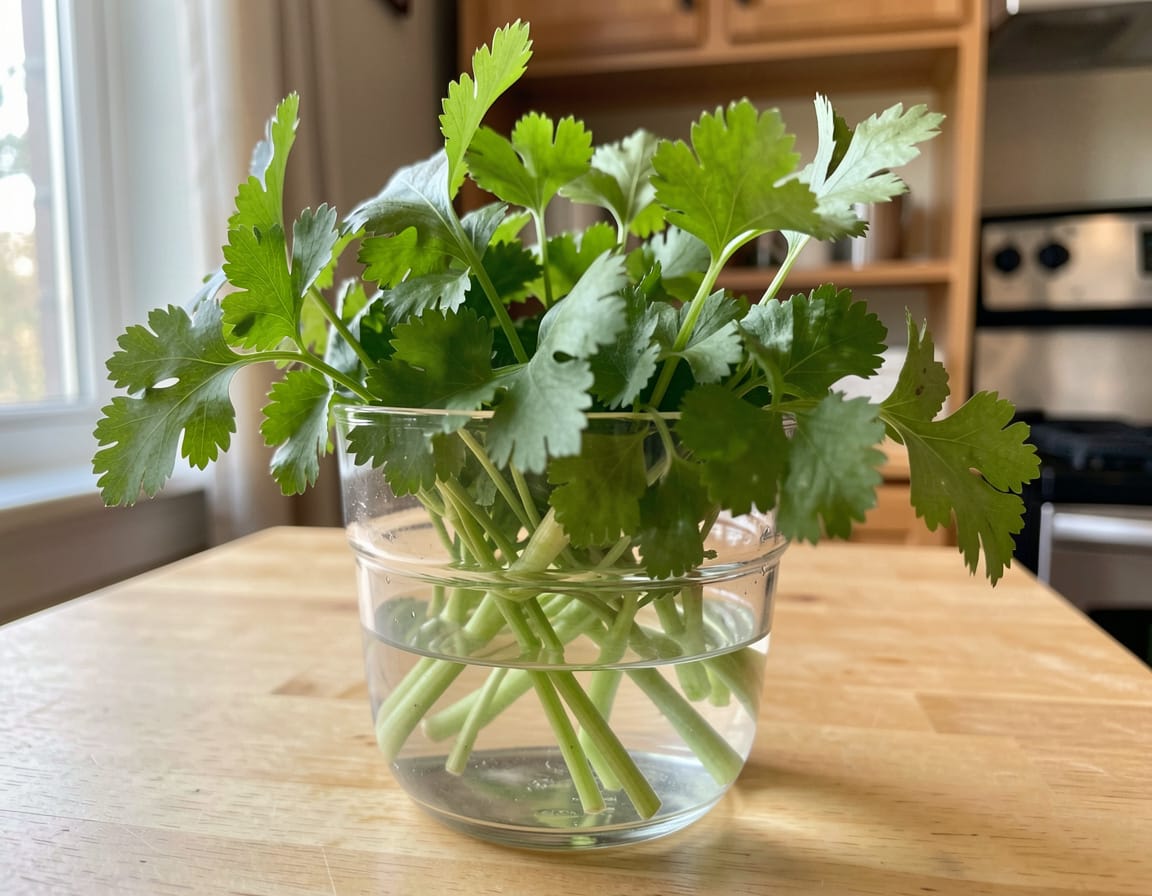
| Clean glass jar | Mason jar or recycled glass | Holds water & roots | Non-toxic, inert | Reusable, plastic-free |
| Filtered water | Room-temperature | Supports root growth | Reduces chlorine stress | Less plant shock |
| Sharp scissors | Clean cutting tool | Prevents stem damage | Reduces rot risk | Long-lasting tool |
| Sunny window | Indirect light | Photosynthesis | Natural light exposure | No energy use |
I avoid recommending specialized products here. If an organic solution requires constant buying, it’s not truly sustainable.
Step-by-Step: How to Grow Cilantro From Cuttings in Water Indoor
1. Choose the Right Stems
In my hands-on work, success starts at the grocery store or farmer’s market. Look for cilantro with:
- Bright green leaves
- Firm, unbroken stems
- No yellowing or slimy bases
Cut stems that are 4–6 inches long, removing lower leaves so nothing sits below the waterline.
2. Make a Clean Cut
Cut stems at a slight angle just below a leaf node. This increases surface area for root development. Avoid crushing the steam clean cuts matter more than most people realize.
3. Place in Water Correctly
Fill your jar so only the bottom 1–1.5 inches of stem is submerged. Leaves in water cause rot and cloudiness.
4. Position for Light
Place the jar near a bright window with indirect sunlight. Direct midday sun can overheat water and stress stems, especially in south-facing U.S. windows.
5. Change Water Regularly
Change water every 1–2 days. This is non-negotiable. Stagnant water is the #1 reason cilantro fails indoors.
6. Watch for Roots
Roots typically appear within 5–10 days. Once roots reach about an inch long, you can begin light harvesting.
Everyday Organic Styling & Care Routine
Growing herbs indoors works best when it’s part of your daily rhythm, not a separate chore.
Daily (1–2 Minutes)
- Check water clarity
- Remove any yellowing leaves
- Rotate the jar slightly for even light
Weekly
- Deep rinse the jar
- Trim stems lightly to encourage fresh growth
- Reposition based on seasonal light changes
In real homes, this routine fits naturally into morning coffee or evening kitchen cleanup.
How to Style Water-Grown Cilantro as Natural Interior Decoration
Indoor herbs shouldn’t feel like an afterthought. When styled intentionally, they enhance eco-friendly home styling.
Organic Home Décor Ideas
- Group cilantro with rosemary or mint in matching jars
- Place jars on reclaimed wood trays
- Use linen or cotton runners underneath for texture
Sustainable Home Design Tip
Avoid painted or metallic containers. Bare glass, ceramic, and untreated wood age better and don’t leach chemicals.
In open-concept homes, herbs act as subtle dividers between kitchen and living spaces functional and beautiful.
Deep Organic Setup or Seasonal Refresh
Seasonal Adjustments
- Winter: Move closer to windows, rotate more often
- Summer: Pull back from direct sun, increase water changes
- Spring/Fall: Ideal balance best growth phase
Long-Term Plant Health
Cilantro grown in water has a lifespan. After 3–5 weeks, stems weaken. At this stage:
- Compost old cuttings
- Start fresh from new bunches
- Or transition rooted stems to soil if desired
This cycle aligns perfectly with organic gardening practices use, renew, return to the earth.
Prevention & Sustainability Tips
In real homes, problems usually come from good intentions applied too aggressively.
- Avoid synthetic “plant food” drops in water
- Never use antibacterial soap on jars
- Don’t overcrowd stems
- Compost spent herbs instead of trashing them
Sustainability isn’t about adding more it’s about knowing when to stop.
Common Mistakes to Avoid (And Why They Matter)
Fake “Eco-Friendly” Containers
Some bamboo-look plastics still contain resins. Stick to glass or ceramic.
Poor Lighting
Too little light causes leggy growth; too much causes bitterness.
Overconfidence With Water
More water doesn’t mean better growth. Oxygen matters.
Chemically Treated Herbs
Non-organic cilantro may struggle to root due to post-harvest treatments.
Each of these mistakes stresses plants and undermines the calm, healthy environment you’re trying to create.
Local U.S. Home Context: What Actually Works
Small Apartments
A single windowsill jar is enough. No grow lights required.
Rentals
No drilling, no soil spills, no lease issues.
Low-Light Homes
Use east-facing windows or reflective surfaces behind jars.
Urban vs Suburban
Urban homes benefit most from water-grown herbs due to limited outdoor space. Suburban homes often rotate indoor herbs seasonally.
Extra Expert Tips From Real Homes
- Reuse pasta sauce jars—wide mouths help airflow
- Harvest outer leaves first to extend life
- Pair cilantro with neutral scents—avoid placing near diffusers
- If roots brown slightly, rinse and reset—don’t panic
In my experience, confidence grows alongside the plant. Start simple.
Frequently Asked Questions
Can cilantro really grow long-term in water indoors?
Short to medium term, yes. For ongoing harvests, restart cuttings every few weeks.
How often should I change the water?
Every 1–2 days. Clean water is essential.
Is this method safe for kitchens with pets?
Yes, but place jars out of reach. Cilantro is non-toxic but curious pets can topple jars.
Do I need fertilizer when learning how to grow cilantro from cuttings in water indoor?
No. Added nutrients often cause more harm than good.
Can I move water-grown cilantro to soil later?
Yes, gently. Acclimate slowly to avoid shock.
Why do my stems rot at the base?
Usually from leaves submerged in water or infrequent water changes.
Conclusion: A Small Habit With Lasting Impact
Learning how to grow cilantro from cuttings in water indoor is about more than herbs. It’s a practical expression of organic home décor ideas, natural interior decoration, and sustainable home design all in one simple jar.
In real homes across the U.S., this method consistently proves that eco-friendly living doesn’t require perfection, expensive tools, or extra space. It requires awareness, consistency, and respect for natural processes.
Start with one jar. Let it live on your windowsill. Over time, you’ll notice not just fresher meals but a calmer, more intentional home.
