Every product is independently reviewed and selected by our editors. If you buy something through our links, we may earn an affiliate commission at no extra cost to you.
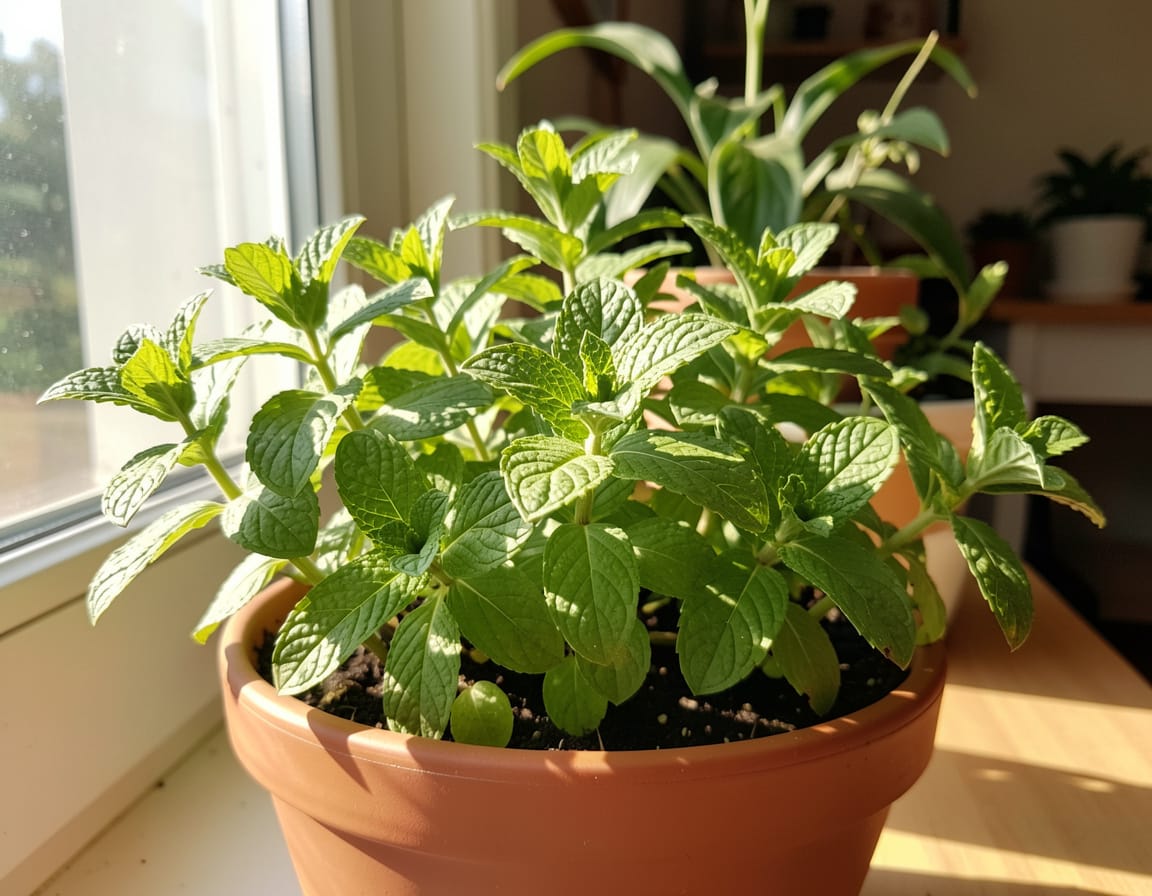
Providing the right light is essential for healthy, flavorful mint grown indoors. How to Provide Ideal Sunlight for Mint Indoors depends on light intensity, duration, and placement. Learn how many hours mint needs, where to position it, and how to prevent leggy, weak growth.
How Many Hours of Sunlight Does Indoor Mint Need
Here’s exactly how I position and manage mint plants for balanced, consistent light in typical U.S. homes.
1. Choose the Right Window
- East-facing windows: Best overall for mint gentle morning sun, cooler in the afternoon.
- West-facing windows: Good option, but may require sheer curtains to filter stronger afternoon light.
- South-facing windows: Excellent in winter but can get too intense in summer. Use a light curtain or move the pot slightly back from the glass.
- North-facing windows: Usually too dim unless supplemented with a grow light.
2. Rotate the Pot Regularly
Indoor light comes from one direction, which causes mint to lean toward the source. Rotate your pot a quarter turn every two or three days to keep growth even and upright.
3. Supplement with Grow Lights
If your home doesn’t get enough natural light—especially during darker winter months—a small full-spectrum LED grow light is a simple solution.
Tips for supplemental lighting:
- Keep the light about 6–8 inches above the plant tops.
- Run it for 12–14 hours daily.
- Use a timer to maintain a consistent schedule.
- Choose full-spectrum lights labeled for herbs or leafy greens; they mimic natural sunlight without excessive heat.
4. Adjust with the Seasons
- Winter: Move mint closer to windows or increase artificial light hours.
- Summer: Pull pots back from strong afternoon sun to prevent leaf scorching.
- Spring/Fall: These are naturally balanced times mint tends to thrive with little adjustment.
Why Light Quality Matters for Mint
Light affects not just growth rate but leaf quality and flavor. Mint’s essential oils develop most when the plant receives steady, moderate light.
Here’s what I’ve observed across dozens of indoor growing setups:
- Low light: Pale leaves, weak stems, and mild flavor. The plant stretches toward light sources.
- Moderate indirect light: Balanced growth, darker green leaves, and strong aroma ideal for fresh use.
- Excessive direct light: Leaf curl, brown tips, and dry soil between waterings.
If your mint’s flavor seems dull or it grows too slowly, light is usually the first thing to adjust.
Troubleshooting Light Problems in Indoor Mint
| Problem | Likely Cause | Fix |
| Leggy, stretched stems | Not enough light | Move closer to a brighter window or add a grow light |
| Yellowing leaves | Low light or overwatering | Improve light access and let soil dry slightly between waterings |
| Brown or crisp leaf edges | Too much direct sunlight | Filter light with a sheer curtain or move plant back from the window |
| Small, pale leaves | Weak light intensity | Increase to at least 4 hours of bright light or 12 hours under grow lights |
| Weak aroma | Inconsistent lighting | Keep light schedule steady—mint likes predictable rhythms |
Organic Light-Management Practices
For those practicing organic, sustainable indoor gardening, small adjustments can help your mint thrive without energy waste or toxic materials:
- Use reflective surfaces. Place a light-colored wall or mirror behind your mint to bounce light evenly.
- Choose energy-efficient grow lights. LED fixtures consume less power and emit minimal heat ideal for small apartments.
- Combine natural and artificial light. A few hours of morning sun plus several hours of LED light gives great results.
- Avoid glossy decorative pots. They can concentrate heat and light, stressing the roots. Use unglazed terracotta or recycled ceramic containers instead.
Realistic U.S. Home Scenarios
Mint adapts well to a variety of American living situations:
- Small apartments: Place mint on an east-facing kitchen window with a small clip-on grow light for supplemental brightness.
- Suburban homes: A west-facing window in the dining area often gives sufficient indirect light.
- Urban balconies: Filter sunlight through railing shadows or sheer fabric to avoid scorching.
- Cool northern regions: Expect longer artificial light hours in winter; natural light alone is often too weak after October.
- Hot southern regions: Provide afternoon shade direct sunlight behind glass can reach over 100°F and dehydrate the plant quickly.
Expert Tips for Perfect Indoor Lighting
- Move mint gradually. Sudden changes in light can shock the plant. Transition it over several days when changing locations.
- Watch the leaves. Leaf color is your best indicator. Deep green means enough light; pale or yellowish leaves mean it needs more.
- Group plants. Placing several herbs together creates a microclimate with higher humidity and shared light reflection.
- Clean windows and light fixtures. Dust reduces light intensity by up to 20%. Keeping them clean ensures consistent exposure.
- Time your watering to light cycle. Water early in the day so leaves dry before the lights turn off this helps prevent fungal problems.
Frequently Asked Questions
1. How much sunlight does mint need to grow indoors? Mint needs about 4–6 hours of bright, indirect sunlight per day or 12–14 hours under full-spectrum grow lights to stay healthy and flavorful.
2. Can mint grow in low light? It will survive but won’t thrive. Low light results in weak, pale leaves and poor aroma. Supplement with a small LED grow light if your space is dim.
3. What happens if my mint gets too much sun indoors? Direct, strong sunlight especially through glass can scorch leaves. You’ll see brown edges and dry soil. Move the pot a few inches back from the window.
4. Do LED grow lights work as well as sunlight? Yes, as long as you use full-spectrum lights made for herbs. In cooler or darker homes, they’re often more reliable than window light.
5. How do I know if my mint is getting enough light? Healthy mint has upright stems, deep green leaves, and a strong scent. If it’s leaning, pale, or dull in aroma, increase the light exposure.
6. Can I keep mint under lights year-round? Absolutely. Many indoor gardeners grow mint entirely under lights through winter. Just maintain a regular 12–14 hour light cycle.
Conclusion
So, how much sunlight does mint need to grow indoors? Aim for 4–6 hours of bright, indirect natural light, or supplement with 12–14 hours of full-spectrum artificial light. Balance is key too little light makes weak, tasteless leaves, and too much can burn them.
In my experience working with hundreds of homeowners, mint is one of the most resilient indoor herbs once you match its light to its natural preferences. Whether your home is sun-drenched or softly lit, a bit of observation and adjustment keeps mint lush, aromatic, and endlessly useful in your organic kitchen.
Growing mint indoors isn’t just convenient it’s a small, daily connection to nature’s rhythm, right from your windowsill.
