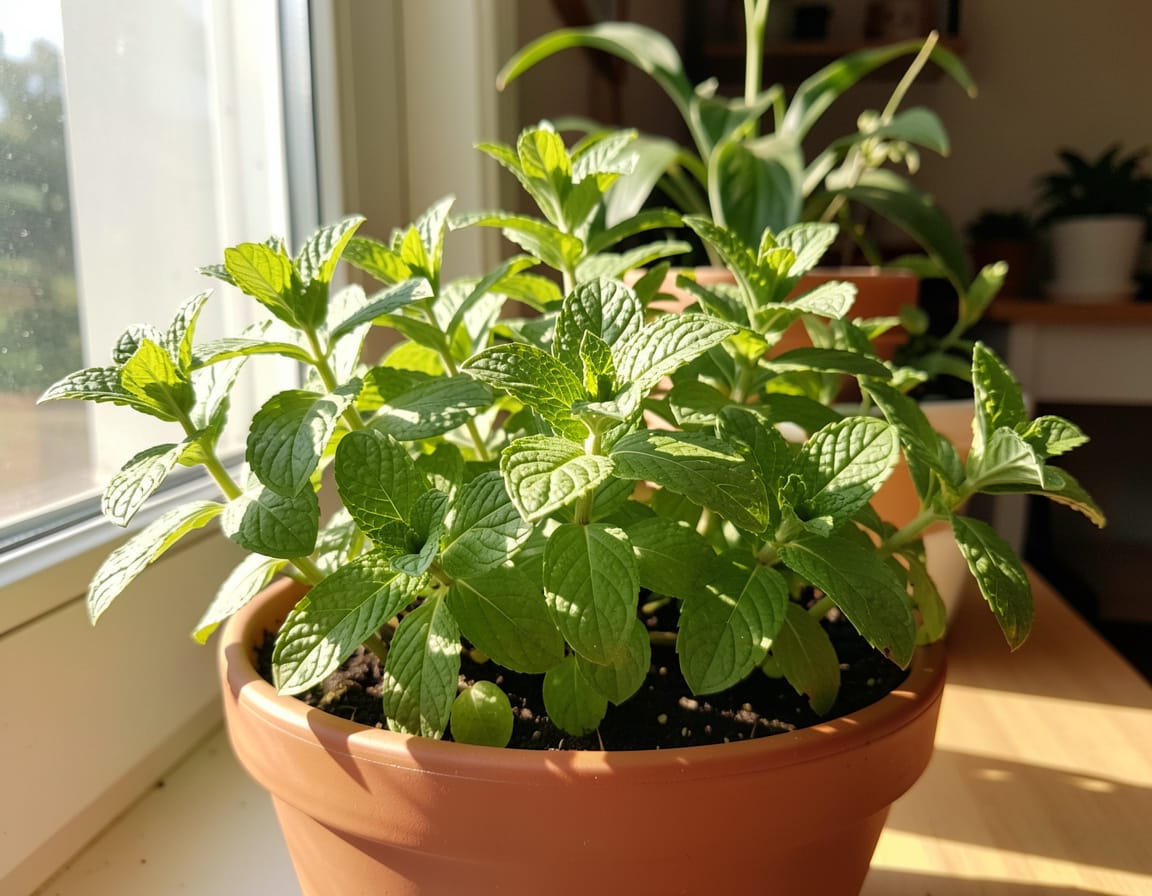
Every product is independently reviewed and selected by our editors. If you buy something through our links, we may earn an affiliate commission at no extra cost to you.
For those beginning their herb gardening journey, understanding how long it takes for mint to germinate indoors is an important first step. Mint is one of the easiest herbs to grow once established, but its seeds can challenge your patience at the start. They’re tiny, slow to sprout, and sensitive to temperature and moisture changes.
From years of helping homeowners and renters grow fresh herbs on kitchen windowsills and apartment balconies, I can tell you that mint rewards careful attention during germination. With the right warmth, light, and humidity, you’ll see those first green shoots in about 10 to 15 days, though sometimes it takes up to three weeks.
Let’s look at what happens during this stage, how to create ideal indoor conditions, and how to transition seedlings into strong, productive plants.
Understanding Mint Germination Indoors
Mint (Mentha spp.) reproduces easily through cuttings or root division, but starting from seed is a rewarding way to learn about plant growth from scratch. Germination is the process by which the seed absorbs water, breaks dormancy, and begins to form its first leaf structures.
Indoors, this process can be slightly slower than outdoors because of lower light and humidity fluctuations. The key factors affecting how long it takes include:
- Temperature: Mint seeds germinate best between 68°F and 75°F (20–24°C).
- Light exposure: Mint seeds are surface germinators burying them too deep prevents sprouting.
- Moisture: Consistent, gentle moisture helps the seed coat soften so roots can emerge.
- Air circulation and humidity: Balanced humidity encourages germination, but stagnant air can invite mold.
Under the right conditions, you’ll typically see sprouts in 10–15 days, and your seedlings will be ready for transplant in about 4–5 weeks.
Step-by-Step: How to Germinate Mint Seeds Indoors
1. Choose the Right Container
A shallow seed tray or small pots with drainage holes work best. Line the bottom with a thin layer of compost or a bit of coco coir for moisture retention.
2. Prepare the Soil
Use a high-quality organic seed-starting mix light, well-draining, and free from synthetic fertilizers. You can blend equal parts compost, coco coir, and perlite.
3. Sow the Seeds
Mint seeds are extremely fine. Sprinkle them lightly on the surface and press gently into the soil without covering them. They need light to germinate.
4. Create a Humid Environment
Mist the surface until it’s evenly moist, then cover the tray loosely with a clear lid or plastic wrap. This maintains humidity while letting in light.
5. Provide Warmth and Light
Keep the tray in a warm spot (around 70°F) with bright, indirect sunlight. If daylight is limited, use a small LED grow light for 12–14 hours a day.
6. Maintain Moisture
Mist daily or whenever the top of the soil feels dry. Avoid overwatering—soggy conditions cause seeds to rot before they sprout.
7. Watch for Sprouts
You’ll see tiny green shoots in 10 to 15 days. Once seedlings appear, remove the cover to improve air circulation and prevent fungal issues.
8. Thinning and Transplanting
When seedlings reach about 2 inches tall and have a few true leaves, thin out weaker ones or transplant them into their own pots. Continue growing them in bright light until the roots are well established.
Common Issues During Mint Germination
In real homes, especially during winter or in air-conditioned spaces, germination can take longer. Here’s how to troubleshoot common problems:
| Problem | Likely Cause | Solution |
| Seeds not sprouting after 3 weeks | Temperature too low or seeds buried too deep | Move tray to a warmer location (around 70°F) and ensure seeds are on the surface |
| Mold on soil or seeds | Too much humidity, poor ventilation | Remove cover for a few hours daily; use a small fan for gentle airflow |
| Uneven germination | Old seed stock or inconsistent moisture | Always use fresh, organic seeds and mist evenly every day |
| Seedlings falling over | Damping-off disease (fungal) | Improve air circulation, avoid overwatering, and use sterile seed-starting mix |
How to Care for Mint Seedlings After Germination
Once your mint has sprouted, your focus shifts from germination to healthy growth:
- Light: Keep the pot near a bright east- or south-facing window. Mint needs at least 4 hours of light daily.
- Water: Maintain lightly moist soil. Mint hates drying out but also dislikes soggy roots.
- Feeding: After 4 weeks, feed lightly with diluted organic compost tea or seaweed extract.
- Transplanting: When roots fill the starter pot, move seedlings into larger containers (8–10 inches wide) with fresh organic potting soil.
A good rule of thumb: the healthier your seedling care, the faster your mint will establish a strong root system and start producing flavorful leaves.
Realistic U.S. Home Scenarios
- Small apartments: Start seeds on a sunny kitchen counter or windowsill. Use a humidity dome to maintain moisture in drier indoor air.
- Cooler northern climates: A seedling heat mat helps jumpstart germination during winter.
- Homes with limited natural light: A compact grow light (set on a timer) ensures consistent growth.
- Warm southern regions: Keep the tray out of direct midday sun to prevent overheating.
The beauty of mint is its adaptability it germinates and grows well in nearly any U.S. climate when given a stable indoor environment.
Expert Tips for Faster, Healthier Germination
- Pre-soak seeds: Soak mint seeds in warm water for 4–6 hours before planting to soften the coat and encourage faster germination.
- Bottom watering: Instead of watering from above, place the seed tray in a shallow dish of water for 10 minutes. The soil will absorb moisture evenly.
- Use fresh seed: Mint seed viability drops quickly after one year, so buy small packets of fresh, organic seed each season.
- Label trays: Since mint germinates slowly, labeling helps you track planting dates and know when to expect results.
- Patience: Even under perfect conditions, not all seeds germinate at once. Wait at least 21 days before re-sowing.
Frequently Asked Questions
1. How long does it take for mint to germinate indoors? Under ideal conditions warmth (around 70°F), light moisture, and bright indirect light mint seeds germinate in 10 to 15 days, though it may take up to 3 weeks.
2. Why are my mint seeds taking longer to sprout? Cool temperatures, low humidity, or old seeds can slow germination. Move your tray to a warmer spot and mist regularly.
3. Should I cover mint seeds with soil? No. Mint seeds need light to germinate. Press them gently onto the soil surface instead.
4. Is it easier to grow mint from cuttings than seed? Yes. Cuttings root in water within a week, while seeds take longer. However, growing from seed lets you explore different mint varieties.
5. What kind of soil works best for mint seeds? Use an organic, loose, well-draining mix rich in compost or coco coir. Avoid synthetic fertilizers they can burn young seedlings.
6. Do I need a grow light? If your indoor space lacks bright natural light, a small LED grow light helps maintain consistent germination and early growth.
Conclusion
So, how long does it take for mint to germinate indoors? Typically around 10 to 15 days, provided you maintain warmth, moisture, and light. Mint may test your patience early on, but once the seeds break through, it quickly becomes one of the most forgiving and rewarding herbs to grow.
From my own experience maintaining organic indoor gardens, I’ve found that successful mint germination depends more on consistency than special tools. Keep the process natural use organic soil, clean containers, and gentle watering and you’ll soon have fresh, fragrant mint ready to elevate everything from tea to home décor.
Growing mint indoors isn’t just gardening; it’s cultivating freshness and calm right in your living space.
