Every product is independently reviewed and selected by our editors. If you buy something through our links, we may earn an affiliate commission at no extra cost to you.
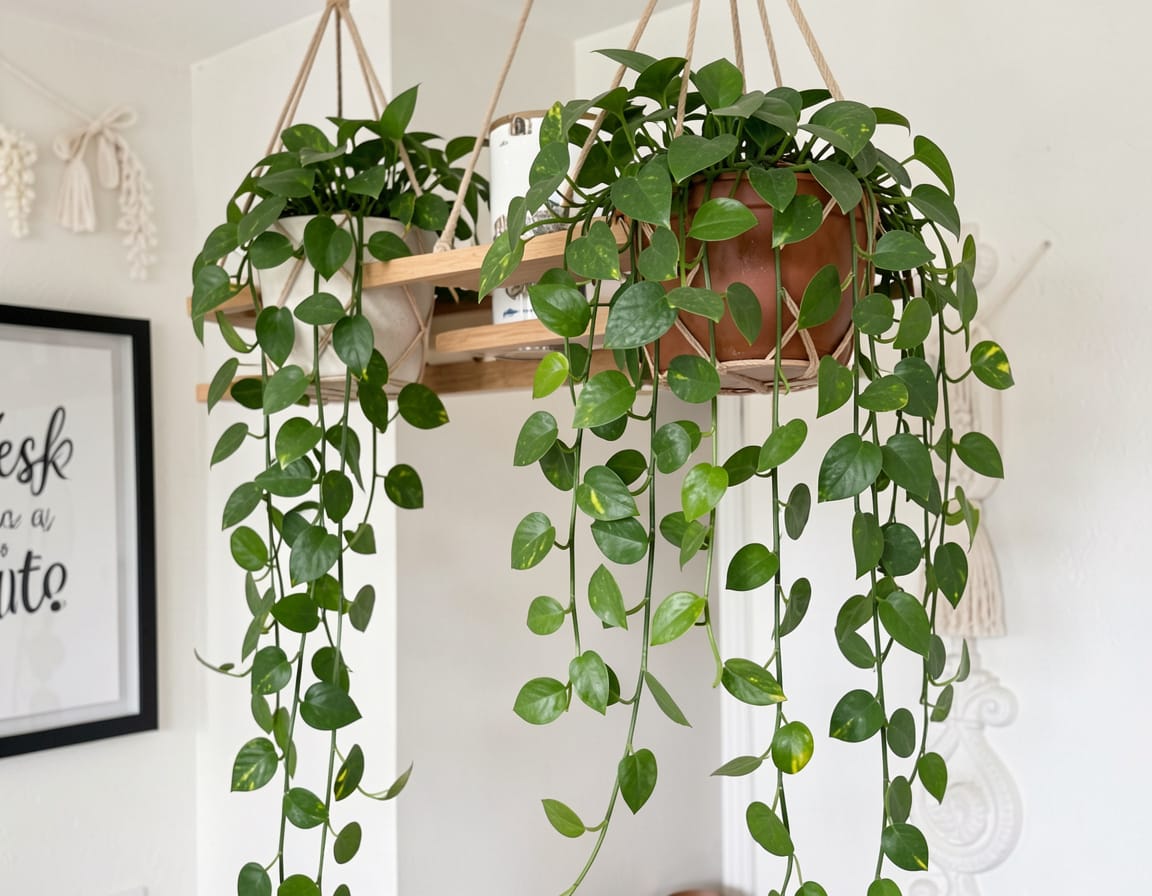
Decorating with pothos vines adds instant greenery and effortless style to any space. Let trailing vines cascade from shelves, hang them in macramé planters, or train them along walls and windows. Their lush leaves soften interiors, improve air quality, and create a calm, natural atmosphere.
Below is a professional, experience-based guide to decorating with pothos vines safely, sustainably, and beautifully in real U.S. homes.
Why Pothos Is Ideal for Natural Home Decoration
Pothos vines are often my first plant recommendation when clients want to “green” their homes organically. Here’s why:
- Air purification: They help filter common indoor toxins like formaldehyde and benzene.
- Low maintenance: They adapt to a wide range of light and watering conditions.
- Styling flexibility: They trail, climb, or drape fitting nearly any décor style.
- Non-toxic décor option: Unlike artificial vines, they release oxygen and contain no synthetic dyes or plastics.
- Fast growth: You can shape them into living art or propagate cuttings easily for other rooms.
Choosing the Right Variety for Your Space
| Variety | Appearance | Best For | Light Conditions |
| Golden Pothos | Green leaves with golden or yellow variegation | Classic boho & natural décor | Medium to bright indirect light |
| Marble Queen | Creamy-white marbled leaves | Light, serene interiors | Bright indirect light |
| Neon Pothos | Vibrant chartreuse leaves | Modern, minimal spaces | Bright, filtered light |
| Jade Pothos | Deep green leaves | Traditional, darker corners | Low to medium light |
| Cebu Blue | Silvery-blue matte leaves | Contemporary or tropical themes | Medium to bright light |
Organic and Sustainable Styling Materials
When decorating with pothos vines, always pair them with natural, non-toxic materials that complement their living texture.
| Material | Why It Works | Eco Benefit |
| Terracotta or clay pots | Breathable, prevents overwatering | Reusable, non-synthetic |
| Macramé hangers (cotton or hemp) | Adds organic texture and height | Biodegradable |
| Natural wood trellises or driftwood | Encourages climbing | Renewable material |
| Glass or recycled-ceramic planters | Highlights roots if grown hydroponically | Sustainable reuse |
| Coconut coir poles or moss poles | Mimics natural climbing conditions | Compostable |
Avoid PVC-coated planters or synthetic “moss” poles they may off-gas or flake microplastics into your living environment.
Decorating Ideas for Different Home Spaces
A. Living Room
- Shelf styling: Let vines trail from high bookshelves or floating wall shelves. Loop or pin discreetly with clear clips made from recycled materials avoid tape or staples that can bruise stems.
- Corner filler: Place a large, lush pothos in a floor pot and train it around a bamboo stake or indoor tree branch.
- Wall greenery: Mount a natural wood board and attach small terracotta pots or glass jars for a living wall effect.
Pro tip: Pothos pairs beautifully with warm wood, linen, and ceramics keep other décor neutral to let the greenery stand out.
B. Kitchen
- Cabinet crown draping: Place a pothos on top of cabinets where it can cascade naturally downward.
- Hanging planters near windows: Use cotton macramé hangers for filtered sunlight exposure.
- Hydroponic jars: Root pothos cuttings in clear water jars it’s visually clean and perfect above counters.
Safety note: Keep the plant out of reach of pets and food-prep surfaces, as pothos can cause mild irritation if ingested.
C. Bedroom or Reading Nook
- Soft trailing décor: Drape one or two vines along a floating shelf near the bed for a restful, biophilic accent.
- Canopy or curtain-frame styling: Train a pothos over a curtain rod or canopy frame using gentle ties or twine.
- Wall art integration: Combine framed botanical prints with a live pothos vine weaving between frames.
Expert observation: In bedrooms, pothos can help balance humidity and subtly filter air pollutants from bedding or furniture materials.
D. Bathroom
Pothos thrives in warm, humid air perfect for natural spa-like décor.
- Set a small vine on a high shelf or corner ledge where it can trail safely away from water spray.
- Choose a ceramic pot with drainage and place it on a bamboo or cork tray to catch excess moisture.
- Mix with ferns or peace lily for a lush, tropical feel.
Avoid sitting pots directly on tile floors it reduces drainage and can encourage rot.
E. Office or Workspace
- Wrap vines around a driftwood hoop or natural branch for a sculptural, organic focal piece.
- Place a small pothos on a filing cabinet or bookcase to soften industrial lines.
- Train vines along a corkboard edge or around a desk lamp using removable clips.
Plants at eye level help reduce screen fatigue and promote calm focus something I’ve consistently seen in clients’ home offices.
Creative, Sustainable Training Techniques
Pothos vines are naturally flexible. Here’s how to train them safely:
| Method | How To Do It | Why It Works |
| Trailing | Let vines hang naturally from shelves or hanging planters | Easiest, shows off cascading growth |
| Climbing | Attach to moss or coir poles, or fix to a wall with gentle plant clips | Promotes larger, heartier leaves |
| Horizontal “runner” design | Run vines along window frames or shelves with twine supports | Creates a soft, living border |
| Wreath or circle mount | Shape around a reclaimed wire hoop or bamboo ring | Compact and artistic |
Pro tip: Turning your plant occasionally ensures even light exposure and balanced growth.
Maintenance for Healthy, Long-Lived Pothos
- Light: Bright, indirect is best; tolerate low light but growth will slow.
- Water: Let the top inch of soil dry before watering. Overwatering is the main cause of yellow leaves.
- Fertilizer: Use organic liquid fertilizer (like compost tea or diluted fish emulsion) monthly during spring and summer.
- Pruning: Trim long vines to encourage fullness you can root cuttings easily in water.
- Cleaning: Wipe leaves monthly with a damp cotton cloth to remove dust and improve photosynthesis.
For renters or frequent movers, pothos also travels well just coil vines gently and transport in a breathable bag.
Common Mistakes to Avoid
- Artificial supports or plastic vines they off-gas and clash with natural décor.
- Direct sun exposure burns leaves easily.
- Overcrowded pots roots need space; repot every 1–2 years.
- Overwatering soggy soil suffocates roots.
- No pruning vines become leggy and sparse without occasional trimming.
- Ignoring light direction rotate every few weeks for symmetry.
Local U.S. Home Considerations
- Northeast & Midwest: Place near east or south windows in winter for adequate light.
- South & Southwest: Shield from harsh afternoon sun; filtered light through sheer curtains works best.
- Pacific Northwest: Low light tolerance makes pothos ideal for cloudy days.
- Humid Southeast: Ensure pots have drainage to prevent root rot in warm, moist air.
Extra Expert Tips
- Budget-friendly décor: Propagate cuttings in water jars for free new plants they make great gifts or shelf accents.
- Pet safety: Keep out of reach; pothos is mildly toxic if chewed.
- Combine textures: Pair trailing pothos with upright plants (like snake plant or peace lily) for dimensional greenery.
- Eco-lighting: Use warm LED grow bulbs in darker corners to reduce energy use while maintaining healthy vines.
- Minimalist alternative: Grow one long, healthy vine and let it frame a doorway or window simple, elegant, and low effort.
FAQ: Decorating With Pothos Vines
1. Can pothos grow in just water? Yes, indefinitely, if you refresh the water weekly and add a drop of liquid fertilizer monthly. Use glass containers to enjoy visible roots.
2. How can I make my pothos fuller? Prune regularly and replant the cuttings into the same pot it creates a denser, lusher plant.
3. What’s the best way to hang pothos without damaging walls? Use removable adhesive hooks or clips rated for lightweight plants. For long-term setups, install small screw hooks directly into studs and support with natural rope.
4. Will pothos grow outdoors? Yes, in USDA zones 10–12 (warm southern climates). In most of the U.S., treat it as an indoor plant or bring it in during colder months.
5. Is pothos good for air quality? It helps reduce common VOCs and adds humidity, contributing to a cleaner indoor environment though not a substitute for proper ventilation.
6. Can I mix pothos varieties in one pot? Absolutely. Combining Golden and Marble Queen varieties adds visual depth while maintaining similar care needs.
Final Thought
Decorating with pothos vines is one of the simplest, most sustainable ways to bring organic beauty into your home. They soften hard edges, clean the air, and invite a sense of calm connection to nature.
In my experience, the most successful designs are those that allow the plant’s natural shape to guide the décor not the other way around. Give your pothos room to trail, climb, or dance in the light, and it will turn any space from apartment corner to open-concept living room into a living, breathing piece of art.
