Every product is independently reviewed and selected by our editors. If you buy something through our links, we may earn an affiliate commission at no extra cost to you.
Adjustable railing planters solve one of the biggest frustrations in small-space gardening: railings aren’t standard. Wood, metal, composite, square, round every deck and balcony is different. A fixed bracket rarely fits perfectly. Adjustable railing planters allow you to fine-tune the width and grip so your planter sits level, secure, and properly balanced.
But adjustability alone doesn’t guarantee success. Weight load, drainage, soil depth, sun exposure, and wind pressure determine whether your planter thrives or becomes a safety hazard.
This guide walks you through how to choose the right adjustable railing planter, install it safely, and plant it for long-term performance.
Introduction
Most railing planter failures have nothing to do with plant care. They fail because:
- The planter doesn’t fit the railing width.
- Brackets loosen over time.
- Soil weight exceeds load limits.
- Drainage water stains decking.
- Wind stress wasn’t considered.
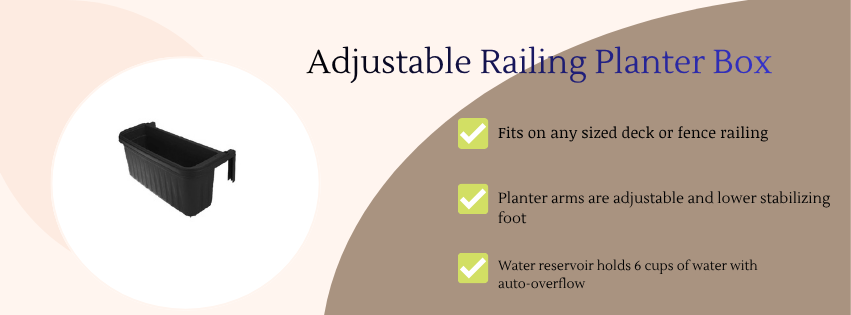
Adjustable railing planters are designed to eliminate fit issues but they still require proper installation and planting strategy.
If you want a secure, low-maintenance setup that supports healthy root systems and survives real outdoor conditions, here’s exactly how to do it.
Quick Summary Box
Best For: Balconies, decks, and patios with non-standard railing widths Typical Adjustable Range: 2–6 inches wide railings Minimum Soil Depth: 6–8 inches (8–10 inches preferred) Safe Weight Target: Under 20–25 lbs per planter unless mounted to structural posts Best Materials: UV-resistant resin or powder-coated aluminum Ideal Sun Exposure: East-facing for easiest maintenance Watering Frequency (Summer): 3–7 times weekly depending on exposure
What Are Adjustable Railing Planters
Adjustable railing planters use:
- Sliding brackets
- Compression clamps
- Adjustable hooks
- Locking screw mechanisms
These systems allow you to modify the grip width to fit various railing dimensions without permanent structural changes.
They’re ideal for:
- Renters
- Composite or metal railings
- Railings with unusual thickness
- Situations where drilling is not allowed
Why Adjustability Matters for Plant Health
A poorly fitted planter tilts. Even a slight forward tilt affects:
- Soil distribution
- Drainage flow
- Root development
- Water retention
When soil consistently shifts toward one side, roots develop unevenly, leading to instability and poor nutrient uptake.
Proper adjustment ensures:
- Level soil surface
- Even water distribution
- Consistent drainage
Key Buying Criteria for Adjustable Railing Planters
1. Adjustable Range Width
Measure your railing thickness precisely.
Common ranges:
- 2–4 inches
- 4–6 inches
Choose a planter with at least 0.5-inch extra adjustment room for stability.
2. Weight Capacity
Soil is heavy especially when saturated.
Approximate weights:
- Dry potting mix: 20–25 lbs per cubic foot
- Wet soil: significantly heavier
A 24-inch planter (8 inches deep) can weigh 15–25 lbs when watered.
Rule: If mounting to standard deck railing boards, stay under 20 lbs unless brackets anchor to structural posts.
3. Material Durability
UV-Resistant Resin
Best overall balance of weight and durability.
Pros:
- Lightweight
- Weather resistant
- Affordable
Avoid thin, brittle plastic.
Powder-Coated Aluminum or Steel
Premium durability.
Pros:
- Long lifespan
- Secure bracket systems
Cons:
- Heavier
- Can heat up in full sun
Wood (Cedar or Teak)
Attractive but heavier.
Requires annual sealing.
Higher maintenance.
Soil Depth Requirements (Critical for Success)
Many adjustable railing planters are shallow.
Minimum depth: 6 inches Preferred depth: 8–10 inches for better moisture stability
Shallow planters dry out faster and restrict root systems.
Avoid planters under 5 inches deep for flowering plants.
Ideal Soil Mix for Adjustable Railing Planters
Because these planters are elevated and wind-exposed, aeration matters.
Recommended Mix:
- 50–60% high-quality potting mix
- 20–30% compost
- 10–20% perlite or pumice
Why this works:
- Prevents compaction
- Improves drainage
- Maintains oxygen flow to roots
Never use garden soil it compacts and adds unnecessary weight.
Drainage and Deck Protection
All adjustable railing planters must have:
- Multiple drainage holes
- Slight air gap between planter and deck surface
If water drips onto decking:
- Install rubber spacers
- Consider drip trays (but never block drainage holes completely)
Blocked drainage causes root rot quickly in shallow containers.
Best Plants for Adjustable Railing Planters
Because these are elevated and often exposed, choose plants with:
- Shallow root systems
- Wind tolerance
- Moderate water needs
Full Sun (South/West Facing)
- Geraniums
- Calibrachoa
- Lantana (zones 8–11 perennial)
- Portulaca
- Verbena
Expect near-daily watering in zones 9–11 during peak heat.
Partial Sun (East Facing Ideal)
- Petunias
- Bacopa
- Nasturtiums
- Parsley
- Chives
Morning sun reduces heat stress.
Shade (North Facing)
- Impatiens
- Begonias
- Coleus
- Ferns
Increase compost content slightly for moisture retention.
Installation Best Practices
Step 1: Measure Railing Width
Use a caliper or measuring tape. Measure at multiple points.
Step 2: Install While Empty
Never mount a filled planter.
Step 3: Level Before Filling
Use a small level tool to confirm horizontal alignment.
Step 4: Tighten Gradually
Avoid overtightening clamps this can crack resin railings.
Step 5: Test Weight
Add soil and water gradually while checking bracket stability.
Irrigation Options
Manual Watering
Lowest cost but requires consistency.
Check soil daily in summer.
Self-Watering Adjustable Planters
Good for:
- Petunias
- Bacopa
- Impatiens
Not ideal for drought-tolerant plants like rosemary or portulaca.
Drip Irrigation Kits
Best long-term solution for multiple planters.
Reduces watering frequency and stabilizes moisture levels.
Cost range: $50–$200 depending on size.
Winter Considerations by USDA Zone
Zones 3–6
- Remove soil before hard freeze.
- Store resin planters indoors.
Frozen saturated soil expands and cracks containers.
Zones 7–8
- Elevate planters to prevent waterlogging.
Zones 9–11
- Year-round planting possible.
- Monitor salt buildup from frequent watering.
Common Beginner Mistakes
- Exceeding railing load capacity.
- Buying too-shallow planters.
- Overfilling soil above drainage holes.
- Ignoring wind exposure.
- Using heavy garden soil.
- Mounting unevenly.
Budget vs Premium Comparison
Budget Setup ($50–$150)
- Resin adjustable planters
- Standard potting mix
- Manual watering
Maintenance: Moderate to high.
Premium Setup ($300–$800+)
- Powder-coated aluminum planters
- Integrated irrigation system
- Premium soil mix
- Slow-release fertilizer program
Maintenance: Lower long-term effort.
Higher upfront investment but better longevity and stability.
FAQ
1. Are adjustable railing planters safe?
Yes if weight limits are respected and railings are structurally sound.
2. How much weight can railing planters hold?
Most standard systems handle 15–25 lbs. Always verify manufacturer specifications.
3. Do adjustable clamps damage railings?
Not if properly installed and not overtightened.
4. What’s the ideal depth?
At least 6 inches; 8–10 inches is better for moisture stability.
5. Are they renter-friendly?
Yes. Clamp-based models avoid permanent drilling.
6. How often should I water?
Check daily in summer; most require watering 3–7 times weekly depending on sun exposure.
Conlcusion
Adjustable railing planters are one of the most practical solutions for small-space gardening especially when railings vary in width or drilling isn’t an option.
Success comes down to three factors:
- Choosing a structurally secure system
- Using a lightweight, well-draining soil mix
- Selecting plants suited to sun exposure and shallow root zones
Measure carefully. Install securely. Keep total weight within safe limits. Water consistently and fertilize regularly.
With proper setup, adjustable railing planters transform unused vertical space into long-lasting, low-maintenance balcony gardens that add color, privacy, and functional growing space year after year.
