Every product is independently reviewed and selected by our editors. If you buy something through our links, we may earn an affiliate commission at no extra cost to you.
Most seeds will begin to grow (germinate) without light, but they won’t grow well for long without it.Will a seed begin to grow without light? It’s a question that surprises many beginner gardeners. In the earliest stage of life, a seed relies on stored energy rather than sunlight to sprout. Darkness can actually encourage germination for many plants. However, light soon becomes essential for healthy growth, strong stems, and green leaves. Understanding how light affects each growth stage helps gardeners create the right conditions, avoid weak seedlings, and improve overall plant success indoors or outdoors.
Here’s how it works, based on real-world gardening experience in both indoor and outdoor settings:
Seed Begin to Grow Without Light: What Gardeners Should Know
When a seed first starts to grow, it’s using the stored energy inside the seed itself starches and nutrients packed into the seed coat.
- The initial stage (called germination) needs moisture, warmth, oxygen, and time, not light.
- That’s why seeds sprout just fine when buried under soil or in a dark starter tray.
For example:
- Tomato, pepper, and basil seeds germinate perfectly in complete darkness.
- Carrot and beet seeds do, too but they’re sown shallowly so they can reach light quickly once they sprout.
But Once the Sprout Emerges, Light Becomes Essential
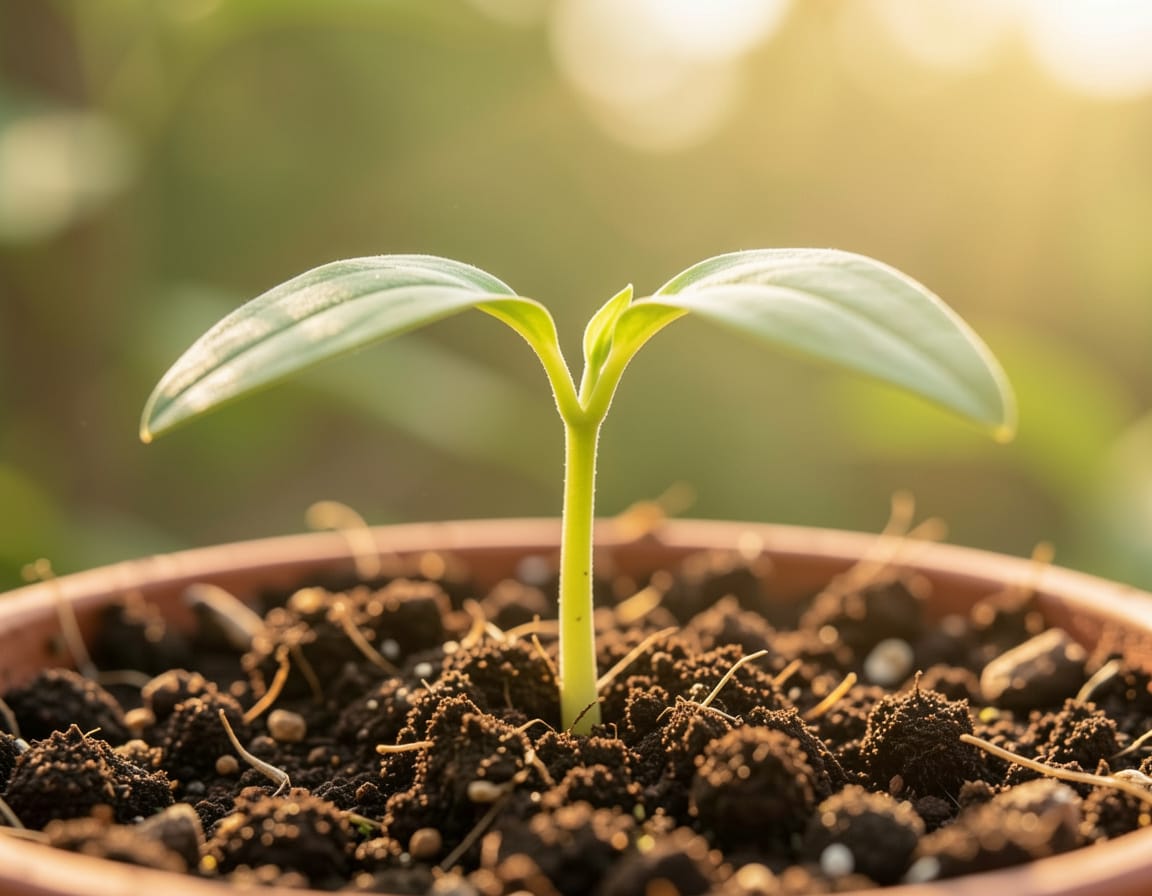
As soon as the seed sends up its first shoot (the cotyledons, or seed leaves), the plant switches from using stored energy to making its own food through photosynthesis. Without light at this stage:
- Seedlings become tall, pale, and weak (“leggy”).
- Growth slows dramatically.
- The plant often collapses within days.
So, while the seed can start life in darkness, it must get light soon after sprouting to survive and grow strong.
Practical Tips for Indoor and Apartment Gardeners
In real home setups, here’s what works best:
- Keep trays warm and dark for germination. Cover with a humidity dome or plastic wrap until most seeds sprout.
- Move to light immediately after sprouting. A bright, south-facing window works for many plants, but seedlings usually need 12–14 hours of strong light daily.
- Supplement if needed. A simple full-spectrum LED grow light, placed 6–12 inches above the seedlings, prevents weak, stretched growth especially in apartments with limited sunlight.
- Maintain gentle airflow. Light plus slight air movement (a fan on low or an open window) keeps stems sturdy and reduces mold.
A Few Exceptions
Some species actually need light to germinate their seeds are so fine they sit on top of the soil:
- Lettuce
- Petunias
- Snapdragons
- Begonias
For these, you press the seeds gently into the surface but don’t cover them they need light for the chemical trigger that starts germination.
In Summary
- Most seeds: Germinate fine in darkness; move to light as soon as they sprout.
- Some seeds: Require light even to germinate.
- All seedlings: Need bright light afterward to grow strong and green.
Professional takeaway: In practice, when I help clients start seeds indoors, we use a two-stage method dark and warm for germination, bright and cool for growth. It’s simple, organic, and produces sturdy, healthy seedlings every time.
