Every product is independently reviewed and selected by our editors. If you buy something through our links, we may earn an affiliate commission at no extra cost to you.
In this article I help homeowners and renters with every spring when they want to bring fresh, seasonal life indoors without resorting to dyed or chemical-laden arrangements.
From an organic home decoration standpoint, the best spring centerpiece flowers are those that are locally grown, unsprayed, and naturally long-lasting. They should harmonize with your home’s natural aesthetic soft, textural, and fragrant rather than overly formal or synthetic-looking.
Below is a detailed guide, drawn from real-world design projects and seasonal floral work across U.S. regions.
Core Principles of Organic Spring Centerpieces
When I design spring arrangements for clients’ dining tables or coffee tables, I focus on:
- Seasonal authenticity: Flowers that are truly in season not forced or shipped thousands of miles.
- Natural color harmony: Muted pastels or fresh greens that blend with indoor light and materials.
- Sustainable materials: No floral foam (use a flower frog, vintage jar, or reusable chicken wire grid).
- Fragrance balance: Softly scented blooms like narcissus or freesia add freshness without overwhelming the room.
The Best Spring Flowers for Centerpieces
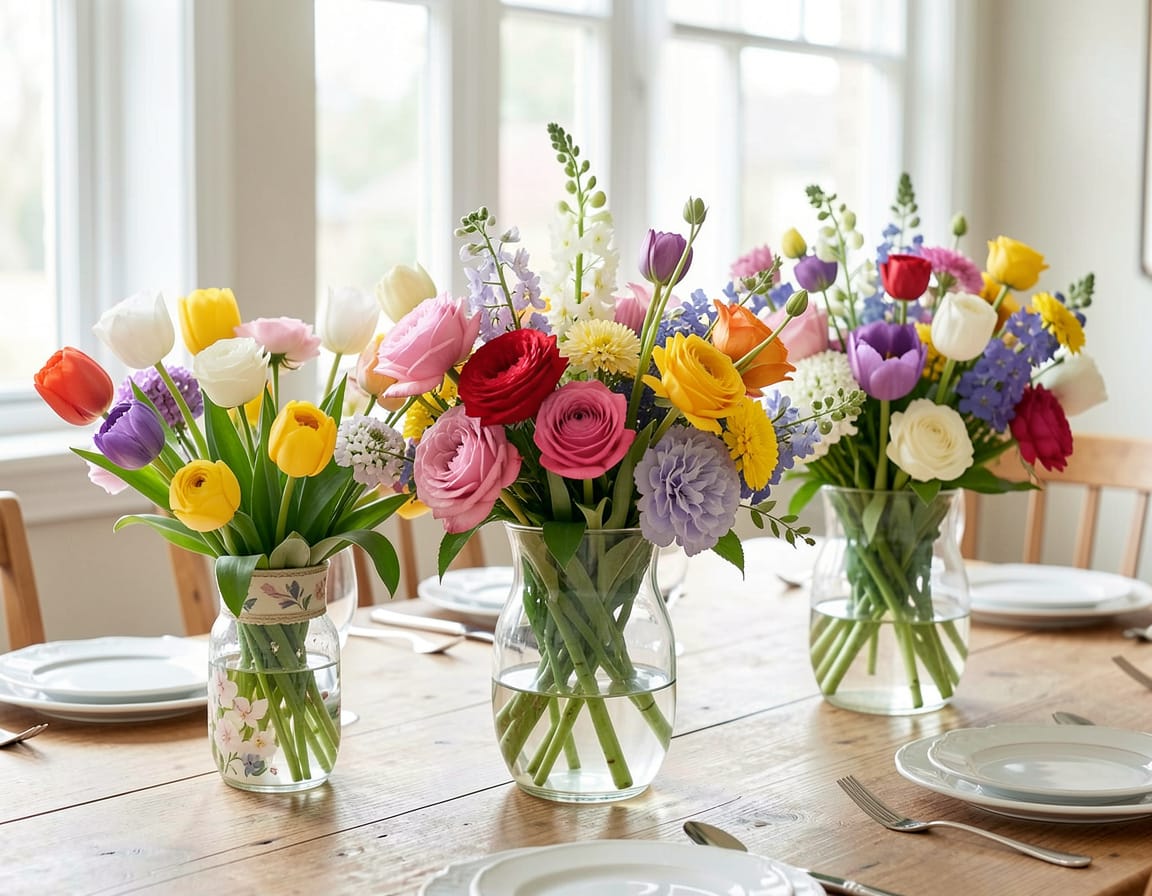
(All widely available at local farmers’ markets or CSA flower shares in the U.S.)
| Flower | Why It Works | Fragrance | Design Notes |
| Tulips | Classic symbol of spring; come in endless colors | Light to none | Pair with daffodils and branches for a simple, sculptural look |
| Daffodils (Narcissus) | Cheerful, low-maintenance, long-lasting | Sweet, classic spring scent | Keep separate from other stems for first day (their sap shortens vase life of others) |
| Ranunculus | Dense, petal-rich blooms that last 7–10 days | Very mild | Look stunning massed together in one color |
| Anemones | Vibrant, modern look with dark centers | None | Excellent for minimalist or contemporary spaces |
| Hyacinths | Compact, fragrant clusters of flowers | Strong, floral | Perfect near entryways or in small vases for scent |
| Sweet peas | Soft, romantic, and delicate | Light, sweet | Combine with greens for a loose, garden-style arrangement |
| Hellebores (Lenten roses) | Elegant, long-lasting, unique tones | None | Excellent focal flower for natural, wild arrangements |
| Lilacs | Gorgeously scented and full | Distinctly floral, nostalgic | Use short branches for dramatic height and scent |
| Peonies (late spring) | Lush, full blooms | Mild & fresh | Just a few stems can make a whole arrangement |
| Flowering branches (dogwood, cherry, quince) | Add structure and height | Lightly scented or neutral | Give a sculptural, seasonal feel |
Pairing Strategy by Mood
- Fresh & Bright Kitchen Table: Daffodils + white tulips + mint or rosemary sprigs
- Calm & Elegant Dining Room: Hellebores + white ranunculus + eucalyptus leaves
- Boho Spring Look: Anemones + sweet peas + foraged greens in a simple ceramic vase
- Classic Cottage Style: Lilacs + peonies + trailing ivy
- Modern Minimalist: A single flowering branch in a tall glass cylinder
Sustainable Design Techniques
- Skip floral foam. It’s a petroleum-based plastic that never biodegrades. Use a flower frog, chicken wire, or simply crisscross stems in a wide-mouthed vase.
- Use foraged greens. Fern fronds, young maple branches, or even herbs like sage and thyme create depth.
- Choose reusable vessels. Stoneware pitchers, vintage jars, or small baskets lined with glass inserts.
- Compost responsibly. When flowers fade, compost the stems and rinse your vase in hot water with vinegar.
How to Make Them Last Longer
From hands-on care experience:
- Cut stems at an angle under running water.
- Change water every 1–2 days.
- Keep away from direct sunlight, drafts, and fruit bowls (ethylene gas shortens bloom life).
- Re-trim stems every few days.
- Add a teaspoon of sugar and a few drops of vinegar to the water to feed stems naturally and inhibit bacteria.
Regional Considerations (U.S.)
- Northeast / Midwest: Tulips, daffodils, hellebores, hyacinths (April–May).
- South / Gulf states: Early peonies, ranunculus, and garden roses (March–April).
- Pacific Northwest: Anemones, sweet peas, and lilacs thrive in cool, damp springs.
- Southwest / California: Early succulents mixed with ranunculus or poppies great for low-water décor.
My Professional Shortlist: Foolproof, Organic Spring Centerpieces
If you want combinations that always work beautifully indoors, I’d recommend:
- Tulips + flowering branches + herbs fresh, architectural, and fragrant.
- Ranunculus + eucalyptus + anemones long-lasting and elegant.
- Daffodils + hyacinths + ferns bright, cheerful, and easy to source locally.
- Peonies + lilacs + garden roses lush “late spring” option for romantic tables.
Final Thoughts
In my experience designing organic home interiors, the best spring centerpieces balance simplicity, authenticity, and sustainability. A few thoughtfully chosen, seasonal stems in a natural vessel often look more refined and feel more alive than any store-bought bouquet.
If you focus on local flowers, reusable containers, and natural texture, your spring centerpiece will not only look beautiful but also support pollinator-friendly and eco-conscious growing practices.
