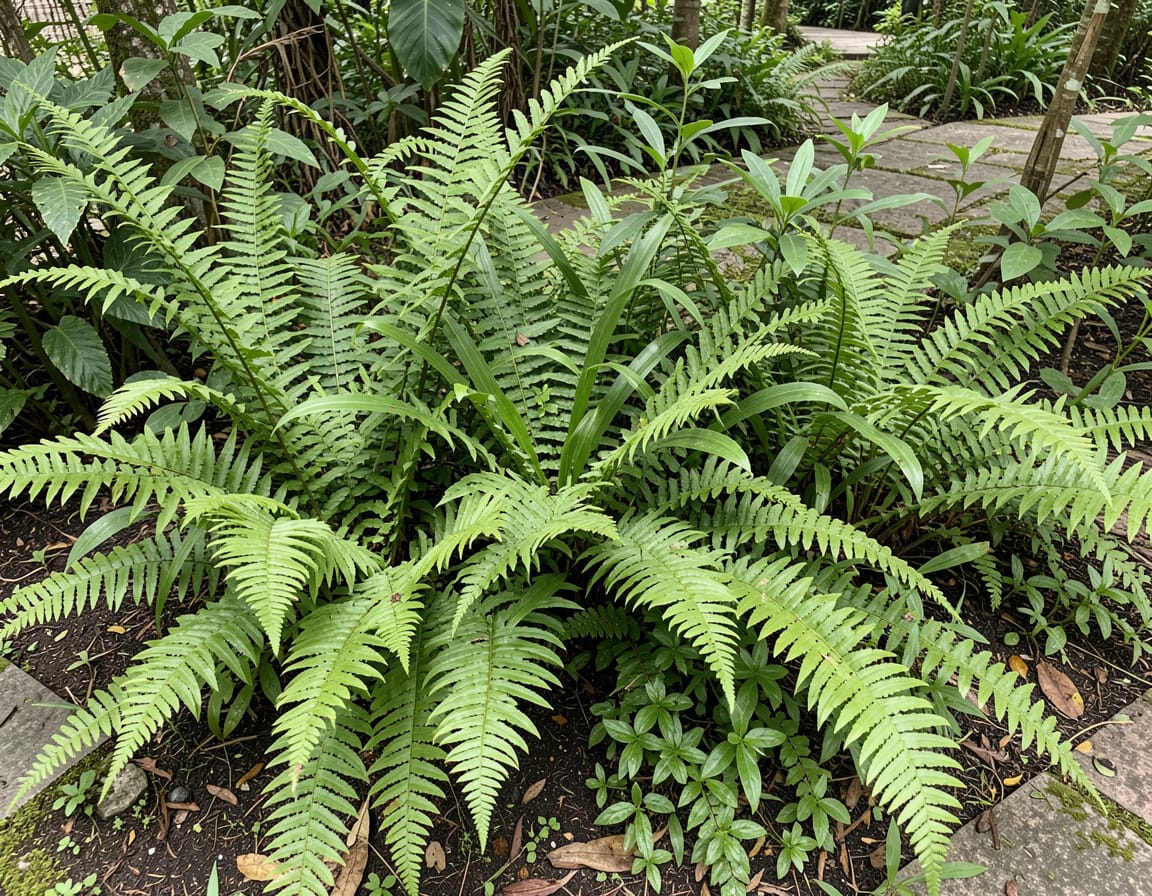
Every product is independently reviewed and selected by our editors. If you buy something through our links, we may earn an affiliate commission at no extra cost to you.
That’s a great question and one I get often from homeowners who want to design a cohesive, low-maintenance shade garden or lush indoor grouping. Ferns naturally thrive in dappled light and moist, humus-rich soil, so the best companion plants are those that share similar preferences for shade, moderate moisture, and organic soil.
Here’s how I typically guide clients when pairing plants with ferns both outdoors and indoors:
Outdoor Companions for Ferns
When designing organic shade gardens, I look for plants that provide contrast in leaf shape or color without competing for space or sunlight.
| Companion Plant | Why It Works | Bonus Tip |
| Hostas | Broad leaves complement fern fronds; both love moist shade. | Combine variegated hostas with solid-green fern varieties for texture contrast. |
| Astilbes | Plume-like flowers add soft color above fern foliage. | Choose pinks or whites for a calm woodland palette. |
| Heucheras (Coral Bells) | Colorful, semi-evergreen leaves add year-round interest. | Pick deep burgundy or lime tones to highlight green ferns. |
| Bleeding Hearts (Dicentra spp.) | Delicate spring flowers pair beautifully with fern texture. | After flowering, ferns hide Dicentra’s fading foliage. |
| Brunnera or Lungwort (Pulmonaria) | Heart-shaped, speckled leaves brighten shade gardens. | Great for groundcover under taller ferns. |
| Wild Ginger (Asarum canadense) | Glossy leaves and low growth pattern complement taller ferns. | Native, drought-tolerant once established. |
| Shade-tolerant grasses (Carex spp.) | Fine, arching blades contrast fern texture. | Use native sedges for ecological balance. |
Design Tip: In U.S. woodland or shaded yard settings, I often layer these plants beneath trees or around patios to create a “forest-floor” effect cool, green, and texturally rich. The key is maintaining even moisture with compost-rich mulching.
Indoor Companions for Ferns
Indoors, fern-friendly neighbors are humidity-loving, indirect-light plants that won’t crowd roots or compete for nutrients.
| Plant | Why It Works Indoors | Care Compatibility |
| Peace Lily (Spathiphyllum) | Thrives in low light and high humidity. | Prefers same watering rhythm as ferns. |
| Calatheas and Marantas (Prayer Plants) | Share similar humidity needs; patterned leaves add visual interest. | Keep soil moist, never soggy. |
| Pothos or Philodendron | Easy to grow; vines soften vertical spaces around ferns. | Tolerates lower light; great for mixed planters. |
| Spider Plant | Air-purifying and resilient; handles same watering cycles. | Ideal for hanging near ferns. |
| Anthurium or ZZ Plant (for bright, humid bathrooms) | Adds structure and color. | Just watch light—too much sun can stress ferns. |
Pro Tip: Group indoor ferns with these companions on a shared pebble humidity tray or near a small tabletop fountain. This stabilizes the microclimate naturally, reducing brown leaf tips and watering fluctuations.
Ecological and Aesthetic Pairing Tips
From years of designing organic landscapes:
- Match moisture needs first. Ferns hate drying out, so avoid drought-tolerant plants.
- Vary leaf size and shape. Contrast frilly fern fronds with broad, smooth leaves for balance.
- Use native shade species. In the U.S., native wild ginger, trillium, or foamflower make sustainable, low-input partners.
- Mulch organically. Leaf mold or shredded bark locks in moisture without chemicals or dyes.
- Avoid aggressive spreaders. Plants like ivy or vinca can overtake ferns in a season.
Example Combo (Real-World Backyard Setup)
In a shaded suburban yard in Pennsylvania, I recently layered:
- Ostrich ferns for height and backdrop,
- Hostas and heucheras at mid-level,
- Wild ginger and foamflower as groundcover,
- Then accented with mossy stones and fallen tree bark for natural texture.
The result was a low-maintenance, wildlife-friendly vignette that stayed green from April through October with minimal watering.
Final Thought
Ferns are team players they create a lush, calming framework where other shade plants can shine. Whether you’re styling an indoor green corner or establishing a woodland garden bed, focus on shared light and moisture needs, organic soil, and natural textures. Do that, and your fern companions will thrive together for years.
